

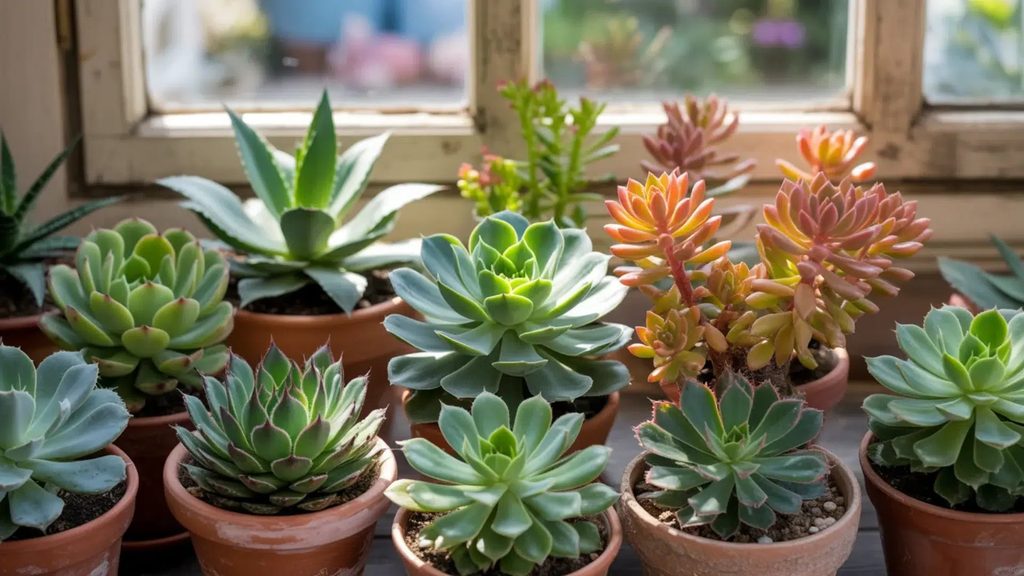
I killed my first succulent plant by watering it too much. Not too little — too much.
It looked fine for a week. Then the leaves went soft, almost see-through, and one by one they fell off when I touched them. I thought it needed more water. It needed the opposite.
That is the most common mistake with succulent plants. Most people do not underwater them. They water them like a fern, on a fixed schedule, in soil that stays wet for days.
So, how often should you water succulent plants? Here is the short answer first, then the full guide. If you are wondering how often to water succulent plants, start with the soil test below.
The short answer: every 10 to 14 days in summer, every 3 to 4 weeks in winter
For most people, how often to water succulent plants is every 10 to 14 days in summer. For most succulent plants indoors in the US, that is a good starting point. Water only when the soil is fully dry, all the way through the pot.
But your home is not my home. A small pot on a hot, sunny windowsill dries out much faster than a large pot in a cool, north-facing room. That is why a calendar alone does not work. You need to check the soil, not the date.
If you learn one rule for succulent plants care, make it this one: dry soil before you water. Always.
Why a fixed watering schedule does not work
Succulent plants store water in their thick leaves. That is their whole trick. They can go days, sometimes weeks, without water.
When you water them every few days, the soil stays damp. The roots sit in wet soil. They cannot breathe, and they start to rot. Once root rot starts, it is hard to stop.
Light, heat, pot size, soil, and season all change how often to water succulent plants. In July, a 2-inch pot in full sun can dry out in a week. In January, the same plant in the same pot can stay damp for a month.
So instead of asking, “Is it Tuesday, so I should water?” ask, “Is the soil dry?”
How to tell if succulent plants need water
Use the finger test. Push your finger about an inch into the soil. Bone dry? Water it. Still damp or cool? Wait a few more days and check again. Use this test every time you wonder how often to water succulent plants.
You can also lift the pot. A dry pot feels light. A wet pot feels heavy. After a few weeks, you will know the difference without thinking about it. It is one of the easiest ways to judge how often to water succulent plants.
Look at the leaves too. Healthy succulent plants have firm, plump leaves. Thirsty leaves look thin, wrinkled, or a little deflated. They usually plump up again within a day or two after a good watering.
Soft, mushy, or see-through leaves are different. That is almost always overwatering, not thirst. Stop watering, let the soil dry out fully, and check the stem near the soil. If it feels soft or black, the roots may already be rotting.
How to water succulent plants the right way
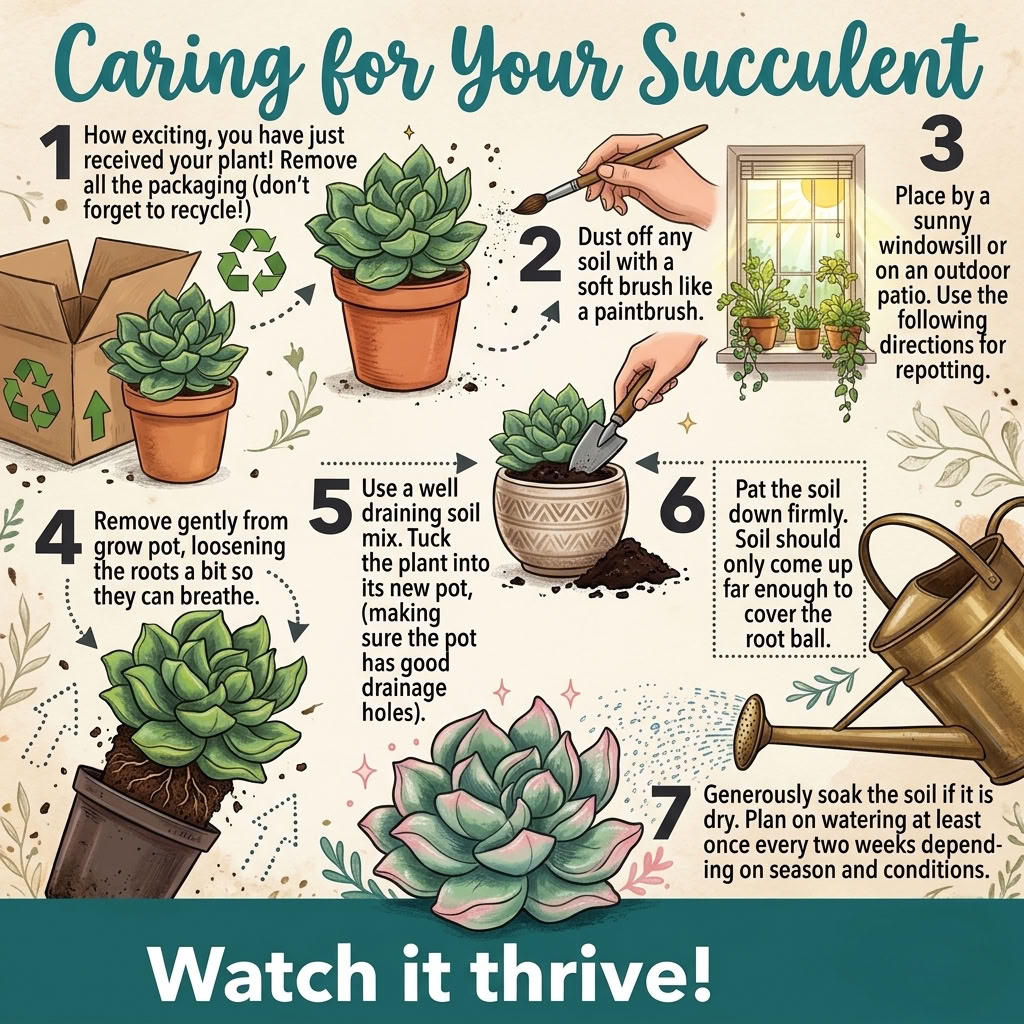
When the soil is dry, water well. This is called the soak-and-dry method, and it is the best way to water succulent plants. The soak-and-dry method is the simplest answer to how often to water succulent plants.
Water slowly until it runs out of the drainage hole at the bottom. Then empty the saucer. Never let the plant sit in standing water.
Do not just sprinkle a little water on top. A light sprinkle wets the top inch and leaves the roots dry. A deep soak reaches the whole root zone, then you wait until it dries out again. A deep soak, then a full dry-out, is the rhythm behind how often to water succulent plants.
Use room-temperature water if you can. Cold water straight from the tap on a cold winter day can shock the roots a little, though most healthy plants handle it fine.
Succulent plants with pots: pot size and material change everything
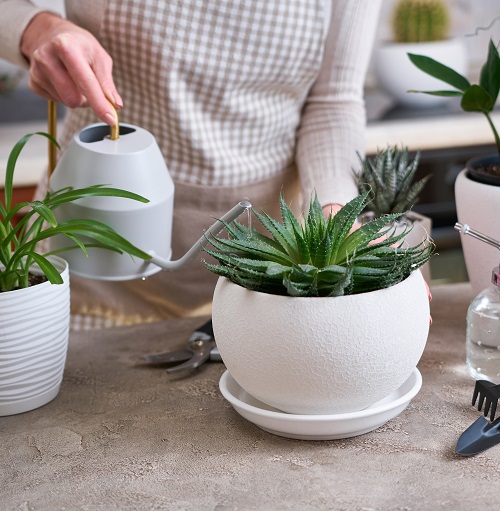
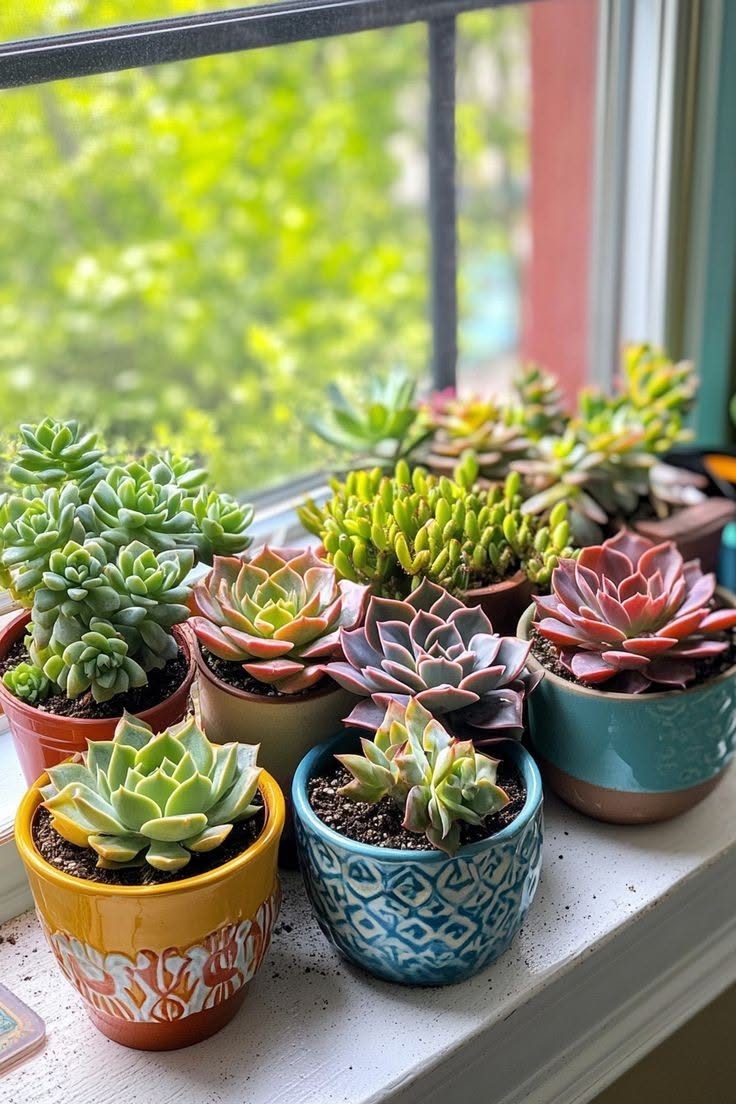
Succulent plants with pots dry out at very different speeds, and the pot is often the reason. The pot you choose changes how often to water succulent plants.
A small 2-inch terracotta pot dries out fast. Terracotta is porous, so water escapes through the sides as well as the top. That is great for beginners who tend to overwater, because it gives you a little extra safety.
A plastic or glazed ceramic pot holds water much longer. The same plant in plastic may need water half as often as it does in terracotta.
A large pot also holds more soil, so it stays damp longer than a small pot. That sounds good, but it can be a trap. A tiny succulent in a huge pot sits in wet soil for weeks, and the roots suffer. Pot size alone can change how often to water succulent plants by a week or more.
The best rule is simple: use a pot that is just a little bigger than the plant, and always use a pot with a drainage hole. If you love a pretty pot with no hole, use it as a cover pot. Keep the plant in a plastic nursery pot inside it, and take it out to water it.
Succulent plants potting mix: use fast-draining soil
Succulent plants potting mix matters as much as watering. Regular garden soil or regular potting soil holds too much water for succulent plants. It stays wet, packs down, and rots the roots. Good mix also changes how often to water succulent plants, because heavy soil stays wet longer.
Use cactus or succulent mix from a garden store, or make your own. A simple mix that works well in most US homes is:
Mix: 2 parts cactus or succulent mix, 1 part perlite, 1 part coarse sand
Perlite and coarse sand open up the soil so water drains fast and air can reach the roots. Do not use fine sand from a sandbox. It packs down and holds water.
If your mix stays damp for more than a week after watering, it is too heavy. Repot into a lighter mix in spring, when the plant is growing again. A lighter mix can also change how often to water succulent plants in the same room.
Succulent plant varieties: different types need different watering
Not all succulent plant varieties drink at the same speed. Different types change how often to water succulent plants — see the guide below.
- Echeveria — every 10 to 14 days in summer, every 3 to 4 weeks in winter. Needs bright light to stay compact. Very easy to overwater.
- Jade plant — every 2 to 3 weeks in summer, once a month or less in winter. Thick leaves store a lot of water. Let it dry out fully between waterings.
- Haworthia — every 2 weeks in summer, every 3 to 4 weeks in winter. Tolerates bright indirect light better than most succulent plants. A good choice for offices.
- String of pearls — every 7 to 10 days in summer, every 2 to 3 weeks in winter. Thirstier than most, because the small beads dry out fast. Still, let the top inch dry first.
- Lithops, or living stones — almost no water in winter, and very little in summer. Water only when the old leaves have dried up and the new ones look wrinkled. These are the easiest to kill by overwatering.
- Mini cactus — every 2 to 3 weeks in summer, once a month or less in winter. Likes sun and neglect. Just watch the spines if you have kids.
When you are unsure how often to water succulent plants, water less. Most succulent plants recover from being a little thirsty. Very few recover from root rot.
Succulent plants indoor vs. outdoor: does location change watering?
Yes. Location changes how often to water succulent plants, too. Succulent plants indoor usually need less water than the same plants outside, because indoor air is still, light is weaker, and soil dries more slowly.
Outdoor succulent plants in full sun and wind can dry out in a few days in summer, especially in a small terracotta pot. Indoor plants in a bright south-facing window may need water every 10 to 14 days in summer. The same plant in a north-facing room may go 3 weeks between waterings.
In winter, indoor plants slow down. Growth stops, light drops, and the soil stays damp longer. That is why most succulent plants indoor need water only every 3 to 4 weeks in winter, sometimes even less. In short, how often to water succulent plants indoors is less often than most people expect.
If you move plants outside for summer in the US, check them more often for the first two weeks. They will dry out faster, and they can sunburn if you move them into full sun too fast. Move them out gradually, over a few days.
Succulent plants care: the rest of how to care for succulent plants
Watering is the biggest part of learning how often to water succulent plants. Watering is also the biggest part of succulent plants care, but light and temperature matter too. If you want to know how to care for succulent plants for years, not just weeks, get these three things right.
Light: Give succulent plants bright light, plus a few hours of gentle morning sun if you can. An east-facing window is ideal in most US homes. A south-facing window is even better in winter. If the plant starts stretching tall and pale, it needs more light, not more water.
Temperature: Most succulent plants are happy at 60 to 75°F, which is normal indoor temperature. Keep them away from heating vents, radiators, and cold drafts from windows and doors. A plant next to a heating vent can dry out fast. A plant pressed against cold glass on a freezing night can get cold damage.
Feeding and repotting: Feed lightly, only in spring and summer, with diluted cactus fertilizer once a month at most. Do not feed in winter. Repot only every 2 to 3 years, or when roots are coming out of the bottom. Spring is the best time to repot.
Succulent plants to buy: what to look for
If you are looking at succulent plants to buy, start with the easy ones. Echeveria, haworthia, jade plant, and mini cactus are the best succulent plants to buy for beginners in the US. They are forgiving, easy to find, and cheap enough that a mistake does not hurt much.
Before you buy, check the plant. Leaves should be firm and full, not soft, mushy, or wrinkled. The stem should feel firm near the soil. Avoid plants with black spots, white cottony bugs, or soil that smells sour. That smell usually means the roots are already rotting.
Check the pot too. Buy succulent plants with pots that have a drainage hole, or plan to repot them into one at home. A pretty pot with no hole is fine as a cover pot, but it is not a good long-term home on its own.
Start with one or two plants that fit your light. Learn how fast their soil dries in your home. Then add more. That is how most people build a collection that actually survives. That practice is the fastest way to learn how often to water succulent plants at home.
Signs you are watering too much or too little
Too much water
- Soft, mushy, or see-through leaves
- Leaves fall off with a light touch
- Stem feels soft near the soil
- Soil smells sour or stays damp for weeks
Too little water
- Leaves look thin, wrinkled, or deflated
- Lower leaves dry up and fall off
- Plant looks dull, but the stem still feels firm
If you see signs of overwatering, stop watering right away. Let the soil dry out fully. If the stem is soft, take the plant out, trim any black, rotted roots, and repot it into dry, fast-draining mix. Do not water it for a week after repotting.
If you see signs of underwatering, give it a deep soak. It should plump up in a day or two. Then go back to checking the soil before you water again — that check decides how often to water succulent plants.
How often to water succulent plants in winter
Winter is when most succulent plants die from overwatering. Growth slows, light drops, and the soil stays damp much longer than it does in summer. In winter, how often to water succulent plants drops to every 3 to 4 weeks.
In most US homes, water succulent plants every 3 to 4 weeks in winter, and only when the soil is fully dry. Some plants in cool rooms may go 5 to 6 weeks without water, and that is fine.
Do not fertilize in winter. Do not repot unless it is an emergency, like a cracked pot or rotting roots. Let the plant rest. It will start growing again in spring, when light and warmth return.
Frequently asked questions
How often should I water succulent plants?
Most indoor succulent plants need water every 10 to 14 days in summer and every 3 to 4 weeks in winter. Always check the soil first. Water only when it is fully dry, all the way through the pot. That range is the starting point for how often to water succulent plants in most homes.
How do I know if my succulent plants need water?
Push your finger an inch into the soil. Bone dry means water it. Still damp means wait. Thirsty leaves look thin and wrinkled. Overwatered leaves look soft and mushy.
Can I water succulent plants from the bottom?
Yes, bottom watering works well. Set the pot in a shallow tray of water for 10 to 15 minutes, until the top of the soil feels damp. Then take it out and let it drain fully. Do not leave it sitting in water. Bottom watering does not change how often to water succulent plants — the soil still has to dry first.
Do succulent plants need direct sunlight?
They need bright light, and most do best with a few hours of gentle morning sun. Harsh midday sun through glass can scorch them, especially in summer.
How long do succulent plants live?
With the right light and watering, many live for years. Jade plants can live for decades. The trick is almost always less water, more light, and good drainage.
Final thought
How often you water succulent plants is not a date on a calendar. It is a habit: check the soil, water deeply when it is dry, and then leave the plant alone.
Start with that habit, and your succulent plants will do the rest. They do not need perfect care. They need less water, more light, and a pot that drains.
New to succulents? Start with our guide to Succulent Plants | Mini Potted Plants — it covers the best beginner types, light, soil, and styling ideas that this watering guide builds on.















One Response