
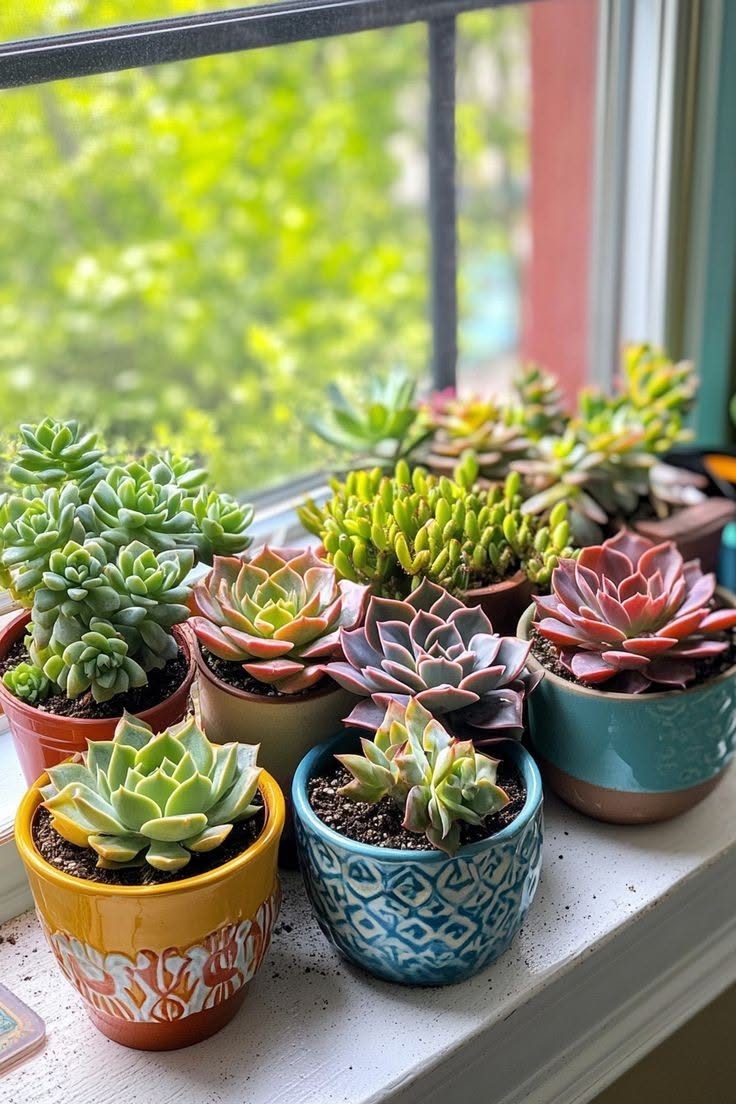
Care and styling guide — best varieties, watering, light, soil, and ideas for desks, windowsills, and small spaces.
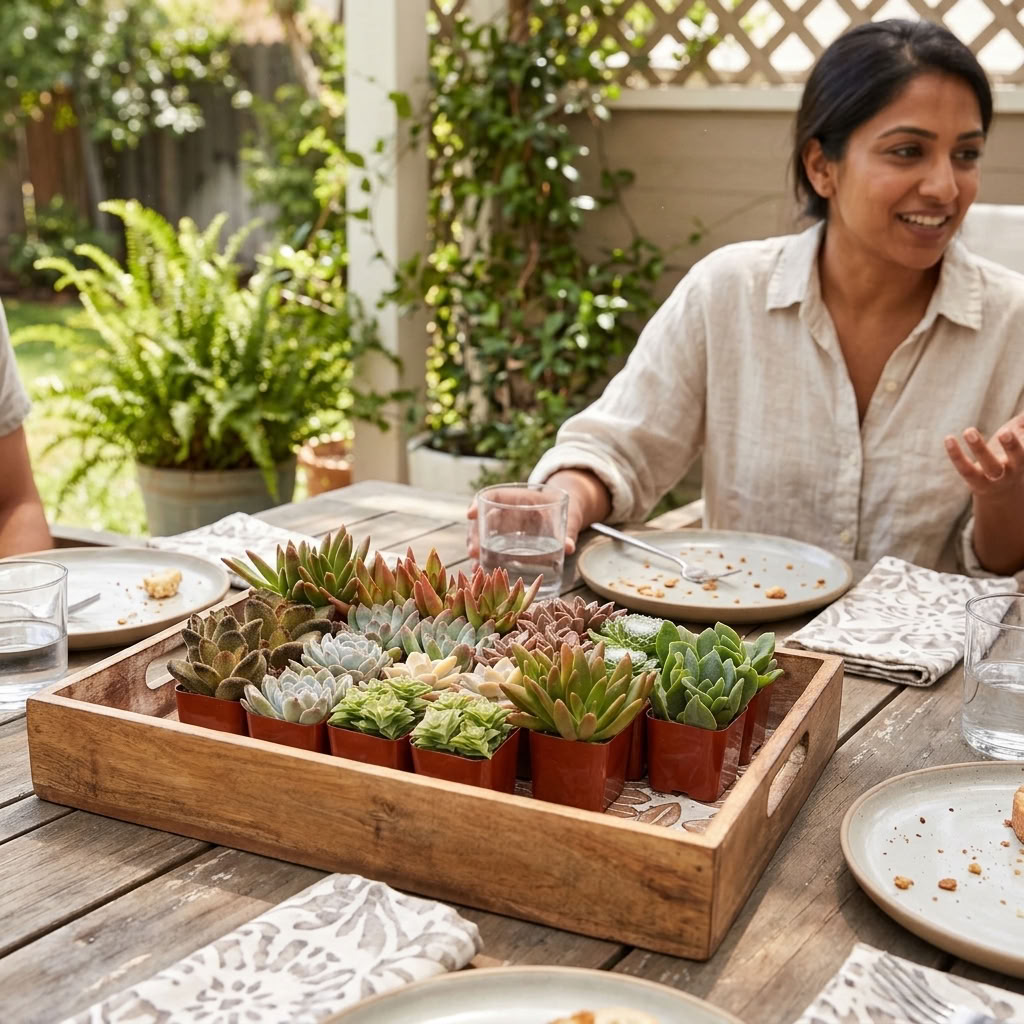
I’ll be honest — my first mini potted succulent almost died in two weeks. Not because I ignored it. Because I loved it too much. I watered it like a fern, kept it in a pretty pot with no drainage hole, and wondered why the leaves went soft and see-through.
Turns out, succulents don’t want that kind of love. They want to be left alone, given a bit of sun, and watered only when they’re actually thirsty. Once I learned that, everything changed. That same little plant is still on my kitchen windowsill, and it’s now surrounded by about a dozen friends.
If you’re new to succulent plants, mini potted plants are the perfect place to start. They’re small, affordable, forgiving, and they instantly make a desk, shelf, or windowsill feel alive.
| The one rule to remember: Check the soil first. Bone dry? Water thoroughly. Still damp? Wait. Almost every succulent problem starts with watering too often. |
What are mini potted succulents, exactly?
Mini potted succulents are small succulent plants grown in 2- to 4-inch pots. Their thick, fleshy leaves act like little water tanks, which is why they can go days — sometimes weeks — without water. Unlike a lot of houseplants, they don’t need misting, pruning every week, or a complicated feeding schedule.
That makes them ideal for beginners, busy people, renters, students, and anyone who has ever said, “I kill every plant I touch.”
Why mini succulent plants are so popular
Look, there’s a reason you see them everywhere, from office desks to coffee shops:
- They fit anywhere. A narrow windowsill, a bookshelf, a bathroom ledge — you don’t need a garden.
- They’re low maintenance. Forget to water for two weeks? They’ll probably forgive you. Water every two days? They won’t.
- They last for years with basic care, and many can be propagated from a single leaf.
- They come in endless shapes — rosettes, trailing strings, spiky architectural forms, and soft, fuzzy leaves.
- Make a room feel calmer. There’s something about a tiny, living thing thriving in a small pot that makes a space feel cared for.
How to choose the right mini succulent plants for you
Don’t just pick the prettiest one in the shop — pick the one that fits your light.
If you have a bright, sunny windowsill, go for echeveria or a mini cactus. They love sun and will keep their tight, colorful shape.
If your room is bright but never gets direct sun, haworthia is your best friend. It’s one of the few small succulent plants that tolerates lower light without stretching out of shape.
If you have pets, be a bit careful. Jade plants are beautiful, but they can be toxic if nibbled. Haworthia and echeveria are generally considered safer choices, though it’s still best to keep plants out of reach.
Best mini potted succulent palnts for beginners
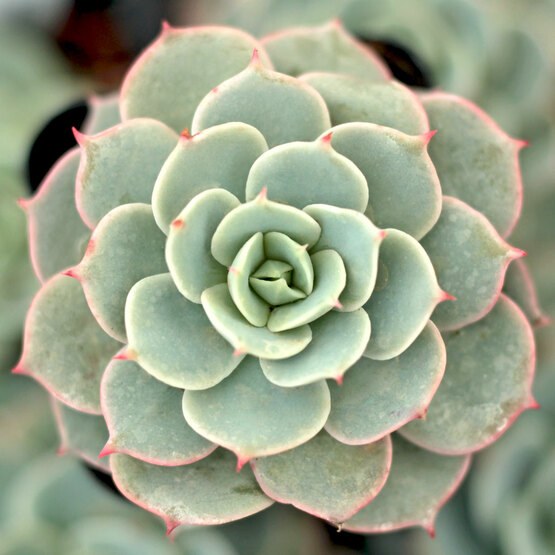
Echeveria — the show-off
Perfect rosettes in green, dusty pink, lilac, and blue-gray. Needs good light to stay compact. The classic choice for a sunny windowsill, and the easiest to recognize at a glance.
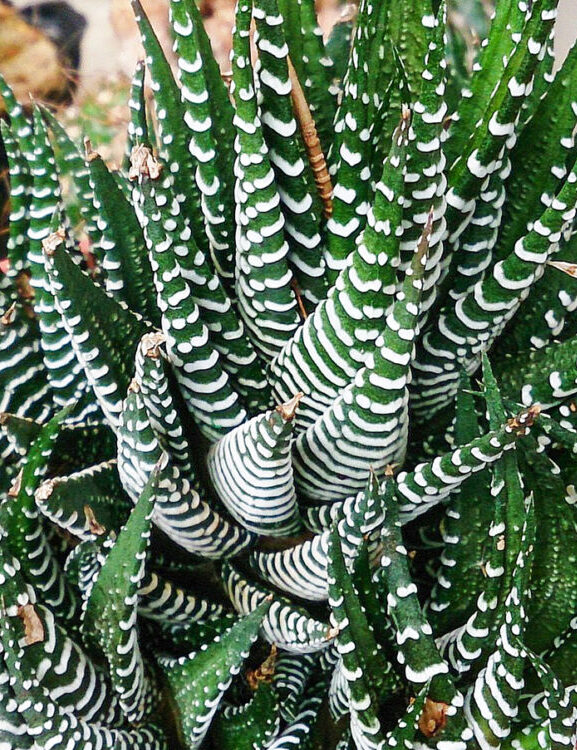
Haworthia — the survivor
Striped, upright leaves, slow-growing, and happy in bright indirect light. My go-to recommendation for offices and rooms without direct sun.
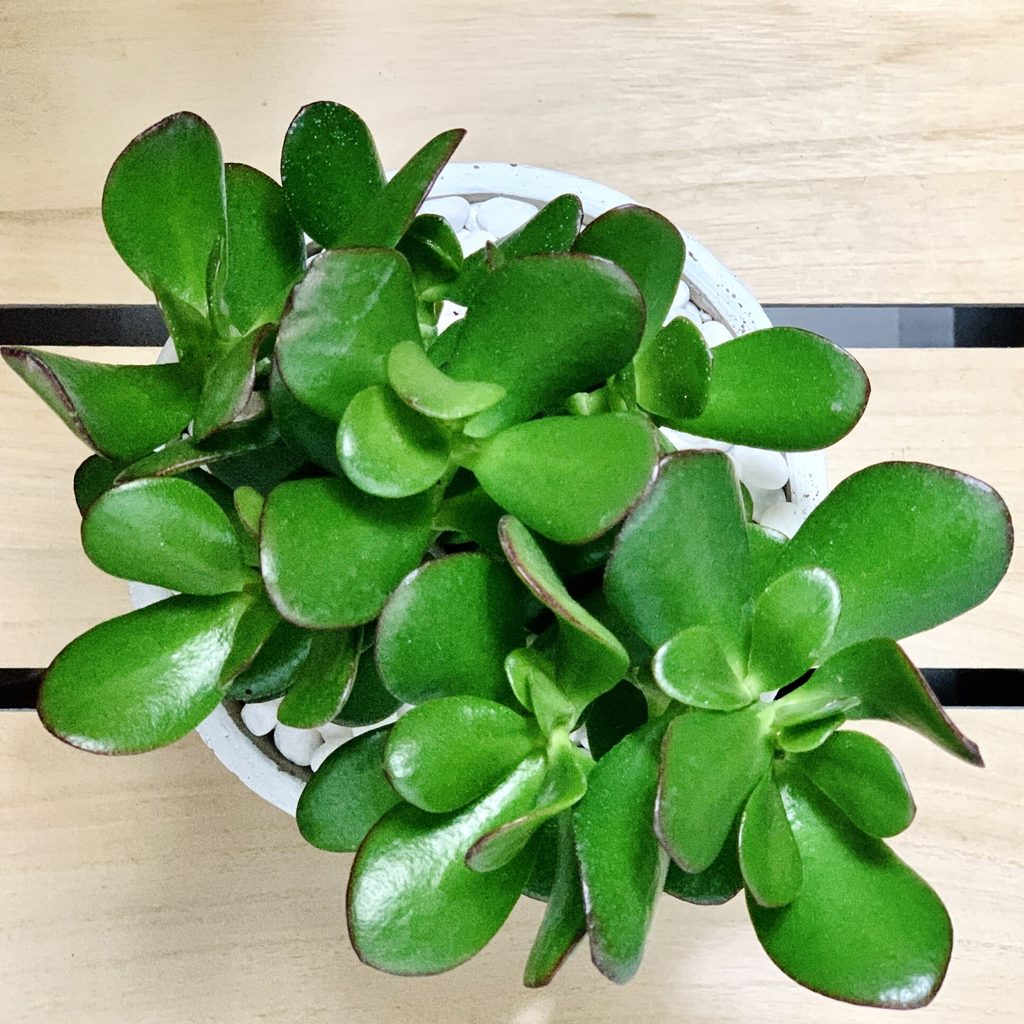
Jade Plant — the slow and steady one
Thick, glossy leaves and a reputation for good luck. It grows slowly, but it can live for decades. Keep it out of reach of pets that like to nibble.
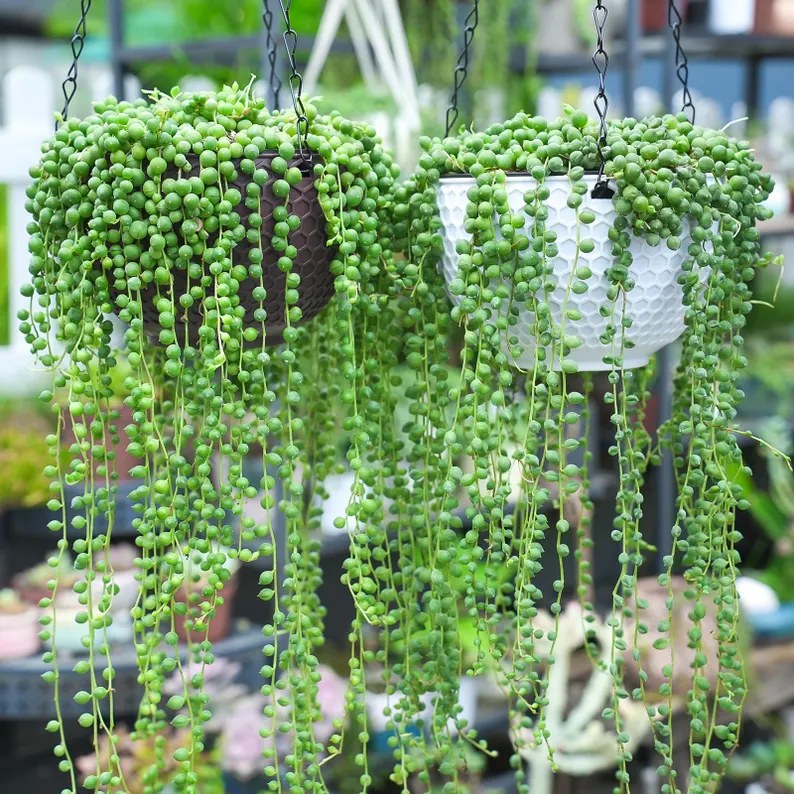
String of Pearls — the drama queen
Trailing beads that look incredible in a hanging pot or on a high shelf. A little fussier about watering, but worth it for the effect.
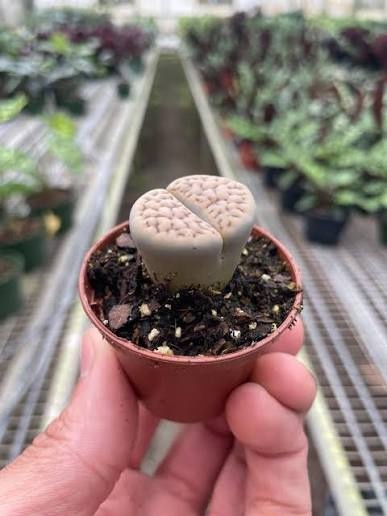
Lithops, or Living Stones — the weird one
They literally look like pebbles. They need almost no water and they fascinate everyone who sees them.
Mini Cactus — the almost-indestructible one
Tiny, sculptural, and happy with sun and neglect. Just watch those spines if you have curious kids.
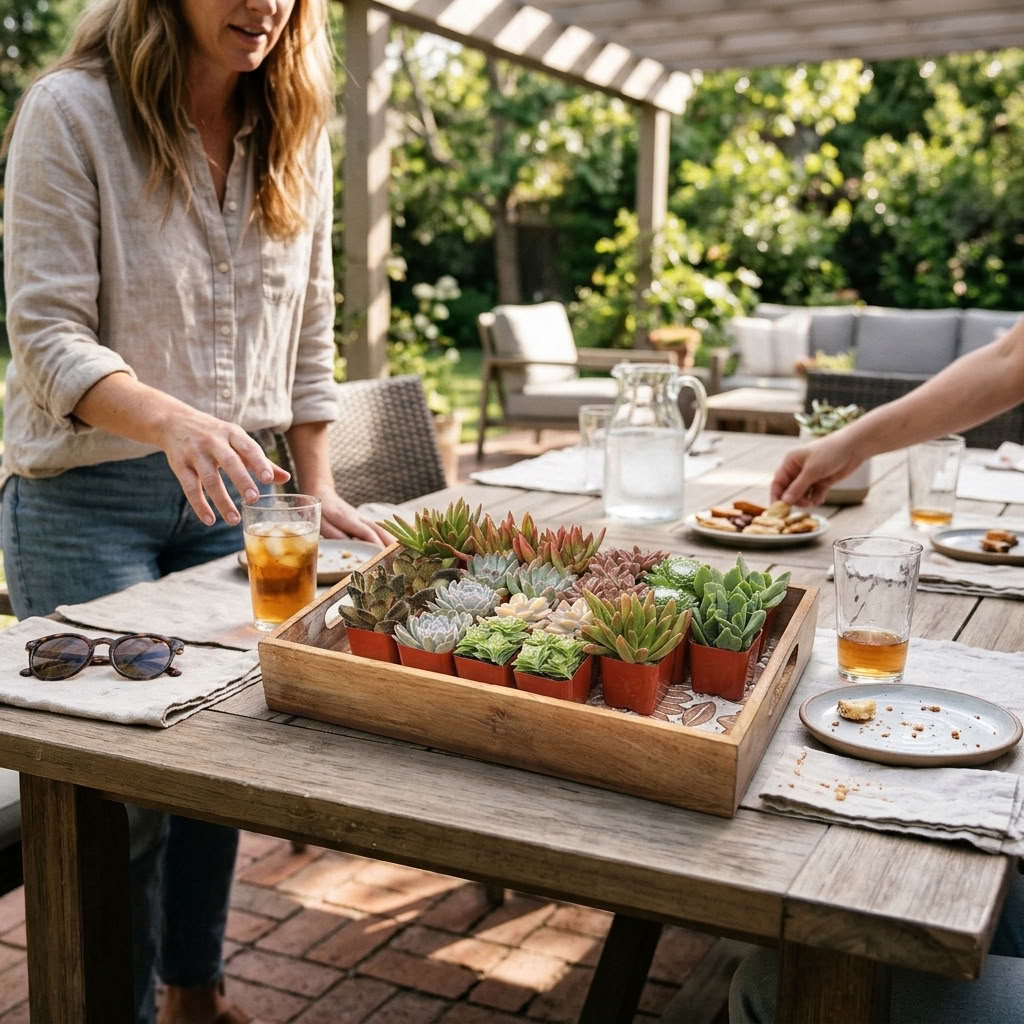
Mix two or three different shapes together — say, one rosette, one upright, and one trailing — and suddenly a small collection looks like a curated display.
Mini succulent plants care: the simple version that actually works
Light: bright is non-negotiable
Give your succulents bright, indirect light, plus a few hours of gentle morning sun if you can. An east-facing window is ideal.
Quick test: if your plant starts stretching tall, leaning hard toward the window, and losing its compact shape, it’s begging for more light. Move it closer, slowly, over a few days so it doesn’t sunburn.
Watering: the soak-and-dry method
This is where most people go wrong, myself included. Don’t water on a schedule. Check the soil first. Push your finger about an inch down. Bone dry? Water thoroughly until it runs out of the drainage hole, then empty the saucer. Still damp? Wait.
In summer, that might be every 10–14 days. In winter, it could be once a month. A tiny 2-inch pot on a hot windowsill will dry out far faster than the same plant in a cool, north-facing room, so always check, never guess.
Soil and pot: drainage or nothing
Use cactus or succulent mix, or make your own: 2 parts cactus mix, 1 part perlite, 1 part coarse sand. Regular garden soil holds too much water and will rot the roots.
And please — a pot with a drainage hole. That pretty pot without one? Use it as a cover pot, and keep the plant in a plastic nursery pot inside it.
Feeding, repotting, and propagation
Feed lightly, only in spring and summer, with diluted cactus fertilizer once a month at most. Most mini succulents don’t need repotting more than every 2–3 years, or when roots are coming out of the bottom.
Want more plants for free? Gently twist off a healthy echeveria leaf, let it dry for 2–3 days, lay it on dry soil, and wait. In a few weeks, you’ll often see tiny roots and a baby rosette appear. It’s weirdly addictive.
Troubleshooting: what your plant is trying to tell you
- Soft, mushy, translucent leaves: Almost always overwatering. Stop watering, let the soil dry completely, and if it’s bad, repot into dry mix and trim any black, rotted roots.
- Stretching tall and pale: Not enough light. Move to a brighter spot gradually.
- Brown, crispy tips: Too much harsh afternoon sun. Give it morning sun instead, or a sheer curtain in summer.
- Wrinkled, deflated leaves: This one is actually thirsty. Give it a good soak — it should plump up in a day or two.
- Tiny white bugs or webbing: Likely mealybugs. Dab them off with a cotton swab dipped in rubbing alcohol and isolate the plant for a week.
Styling mini potted plants in small spaces
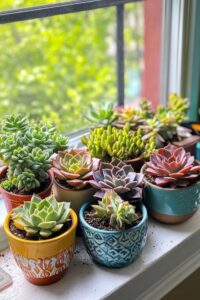
You don’t need a lot of room to make them look good. Line up three different succulent plants on a desk tray for an instant mini garden. Use terracotta for a warm, rustic feel, or white ceramic for a clean, modern look. Put a trailing plant on top of a bookshelf so it spills down. Add one to your bathroom — if it has a window — for that spa feeling.
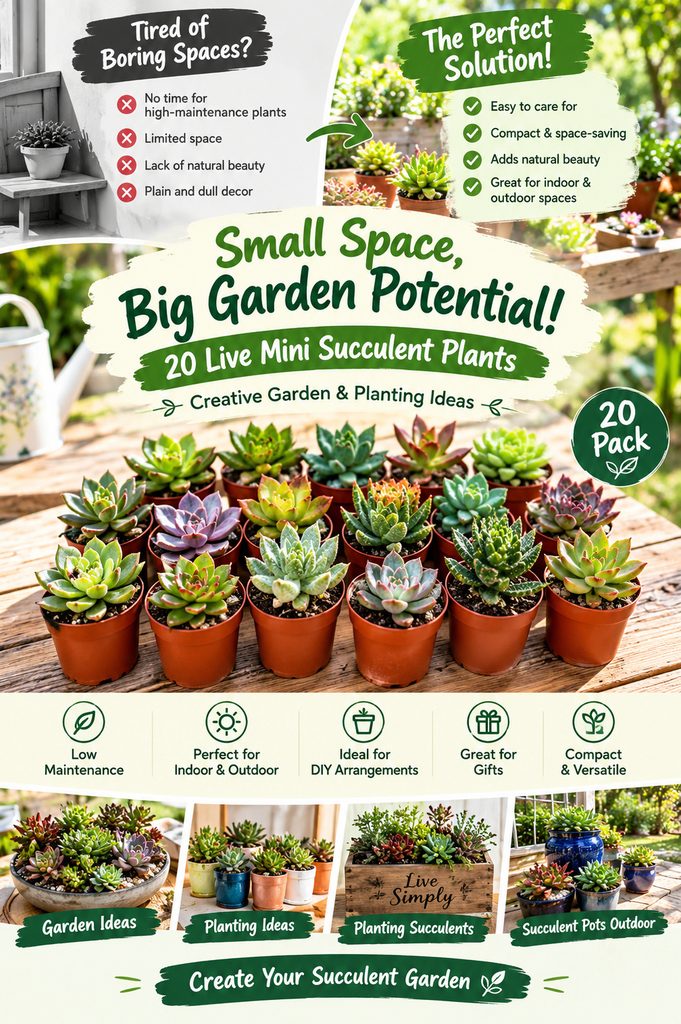
They also make brilliant gifts. A 20-Pack Live Succulent Plants for a housewarming, a new job, a birthday, or just because, says “I thought of you” without being over the top. Add a handwritten tag with one care tip — “water only when dry!” — and you’re officially the thoughtful friend.
Frequently asked questions
How often should I water mini potted succulent plants?
Only when the soil is completely dry, usually every 10–14 days in summer and every 3–4 weeks in winter. Always check the soil — don’t follow a fixed calendar.
Do mini succulent plants need direct sunlight?
They need bright light, and most do best with a few hours of gentle morning sun. Harsh midday sun can scorch them, especially through glass.
Can succulent plants live in an office with no window?
Honestly, not well for long. They’ll survive for a while, then stretch and fade. If you have no natural light, a small grow light for a few hours a day makes a huge difference.
How long do mini potted succulents live?
With the right light and watering, many live for years, and jade plants can live for decades. The trick is almost always less water, more light, and good drainage.
Final thought
You don’t need a big garden, a green thumb, or a lot of time to enjoy plants. Start with one mini potted succulent that fits your light, learn its one simple rule — dry soil before you water — and see how it goes.
Chances are, like me, you’ll be back for a second one within a month. And then a third. And then you’ll need a bigger windowsill.














2 Responses