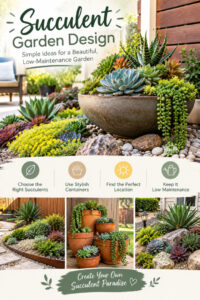
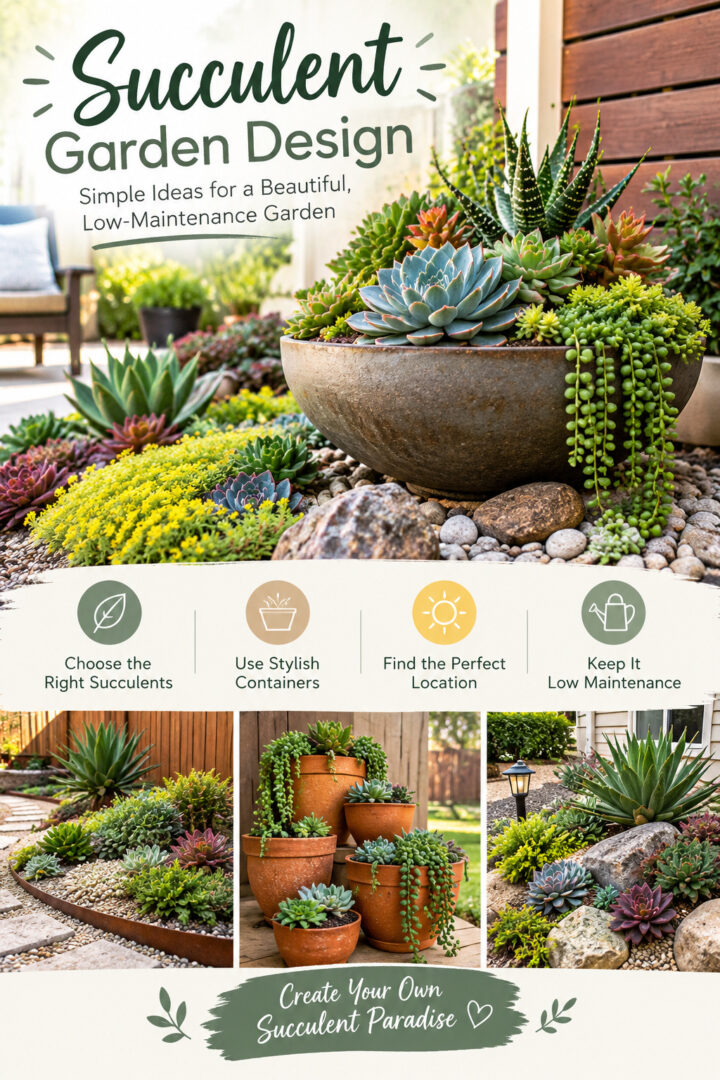
A good succulent garden design can turn a dry, plain yard into a space you love to look at. Succulents come in bold shapes, soft colors, and neat patterns. They need very little water once they are settled. That makes them a smart choice for many homes in the United States.
In this guide, you will learn how to plan a succulent garden design that fits your yard, your climate, and your time. You will get simple layout ideas, a clear step by step plan, and care tips that keep the garden looking good in every season.
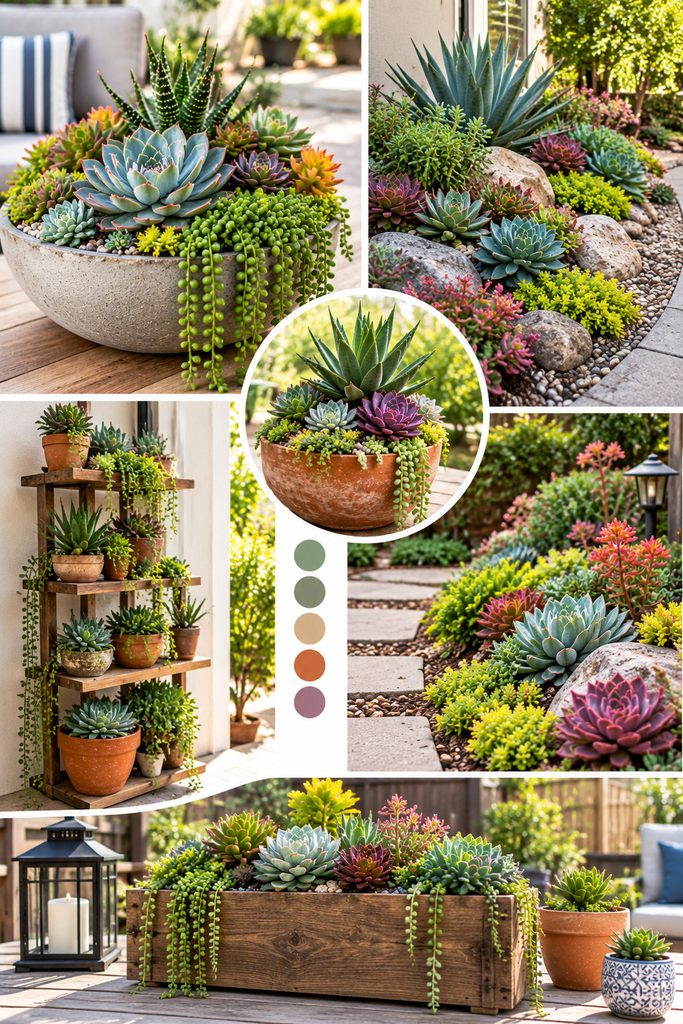
What Is Succulent Garden Design?
Succulent garden design is the art of placing succulent plants in a way that looks planned and balanced. You mix height, color, and texture on purpose. You also give each plant the sun, soil, and space it needs to grow well.
A strong design is not about using the most plants. It is about using the right plants in the right spots. A large agave can be a focal point. A row of echeveria rosettes can be a soft border. Low sedum can fill gaps like a living carpet. When you plan those roles first, your garden looks full and calm, not random and crowded.
Start With Sun, Soil, and Climate
Before you buy a single plant, look at your yard. Most succulents need at least six hours of sun a day. Watch the space in the morning and in the afternoon. Note where shade falls from trees, fences, and the house.
Next, check your climate. In warm states like California, Arizona, Texas, and Florida, many succulents can live outdoors all year. In colder states, frost can harm them. First frost dates are only averages, not a forecast for your exact home, so plan to protect tender plants or grow them in pots you can move indoors in winter.
Soil is the third key part of any succulent garden design. Succulents hate wet feet. If water sits around the roots, the roots can rot. Your soil must drain fast. If your yard soil is heavy clay, grow succulents in a raised bed, a rock garden, or in succulent garden pots instead. That one choice solves most problems before they start.
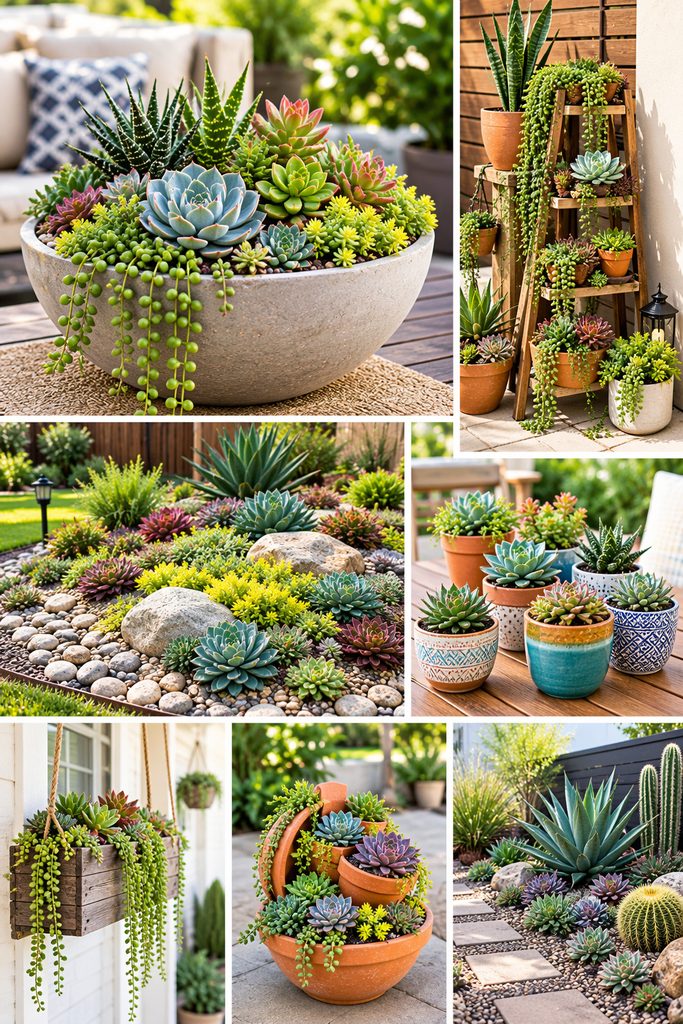
Pick a Layout That Fits Your Space
You do not need a big yard for a great outdoor succulent garden. Pick a layout that matches the space you have.
A rock garden works well on a slope or in a dry corner. Rocks hold the shape, help drainage, and make rosettes stand out.
A raised bed works well if your soil drains poorly. You control the soil mix, and the raised edge makes the design look neat.
A border works well along a walkway, a driveway, or a front porch. Repeat the same plants in a pattern, and the whole line looks planned.
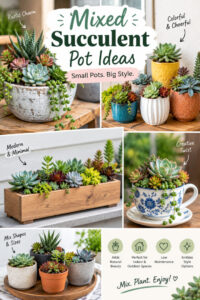
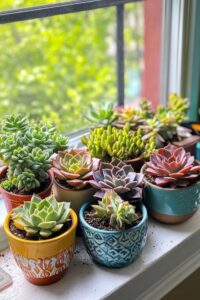
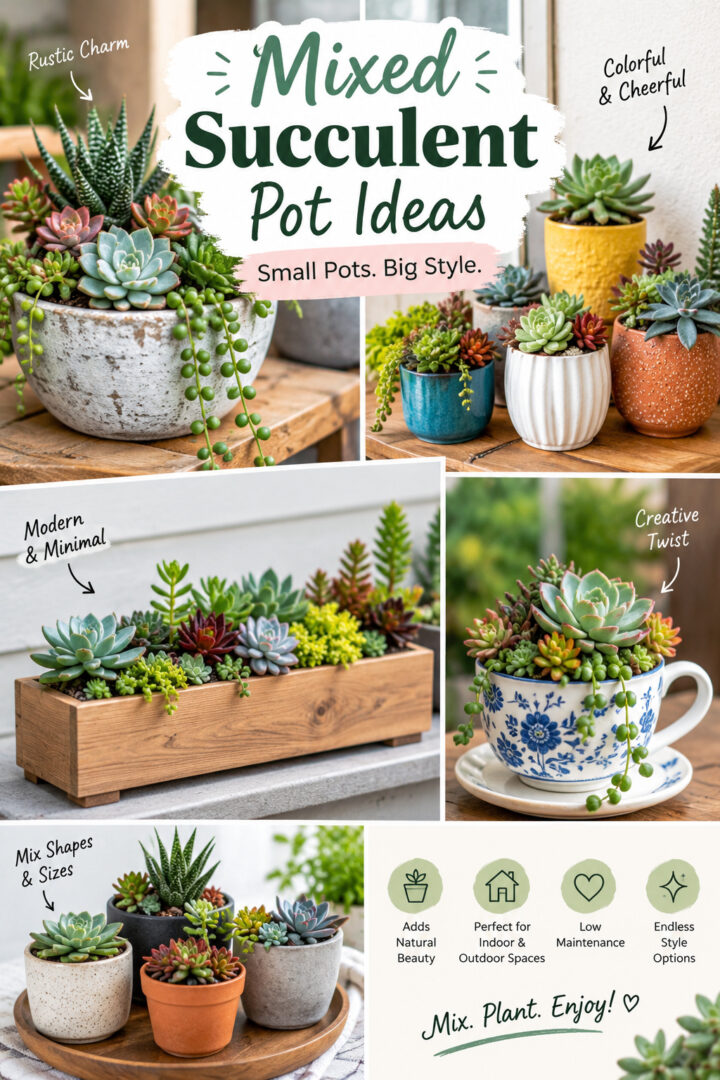
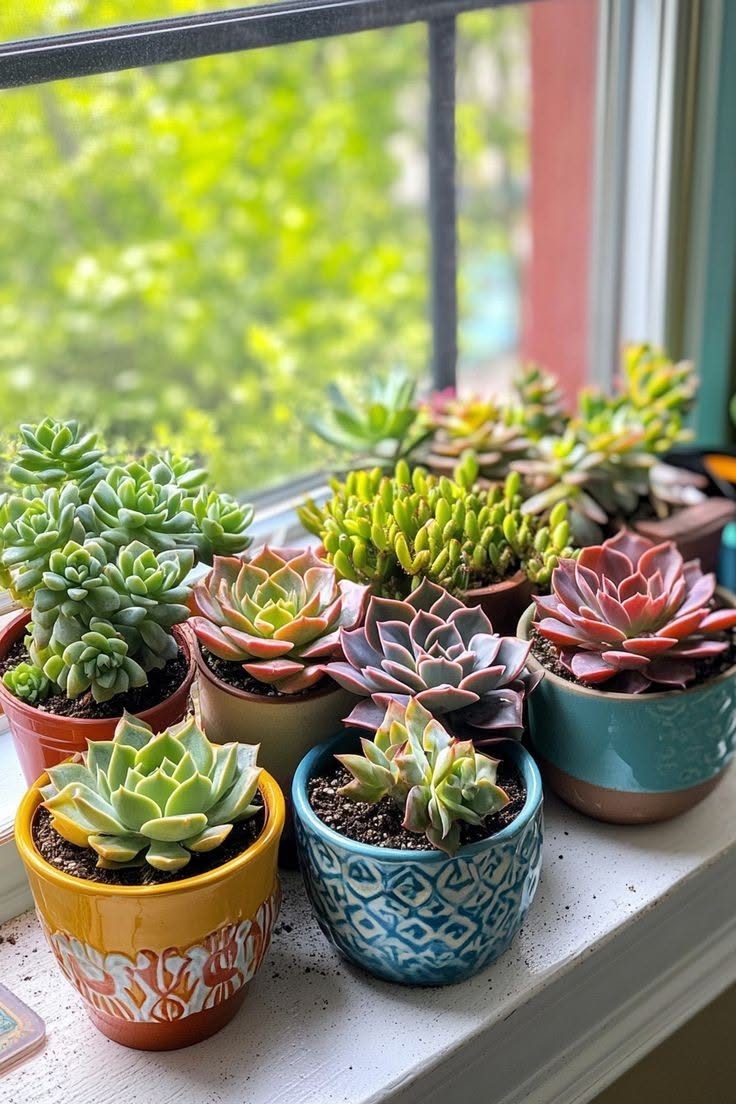
A container garden works well for a patio, a balcony, or a small yard. Group succulent garden pots of different heights. You can move them for more sun, and you can bring them in when frost is forecast as an average risk in your area.
The best succulent garden design is the one you can care for with ease. Start small. You can always add a new bed or a new group of pots next season.
Designing indoors instead? See our mini potted plants guide ideas for desks, shelves, and windowsills.
Best Plants for a Balanced Design
Think of plants in three groups. Focal plants are large and bold. Use one or two, such as agave, aloe, or a large cactus. Place them where you want the eye to go first.
Filler plants are medium and neat. Echeveria, haworthia, and other rosette succulents work well here. Plant them in groups of three or five. Odd numbers tend to look more natural.
Ground cover plants are low and fast to spread. Sedum and other trailing succulents fill gaps, soften the edge of rocks, and help hold the design together.
Mix color as well as shape. Pair blue green rosettes with deep green plants. Add a plant with red tips or a warm orange tone. Repeat each color at least twice in the bed. That repeat is a simple trick that makes a succulent garden design look like it was planned by a pro.
7 Succulent Garden Design Ideas You Can Copy
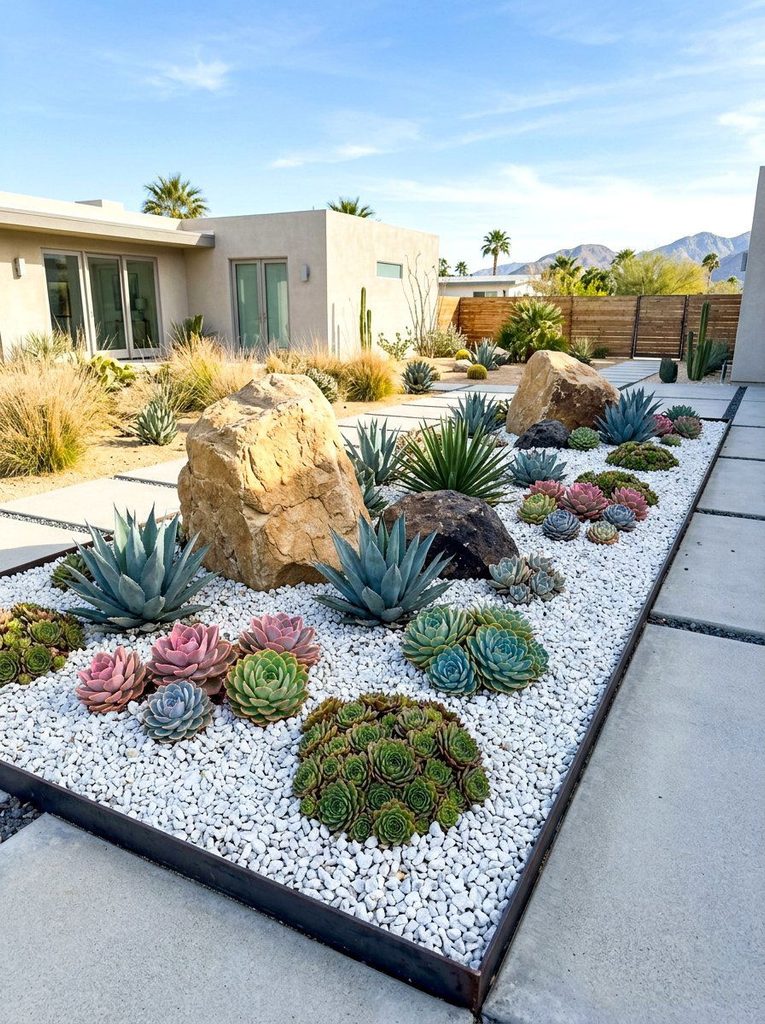
1. The Modern Rock Garden
Use large, flat rocks, pale gravel, and a few bold agave and cactus plants. Keep the lines clean. Leave space between plants. This look fits well with modern homes in the Southwest and in Southern California.
2. The Color Wheel Bed
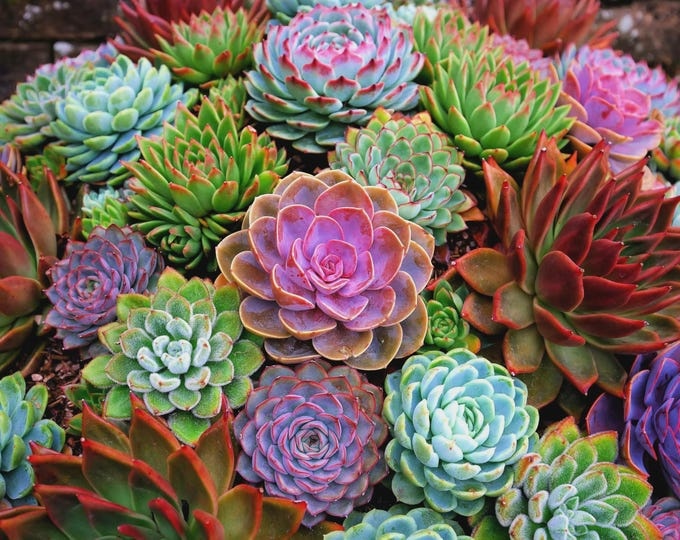
Plant rosettes in bands of color. Start with pale green, move to blue, then to pink and red tips. The bands draw the eye across the bed. This is one of the most shared succulent garden design ideas because it looks great in photos.
3. The Front Yard Water Wise Garden
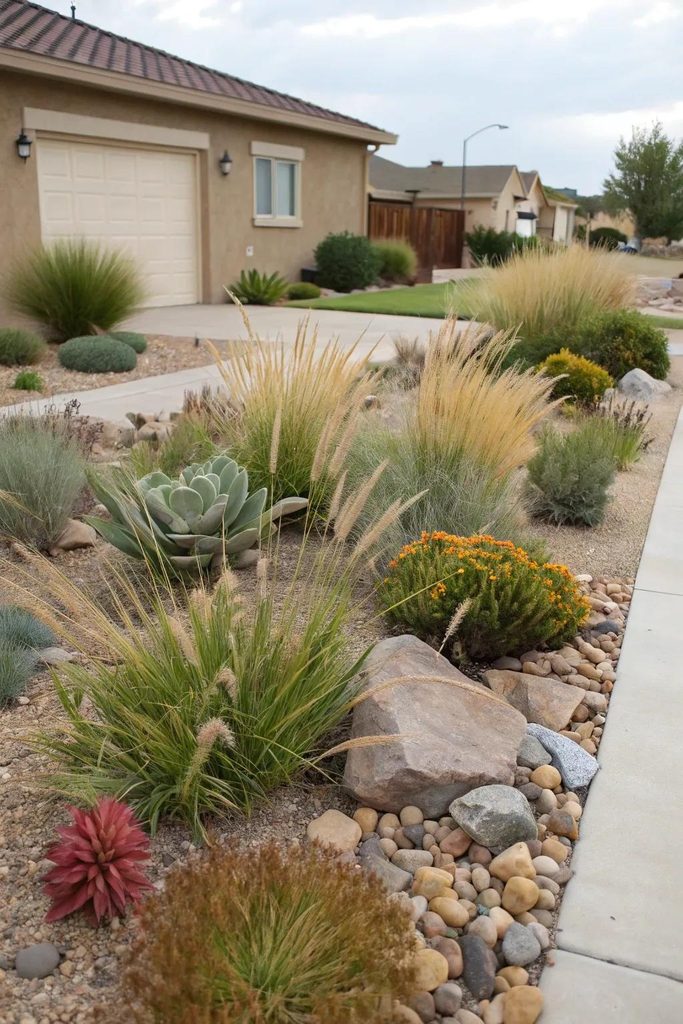
Replace a patch of thirsty lawn with succulents, gravel, and stone. You will use less water, and the yard will look neat all year. Many cities in dry parts of the United States support this kind of yard, since it fits local water rules and dry summers.
4. The Patio Pot Garden
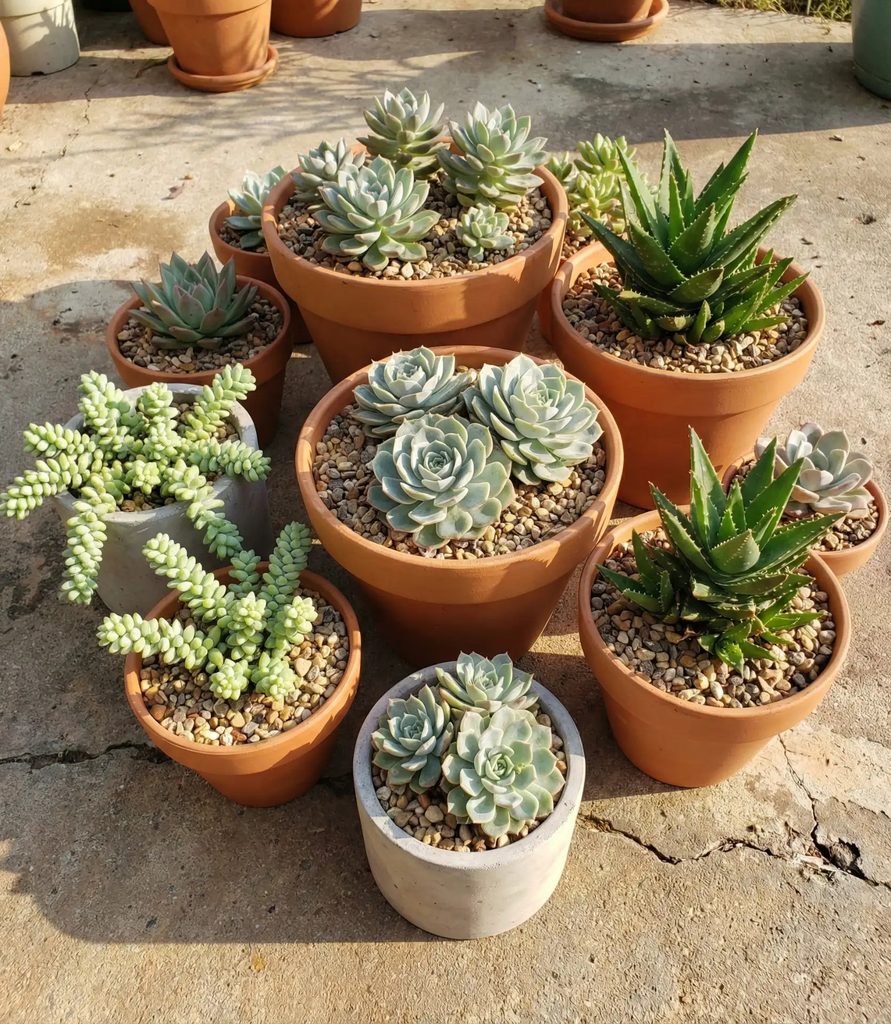
No yard? No problem. Group a mixed succulent pot with taller pots and low bowls on your patio. Use pots in the same color family for a clean look. A patio succulent garden design can be just as rich as a bed in the ground, and it is easy to change when you want a new look.
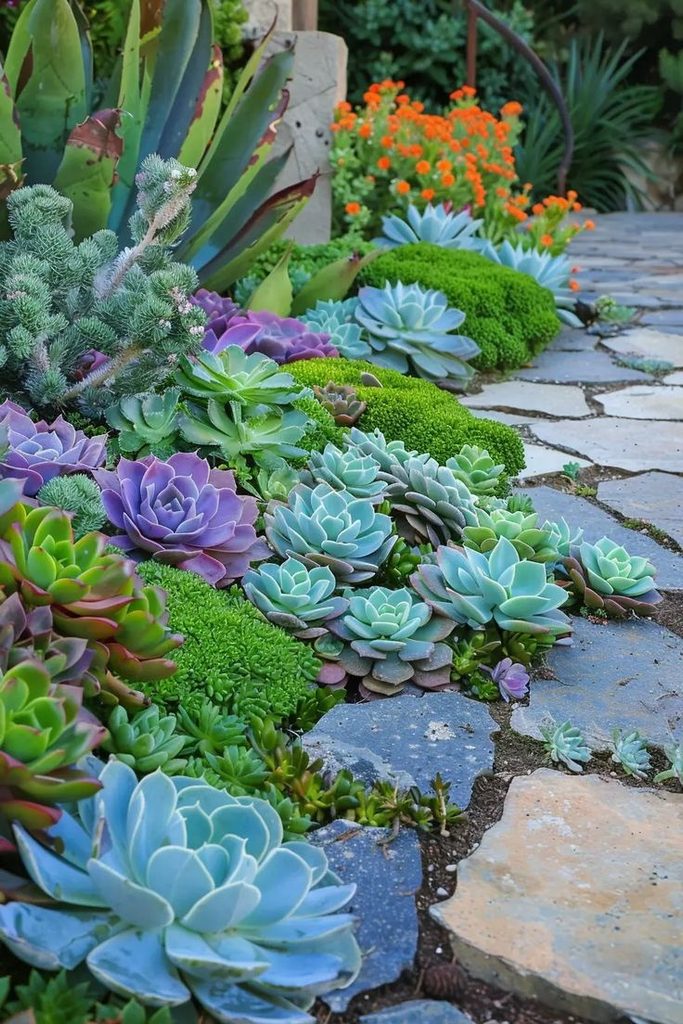
5. The Pathway Border
Line a front walk with low rosettes and trailing sedum. Add a taller plant at each end. Guests see a clear, pretty path, and the plants get the sun and drainage they love along the edge of the walk.
6. The Desert Theme Garden
Use sand toned gravel, terracotta pots, cactus, and agave. Add one or two large stones. This theme feels at home in Arizona and Nevada yards, but it can work in any sunny, dry spot.

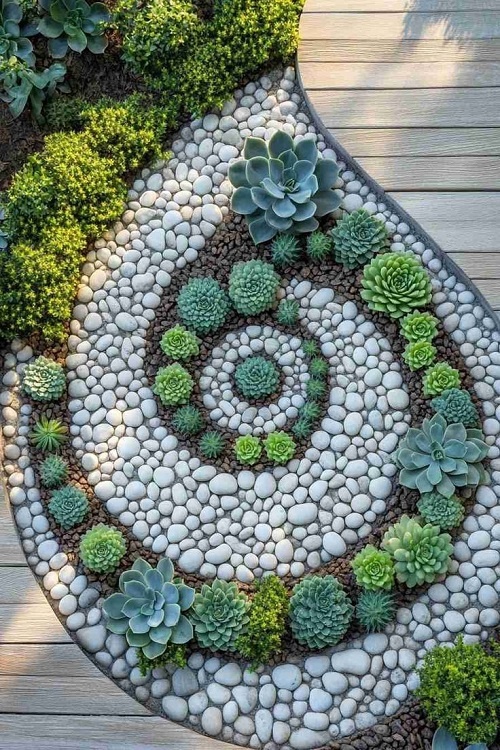
7. The Small Space Spiral or Circle Bed
Mark a circle in a sunny corner. Plant a tall focal plant in the center. Ring it with rosettes, then with ground cover at the edge. A round bed is a classic succulent garden design for small yards because it looks full from every side.
How to Build Your Garden, Step by Step
Step 1: Sketch a simple plan on paper. Mark sun and shade. Mark where the focal plants will go. Keep the sketch simple. You can adjust it as you plant.
Step 2: Clear the area. Pull weeds and old roots. Level the soil, or build your raised bed and fill it with fast draining soil.
Step 3: Fix the soil. Mix in coarse sand, pumice, or perlite to help water drain. Aim for soil that does not stay soggy the day after you water.
Step 4: Place rocks and pots first. Set large stones and empty succulent garden pots where you plan to use them. Step back and look. Move them until the shape feels balanced.
Step 5: Set the plants while they are still in their nursery pots. Place focal plants first, then rosettes, then ground cover. Check the spacing. Most succulents need room for air to move between the leaves.
Step 6: Plant for real. Dig a hole just as deep as the root ball. Set the plant in, fill around it, and press the soil with care. Leave the crown of the plant just above the soil line.
Step 7: Add gravel or small pebbles on top. This top layer keeps soil off the leaves, cuts splash, and gives your succulent garden design a clean, finished look.
Step 8: Water once, lightly, after a few days. Let the roots settle first. Then follow the soak and dry method from then on.
Water, Care, and Seasons
Water is where most new gardens fail. The rule is simple. Soak the soil well, then let it dry out all the way before you water again. In hot summer weeks, that may be every week or two for a new garden. For a settled garden, it may be less often. In winter, most succulents grow slowly and need very little water.
Feed lightly, if at all. A weak feed in spring is enough for most plants. Too much feed makes soft, weak growth that burns in strong sun.
Clean the garden once a month. Pull dry leaves from rosettes. Cut back any trailing plant that covers its neighbors. That small bit of care keeps a succulent garden design looking sharp and helps air flow, which cuts rot.
In winter in cold areas, cover tender plants on frost nights or move pots to a garage or a bright room. Remember that frost dates you see online are long term averages for a town, not a promise for your yard on a given night.
Not sure how to tell when the soil is fully dry? Read our guide on how often should you water succulent plants in summer and winter.
Common Mistakes to Avoid
The first mistake is planting in soil that drains poorly. If you fix only one thing, fix drainage. Good drainage is the base of every long lasting succulent garden design.
The second mistake is crowding. Plants look small in the store, but many grow fast in warm months. Leave space, even if the bed looks a bit open at first. It will fill in.
The third mistake is mixing plants with very different water needs in one bed. Keep thirsty flowers in a different bed. Your succulent garden ideas will work much better when all the plants in one area like the same care.
The fourth mistake is shade. If rosettes stretch and turn pale, they need more sun. Move pots to a brighter spot, or trim back the plant that shades them, a little at a time.
Frequently Asked Questions
What is the best time of year to start a succulent garden design?
Spring is best in most of the United States. Soil is warm, days are long, and plants have time to root before summer heat or winter cold. Fall can also work in warm states with mild winters.
Can I do a succulent garden design in a small yard?
Yes. Use a circle bed, a narrow border, or a group of pots on a patio. A small succulent garden design can look just as full as a large one when you repeat color and shape.
How much sun does an outdoor succulent garden need?
Most succulents need at least six hours of direct sun a day. In very hot areas, light shade in the late afternoon can help prevent leaf burn in summer.
Do I need special soil for succulent garden designs?
Yes, you need fast draining soil. Use a cactus and succulent mix, or add sand and perlite to your bed soil so water does not sit around the roots.
How do I keep my design looking neat all year?
Repeat plants and colors, leave space for growth, remove dry leaves each month, and top the soil with gravel. Those habits keep most succulent garden designs looking clean with very little work.
Final Thoughts
A beautiful succulent garden design is not about spending a lot or filling every inch. It is about a clear plan, fast draining soil, the right plants for your sun and climate, and a layout you can care for with ease.
Start with one bed or one group of pots. Use the ideas in this guide, and adjust them to your home. Once your first succulent garden design fills in, you will have the skill and the confidence to grow it, one sunny corner at a time.