

An unused fireplace opening is wasted space with a draft problem — the chimney pulls warm air out of the room all winter. That is why so many homeowners now fit an electric fireplace into the opening instead. Learning how to fit an electric fireplace into an existing opening is a measuring job, not a building job — no gas line, no masonry. In practice, how to fit an electric fireplace comes down to four things: measure the opening, seal the old flue, get power to the firebox, and finish with trim.
One boundary: this guide covers an insert or small stove in an existing firebox. A wall-mounted or recessed unit is a different job — see our guide on how to install an electric fireplace instead.
Before You Fit an Electric Fireplace, Measure the Opening
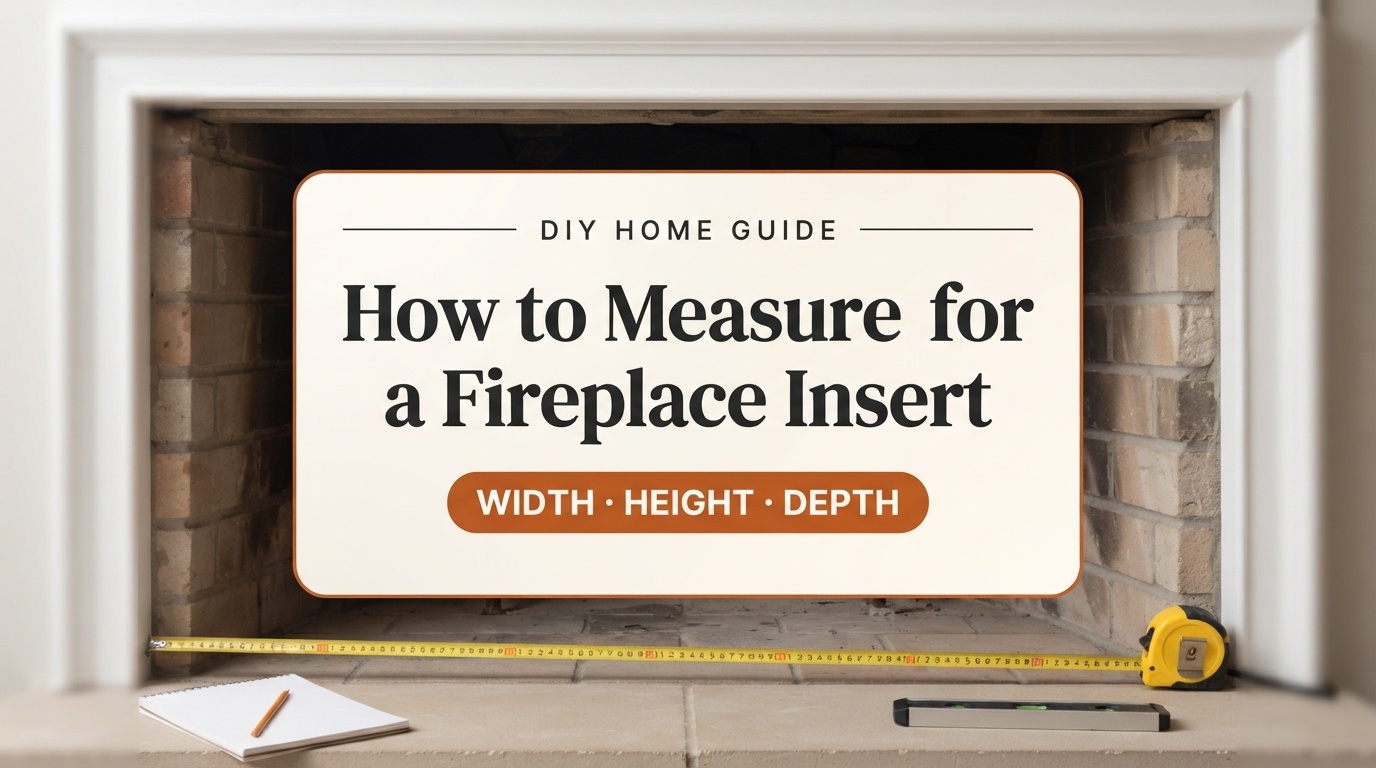
Every fit starts with four numbers, because openings are rarely the size the box label assumes. Measure the front width, the height from hearth to lintel, the depth to the back wall, and the back width — most fireboxes taper toward the back, so a unit that clears the front can still jam halfway in. Write all four down before you shop.
For the full method, including clearances, work through our guide on how to measure for a fireplace insert first — ten minutes that prevents the most common ordering mistake.
The Four Measurements That Decide the Fit
Front width and height size the trim, whose panel must overlap the opening on every side or gaps will show. Depth sizes the body: the insert must sit inside without its vents pressed to the back wall. Back width is the silent deal-breaker, since an old firebox can taper two or three inches narrower than the front. Check the hearth with a level, too — a slope makes a fitted unit rock when the fan runs.
How to Fit an Electric Fireplace in 4 Steps
With the opening measured and the right unit chosen, the fitting itself is an afternoon of work. No step needs a specialist tool, and only one — adding a new outlet — might need a licensed electrician.
Step 1: Clean the Firebox and Seal the Flue
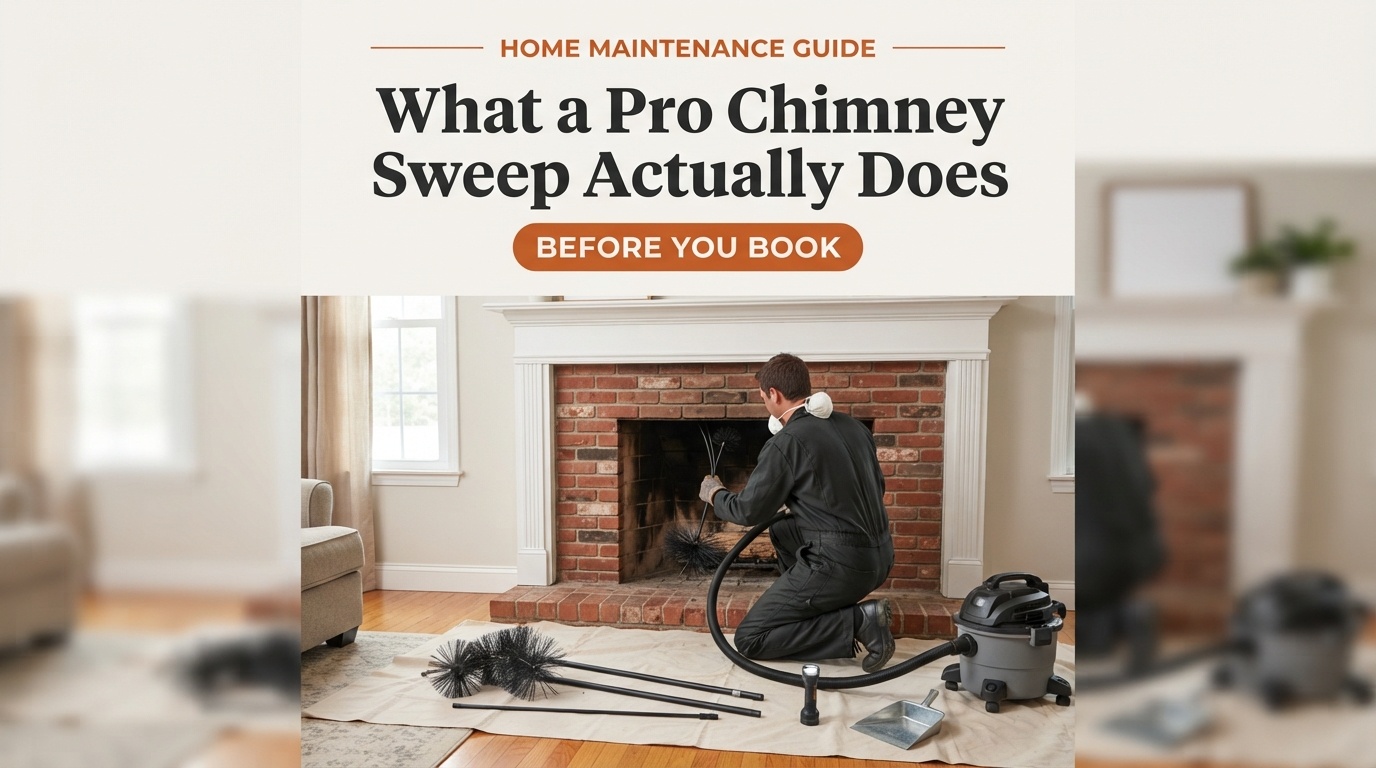
Sweep out ash, vacuum the firebox, and wipe the walls clean. Close the damper and seal it — a chimney balloon, a fitted insulation board, or a flue-blocking plate stops heated air escaping upward and cold downdrafts washing over the unit. Cap the chimney too, so rain cannot reach the unit. You are not altering the chimney, just closing it off — reversible if a future owner wants a real fire again.
Step 2: Fitting an Electric Fireplace Starts With Power and Clearances
An insert needs one thing the old fire never did: a socket — ideally an outlet already inside or beside the firebox. A new outlet inside the opening, added by an electrician, is the cleanest fix. Or run the unit’s own cord to the nearest room outlet — never pinched, never under a rug. Never use an extension cord or power strip: manufacturers void warranties over it, and the heater draws enough current to make it a genuine risk.
Clearances matter just as much. The heater outlet needs open air in front, the intake must stay unblocked, and combustibles — curtains, rugs, throws — keep the distance the manual states. Fitting an electric fireplace safely is mostly respecting those few inches.
Step 3: Slide the Unit In and Level It
Two people make this easier: inserts are awkward, and dragging one scratches the hearth. Set the unit down, check the level, and adjust the supplied feet or thin shims until it sits still. Leave the manual’s gap behind and beside the unit — that space is how the heater breathes. That positioning is the heart of how to fit an electric fireplace: back far enough for the trim to sit flat, not so far that the flame disappears into the dark of the box.
Step 4: Test Everything Before the Trim Goes On
Plug in and test now, while you can still reach everything. Run the flame alone, then full heat, cycle the thermostat, and try the remote from the sofa. Listen for fan rattle: at this stage it is a two-minute levelling fix. After the trim goes on, every adjustment means removing it again.
How to Fit an Electric Fireplace Trim Around the Opening
Most inserts ship with a trim frame sized to overlap the opening and hide the gap. Hold it in place and check the overlap is even — old openings are seldom square, so one side may overlap more — then fix it as directed. Where the gap is irregular, a slim backer frame or a bead of high-temperature sealant behind the trim edge closes it invisibly. Final check from across the room: the unit should read as a fireplace that was always there.
Insert or Freestanding Stove: Which One Belongs in Your Opening?
An insert is built for this job — a self-contained firebox with its own surround, designed to disappear into it. But it is not the only way to fit an electric fireplace into an old firebox. A compact freestanding stove can stand inside a tall, wide opening, or sit on the hearth before a shallow one, bringing two advantages: nothing to trim, and it moves with you. The trade-off is purely the look: built-in versus appliance-in-a-fireplace. Price the whole job before you commit: our breakdown of how much a fireplace insert costs covers unit prices, trim and the electrician’s visit.
When a Stove Beats an Insert
Choose the stove when the opening is too shallow or tapered for insert sizes, when the firebox is an odd shape you do not want to force, or when you want nothing permanent changed. Choose the insert for a standard-size opening and the built-in look.
Mistakes to Avoid When You Fit an Electric Fireplace
Four mistakes account for nearly every bad fit. First, skipping the flue seal: the unit heats well yet the room still feels drafty, because the chimney never stopped working. Second, the extension cord — the one genuinely dangerous shortcut. Third, blocking the heater’s air path with a rug or furniture, so the overheat protection trips and the unit keeps cycling off. Fourth, ordering by front width alone and discovering the taper problem with the unit already in the driveway. Most failed attempts to fit an electric fireplace trace back to one of these four.
Recommended Fireplace for a Wide Opening
For a wide, tall opening, a freestanding stove is the simplest fit of all — no trim, no surround. Our freestanding electric fireplace stove is a 24-inch black stove with a glass door and side windows that suits exactly this job. For the full range, browse the Fireplace category.
Conclusion
So, how to fit an electric fireplace into an existing opening? Measure four numbers, seal the flue, put real power within reach, level the unit, test before you trim, and finish with a surround. Nothing on that list needs a builder, and all of it is reversible. The reward: the fireplace you already have, working again — with a thermostat and a remote. Done well, how to fit an electric fireplace is a one-afternoon answer to a room that has felt unfinished for years.
Frequently Asked Questions
Can you fit an electric fireplace into any existing fireplace opening?
Almost any. Standard openings take standard inserts directly. Shallow, narrow or tapered fireboxes need a compact insert or a freestanding stove instead — which is why back width and depth matter as much as front width.
Do I need to seal the flue before fitting an electric fireplace?
Yes — not for safety, but for comfort. An open flue lets warm air escape and cold air fall in. Closing the damper and sealing it with a chimney balloon or blocking plate stops both, fully reversibly.
Can I plug the insert into an extension cord behind the unit?
No — heaters draw high current, and manufacturers prohibit extension cords and power strips. Use an outlet inside the opening, have one added by an electrician, or run the unit’s own cord to the nearest wall outlet.
Does fitting an electric fireplace damage the existing firebox?
No. Fitting is non-structural: the unit sits in the opening, the flue seal is removable, and the trim fixes to the unit or surround face, not historic masonry. Everything can come back out, returning the fireplace to wood use.
How long does it take to fit an electric fireplace?
For a prepared opening with power nearby, one to two hours — cleaning and sealing take longest. Add an electrician’s visit for a new outlet inside the firebox, and the job still finishes the same day.







One Response