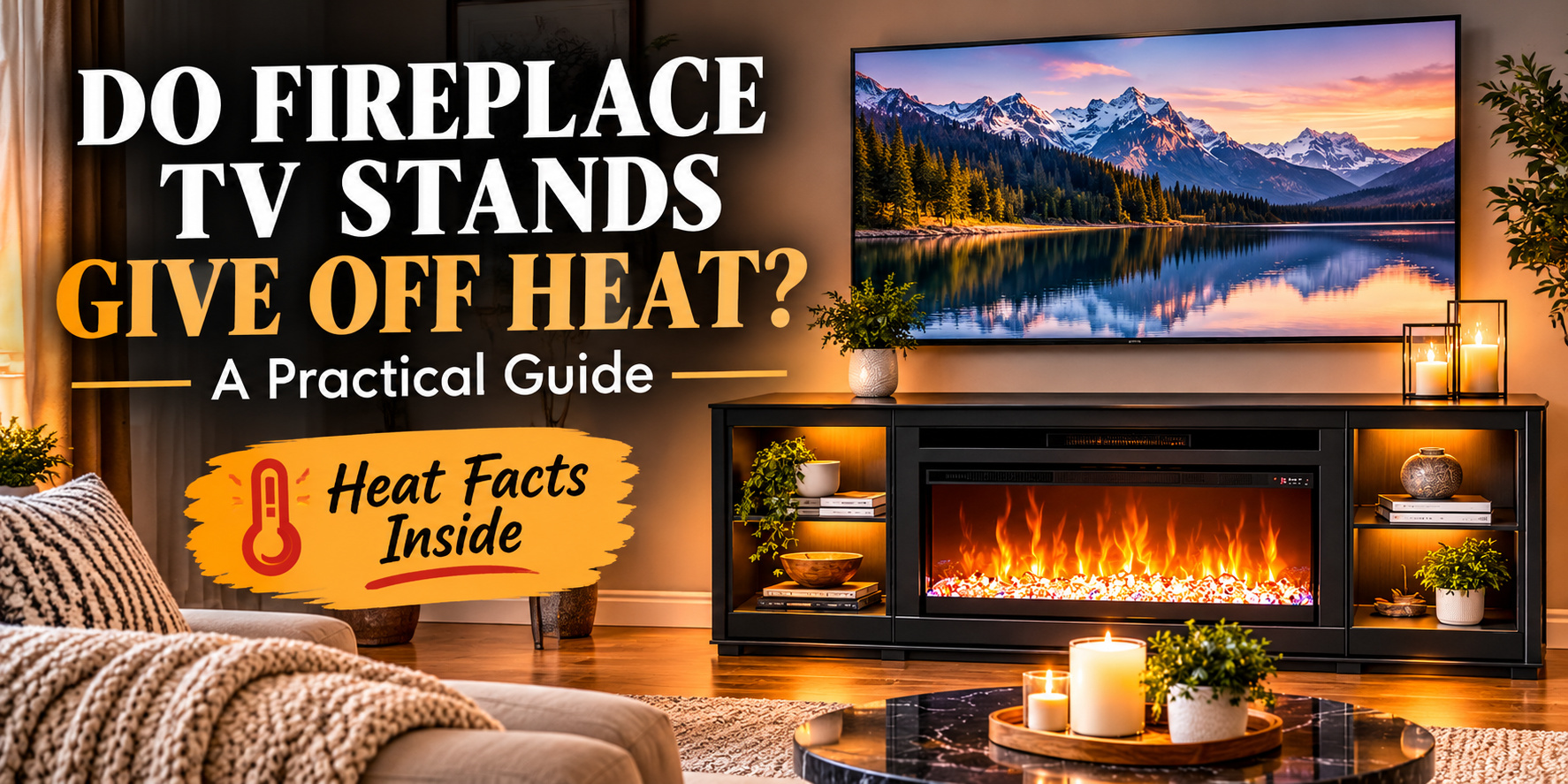

It is the layout every living room photo on the internet seems to use: a wide screen floating above a ribbon of flame. So, can you put a TV over a fireplace in a real home, with a real fire burning under it? Yes — and millions of American homes already do. But the honest answer is “yes, if”: if the fireplace type is right, if the clearances are right, and if the height still lets you watch a two-hour movie without a stiff neck. Done carelessly, you can put a TV over a fireplace and regret it by the second movie; done properly, it is the best-looking seat in the house.
This guide breaks the question down by fireplace type, because the answer is very different for an electric unit than for a wood fire. Then it covers the only two risks that actually matter — heat and viewing height — with the numbers that keep both under control.

Can You Put a TV Over a Fireplace? The Answer by Fireplace Type
Heat is the whole ballgame. A TV is electronics, and electronics hate sustained heat. What changes from one fireplace to the next is how much heat reaches the wall above it — which is why the honest answer to “can you put a TV over a fireplace” is always “which fireplace?”
Electric Fireplaces: The Easiest Yes
An electric fireplace is the safest partner for a TV, and it is not close. There is no combustion, no flue and no hot chimney breast. On most electric models the heated air is pushed out of a front vent at low level, toward the room, not up the wall — and flame-only mode produces no heat at all, so movie night can run on pure glow. Slim recessed and wall-mounted models are designed for exactly this pairing: when you put a TV over a fireplace of this type, the two appliances share one wall like they were built together. If you are free to choose the fire first, choose electric — putting a TV over a fireplace gets simpler than with any other fuel.
Gas Fireplaces: Yes, With Clearances
A gas fire is a real flame, and its flue sends real heat up through the wall or chimney breast above the firebox. Many homeowners still put a TV over a fireplace that burns gas, but the safe version follows both manuals to the letter: the fireplace maker’s clearance above the unit, and the TV maker’s limit on surrounding temperature. A deep mantel between the fire and the screen helps a lot, because it pushes the rising warm air out into the room instead of letting it wash over the TV. Plenty of owners put a TV over a fireplace that burns gas and never have a problem — the difference is always the clearance.
Wood-Burning Fireplaces: The Risky One
Wood is the hardest case. A roaring open fire sends the most heat up the chimney breast, the temperature swings are the least predictable, and soot drifts onto everything nearby. Mounting a TV directly above an open wood fire is the one combination installers routinely advise against. If the wood fire is staying, the safer layouts are a deep, heat-shielding mantel with a generous gap, an enclosed stove instead of an open fire, or the TV on a different wall entirely. And if you do put a TV over a fireplace that burns wood, check the wall temperature after a long, hot burn before the bracket goes up.
The 2 Real Risks When You Put a TV Over a Fireplace
Strip away the forum arguments and only two things can actually go wrong: the screen slowly cooking, and your neck paying for the view.
Heat Rising Into the Screen
When you put a TV over a fireplace, this is the risk to engineer out first. Most TV makers rate their screens for rooms up to roughly 95–100°F, and the wall directly above a working fireplace can pass that if hot air is allowed to climb straight into the back of the set. The fix is mechanical rather than complicated: keep the gap between the fireplace top and the TV bottom (12 inches is the common starting point for electric models), let a mantel or the fireplace’s own shallow body deflect the air outward, and test before you commit. Run the fire on high for an hour, then hold your hand — or better, a cheap infrared thermometer — on the wall where the TV will sit. If the spot feels more than warm, the layout needs more clearance.
Viewing Angle and Neck Strain
The second risk is comfort. Seated eye level on a typical sofa is about 42 inches from the floor, and the center of the TV wants to live near that height. Stack a tall fireplace, a mantel and a clearance gap underneath and the screen’s center can end up at 55 inches or more — fine for a reclined lean-back, tiring for everyday viewing. Low-profile fireplaces dodge most of this problem, which is why the slim electric designs pair so well with a screen. A tilting mount buys back a few degrees, and a pull-down mount over the mantel solves it completely for traditional fireplaces. Before you put a TV over a fireplace of any kind, tape the screen’s outline on the wall at the planned height and live with it for an evening — your neck will give you the verdict.
How High, How Far: Heights and Clearances That Work
These are the working numbers designers use when they put a TV over a fireplace and want it to look right and feel right:
- Gap above the fireplace: about 12 inches between the top of an electric fireplace and the bottom of the TV is the comfortable minimum; follow the manual for gas.
- TV center height: aim for 42–48 inches from the floor for sofa viewing. A 17 inch tall electric fireplace plus a 12 inch gap puts the TV’s bottom edge near 29 inches, so the center of a 65 inch screen (about 32 inches tall) lands near 45 inches — right in the comfort zone.
- Viewing distance: roughly 7 feet for a 55 inch TV, 8 feet for a 65 inch, and 9 to 10 feet for a 75 inch.
- A mantel earns its keep: even a shallow mantel shelf acts as a heat shield and gives the wall a visual break between flame and screen — a small detail that makes any TV over a fireplace look intentional rather than squeezed in.
Pairing TV Size With Fireplace Width
Proportions matter as much as clearances. The classic rule is that the TV should not be wider than the fireplace below it, or the wall looks top-heavy. A 60 inch wide fireplace carries a 55 to 75 inch TV comfortably — a 65 inch TV is about 57 inches wide, so it sits inside the fireplace’s footprint with room to spare. When in doubt, size the fireplace to the TV you own, not the other way round. Get the pairing right and the decision to put a TV over a fireplace looks deliberate from every seat in the room.
Mounting and Cables: Doing the Job Properly
The mount itself is ordinary TV work: a bracket fixed into studs, rated for the screen’s weight, with the fireplace switched off and cool while you drill. The order matters: fireplace first, clearances checked, then the TV — put a TV over a fireplace in that sequence and nothing has to move twice. If the wall is being opened up for a recessed fireplace anyway, that is the moment to plan the TV position too — our step-by-step guide on how to install an electric fireplace covers the framing, clearances and power side in detail.
Cables are where media walls get untidy. Three rules keep it clean and safe: never run a standard power cord or HDMI cable loose inside the wall cavity unless it is rated for in-wall use; keep every cable out of the fireplace’s own cavity and away from its vent; and put a proper outlet behind the TV (an electrician can add one) instead of trailing an extension lead. A recessed cable plate behind the screen keeps the whole wall looking wireless — and every cable you plan before you put a TV over a fireplace is one you will not be fishing out of the wall later.
Recommended: A Fireplace Built for the Wall Under the TV
If the plan is a media wall, the easiest route is an electric model designed for it. Our 60 inch electric fireplace is only 3.5 inches deep, so it recesses into the wall or hangs flat beneath the screen, and its 17 inch height keeps a 65 inch TV’s center close to eye level. Flame-only mode means zero heat under the screen on movie nights, and with the heater on, the warm air is aimed at the room — 1,500W with a thermostat, a 12-hour timer and a remote you never have to leave the sofa for. Browse more models made for this layout in our Fireplace category. It is, in short, a fireplace designed for anyone who wants to put a TV over a fireplace and stop thinking about it.
Conclusion
So, can you put a TV over a fireplace? Yes — provided you respect the two things that decide it: heat and height. Choose an electric fireplace and the heat question mostly answers itself; keep roughly 12 inches of clearance, park the screen’s center near seated eye level, and size the fire to the TV’s width. Do those things and the media wall stops being a compromise and becomes what it looks like in the photos — the best seat in the house, twice over. Thousands of living rooms prove you can put a TV over a fireplace beautifully; now yours has the numbers to do it safely.
Frequently Asked Questions
Is it safe to put a TV over a fireplace?
With an electric fireplace, yes — it is the layout these models are designed for, especially with flame-only mode producing no heat at all. With gas, safety depends on keeping both manufacturers’ clearances and checking the wall temperature. Over an open wood fire, it is the one pairing to avoid.
How much space should there be between a TV and a fireplace?
About 12 inches between the top of the fireplace and the bottom of the TV is the common starting point for electric models. Gas fireplaces follow the clearance in their manual, which can be more. More space is always safer than less, and a mantel shelf in the gap works as a heat shield. However you put a TV over a fireplace, never go below the fireplace manual’s stated minimum.
Will heat from a fireplace damage a TV?
It can if hot air washes over the screen for hours — sustained heat above about 100°F around the set shortens electronic life. The defenses are simple: clearance, a mantel or shallow firebox deflecting the air outward, a one-hour heat test on the wall before mounting, and flame-only mode on electric models when you want zero heat. Put a TV over a fireplace with those defenses in place and heat stops being a reason to avoid the layout.
Can you put a TV above a fireplace without a mantel?
Yes. A mantel helps deflect heat, but it is not required — plenty of media walls run a recessed electric fireplace directly under the screen with just the clearance gap. Without a mantel, keep the full 12 inch gap and prefer a tilting mount so the screen angle stays comfortable.
What size TV looks best over a 60 inch fireplace?
A 55 to 75 inch TV, with 65 inch the sweet spot: at about 57 inches wide it sits just inside the fireplace’s 60 inch width, so the wall looks balanced. Keep the screen no wider than the fireplace below it and the proportions take care of themselves.