

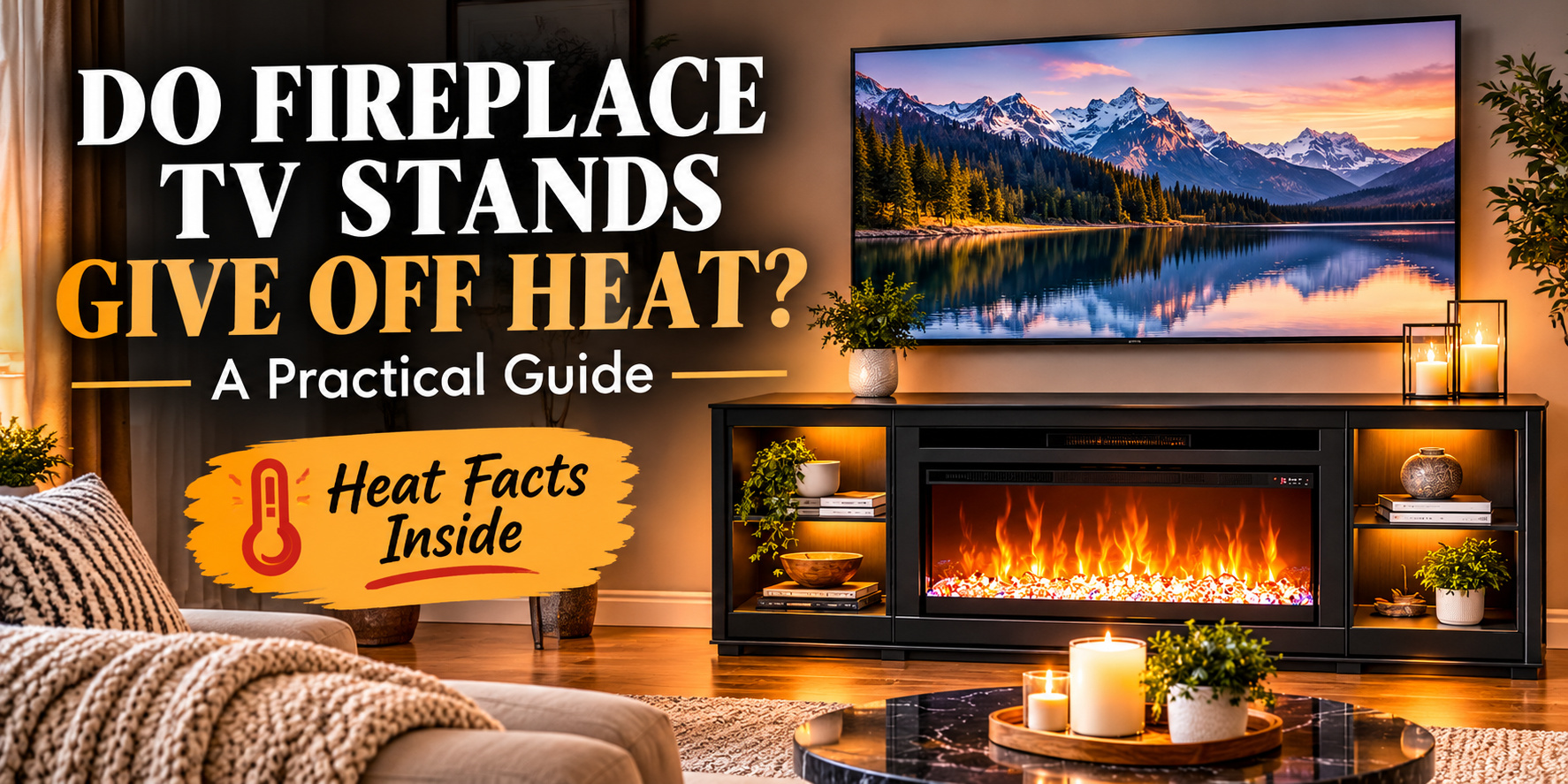
A fireplace tv stand promises the best part of a fireplace — the warm glow — without the mess. It pairs a TV console with a built-in electric firebox, so the flame is a light effect, not a real fire. If you are wondering whether one is safe around your TV, kids and home, the short answer is yes.
Electric fireplace tv stands are among the safest ways to enjoy a fireplace effect indoors because there is no real flame, no combustion and no carbon monoxide. Nothing burns, so there are no sparks, no smoke and no chimney to maintain.
That safety only counts, though, if the model has the right protection features and you follow a few basic placement rules. Here is what to check before you buy.
Why an Electric Fireplace TV Stand Is Safer Than Wood or Gas
A wood fire is real combustion. It produces sparks, creosote, smoke and carbon monoxide, and it needs a chimney, a hearth and constant attention. A gas fireplace removes some of that work but still burns fuel, still produces carbon monoxide and still needs venting and a gas line.
An electric insert works differently: a heating element and a fan, plus lights and an LED effect that imitates flames. The “fire” cannot jump, spark or leak, because it is not a fire at all. There is no fuel in your home and nothing to light.
That does not mean zero risk — an electric unit is still a heater in a wooden cabinet. The real safety question is how the heat is made, where it goes, and what happens if something goes wrong. Good models make those answers reassuring.

Will the Heat Hurt Your TV?
This is the question buyers ask first, and it makes sense: heat rises. So why does the fireplace tv stand not cook the screen sitting right above it?
The answer is in the venting. On nearly all of these units, the heater blows warm air out through vents at the front of the insert, near the floor — not up the back of the cabinet. The warmth moves into the room, toward your sofa, while the top panel and the TV above stay close to room temperature.
What to Check on Any TV Stand with Fireplace
The firebox is built into the furniture by the maker, with the clearances already worked out. Your job is simpler: follow the maker’s guidance for TV size and weight, keep the front vents clear of rugs, baskets and blankets, and leave the airflow open while the heat runs. If the front feels only mildly warm, your TV sits in the position the maker tested.
Safety Features to Look For in a Fireplace TV Stand
When you shop for a fireplace tv stand, treat the safety list like a checklist.
Overheat Protection and Auto Shutoff
Overheat protection is the single most important feature. If the insert gets too hot — a vent is blocked, the fan struggles — a sensor cuts the heat before temperatures become a problem. Look for it named plainly in the specifications. If a listing does not mention it, keep shopping.
Heat Lock, a Timer and a Cool Front
A heat lock (heat-off or child lock mode) lets you run the flame with the heater locked out, so little fingers cannot switch the heat on, and the glow works safely in summer. A timer, usually one to eight hours, shuts the unit down on schedule — handy at bedtime. Also check the front: on a well-made insert it stays cool or only mildly warm, because heat leaves through the vents, not the viewing panel.
Certifications to Check on Electric Fireplace TV Stands
Finally, look for a recognized safety certification. In the United States, that usually means ETL (Intertek) or UL tested the model to a published safety standard. Check the product page, the box or the rating label on the back of the insert for the mark, and be wary of any heater with no certification at all. It does not make a product perfect, but an independent lab checked the basics. Also check the build: a thick, reinforced base and a sturdy top panel keep a wide unit steady.

Where to Put Your Fireplace TV Stand
Set the unit on a flat, stable floor, level against the wall, and check it does not wobble before the TV goes on top. Keep the front vents completely unobstructed — no rug edges, baskets, pet beds or draped blankets — and keep curtains and soft furnishings a sensible distance away, roughly a foot or more, so warm air can move freely.
Plug the unit directly into a standard wall outlet. These inserts draw real power — many run at about 1,400 to 1,500 watts — and a household extension cord is not built for that load over hours. Skip power strips, keep the cord out of walkways, and never run it under a rug. Those watts are also what set your running cost, and the bill is smaller than most people expect — see our breakdown of how much electricity a TV stand fireplace uses for the cost per hour.
Last, treat it like any heater: enjoy the heat while you are in the room, and avoid leaving it running unattended for long stretches. The flame effect alone is the low-risk part; the heat deserves the same respect you would give a space heater.
A Real Example: Reading a Product’s Safety List
Specifications are easier to judge with a real model in front of you. Take this entertainment center with fireplace: a 70 inch distressed white farmhouse stand with a 42 inch insert rated at 4,777 BTU, heating rooms up to 400 sq ft. As electric fireplace tv stand specs go, the safety column is the part to read first.
That model lists overheat protection, a heat lock that lets you lock or switch off the heat while the flame keeps running, a 1 to 8 hour timer and remote control, so you can adjust it from the sofa. A 2.4 inch reinforced base supports the wide frame. None of that is exotic — it is the checklist above, present and named. That is what you want on any model: the features written down, not implied.
Kids, Pets and Peace of Mind
For families, the headline is simple: there is no open flame to reach for, blow on or knock into. A fireplace tv stand cannot spark onto a rug, and there is no hot grate or chimney breast climbing to dangerous temperatures.
The front stays far cooler than a real fire — warm at the vents, but not the searing surface of a wood stove. The heat lock earns its keep here: lock the heater out and the unit becomes a night-light with moving flames. Cats will still claim the warm spot in front of the vents, so keep pet beds a short distance back and check that tails and toys stay out of the airflow.
Sturdiness finishes the job. A wide stand on a reinforced base, with the TV’s weight well within the top panel’s limit, is not easily rocked by a toddler pulling up or a dog brushing past. Route cords where small hands cannot grab them.
Conclusion
A fireplace tv stand will never be a real fire, and that is precisely its safety advantage. Choose a model with overheat protection, a heat lock, a timer and a recognized certification, place it with clear vents and a wall outlet, and it becomes one of the coziest ways to warm a living room. And once it is placed safely, styling it is the fun part — start with our guide to how to decorate a fireplace TV stand.
Frequently Asked Questions
Can the heat from a fireplace tv stand damage your TV?
Not in normal use. The heater blows warm air out of the front vents, away from the TV, and the firebox is built in with the maker’s clearances. Keep the vents clear and follow the size and weight guidance, and the TV sits in the conditions the unit was designed for.
Can you leave a fireplace tv stand on overnight?
Run the flame if you like, but think twice about the heat. Electric fireplace tv stands are heaters, and heaters should not run unattended for long periods. Set the timer for an hour or two so the heat shuts itself off, or switch the heat off and keep the glow.
Are fireplace tv stands safe around toddlers and pets?
They are one of the safer options: no open flame, a front that stays far cooler than a real fire, and a heat lock that stops the heater being switched on by curious hands. Still supervise little ones around any heater, and keep beds, toys and tails clear of the vents.
Can you use an extension cord with a fireplace tv stand?
Best not to. These inserts draw as much power as a space heater, and most extension cords and power strips are not rated for that load over hours. Plug the unit directly into a wall outlet; if the nearest outlet is too far, move the stand.
What safety certification should a fireplace tv stand have?
Look for a mark from a recognized testing lab — most commonly ETL or UL in the United States — on the product page, packaging or the rating label. It means the model was independently tested to a safety standard. If a cheap model shows no certification at all, pass on it.






One Response