
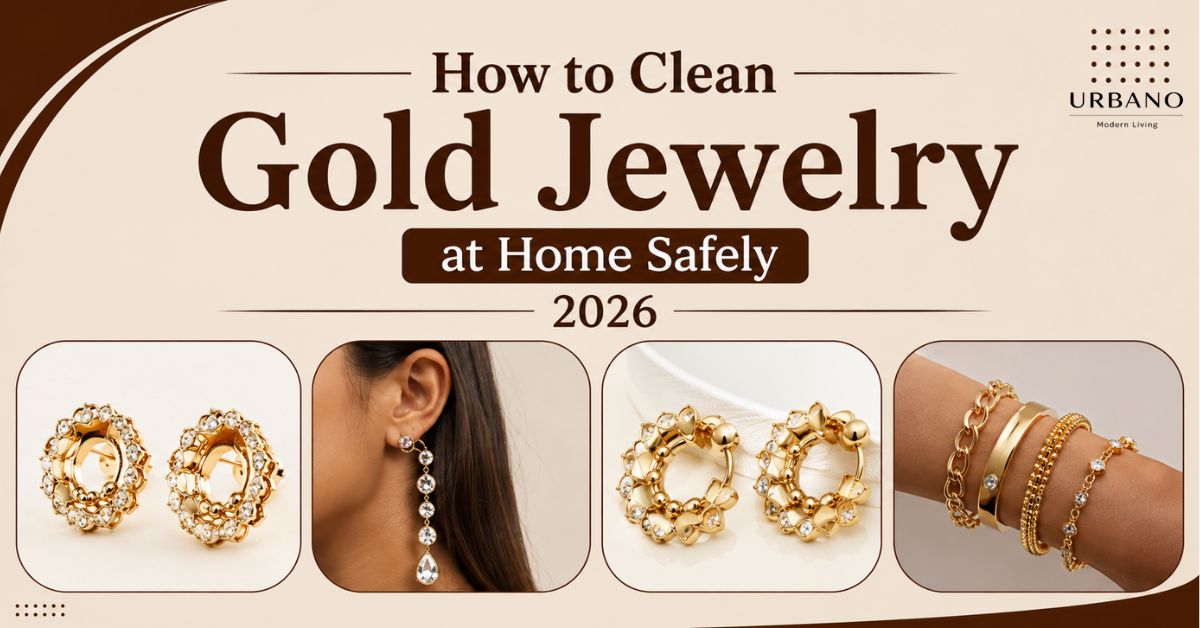
Most advice on how to clean gold jewelry assumes you own solid gold. Plenty of people don’t. They own plated chains, vermeil hoops and alloy pieces with cubic zirconia set into them. The baking soda paste that shines a solid gold ring will strip a plated one down to the base metal in a couple of goes. So the first job isn’t cleaning. It’s working out what’s actually in your hand. Below you’ll find the method that’s safe on everything, the ones that aren’t, plus how to look after plated and alloy pieces so they last years instead of months. The alloy and pearl jewellery in the For Her range sits squarely in that second category.
Warm water and a drop of plain dish soap, a few minutes of soaking, a soft brush only where the piece is solid metal, then a full rinse and a pat dry. That’s it for solid gold. For plated, alloy and pearl pieces, skip the soak and the brush entirely and wipe with a barely damp cloth. Nothing abrasive touches anything plated, ever.
| What you own | Method | Never do this |
|---|---|---|
| Solid gold, 10k to 18k | Warm soapy water, soft brush, rinse, dry | Chlorine, bleach, harsh scouring |
| Solid gold with diamonds | Same, plus a soft brush behind the stone | Ultrasonic on treated stones |
| Gold vermeil or plated | Damp soft cloth only, dry at once | Soaking, brushing, baking soda |
| Gold filled | Brief soapy wipe, rinse, dry fast | Long soaking, abrasives |
| Alloy costume pieces | Dry or barely damp cloth | Water sitting in joints, any soak |
| Pearls | Damp soft cloth, air dry flat | Soap, ultrasonic, any chemical |
| Cubic zirconia in alloy | Damp cloth, dry brush for dust | Soaking, which loosens glued settings |
Four things get called gold jewellery and only one of them is gold all the way through. Solid gold is an alloy of gold with copper, silver, nickel or zinc. Karat tells you the ratio. 24k is nearly pure and soft enough to mark with a fingernail. 10k has the most other metal in it, which makes it harder and also the most likely to darken over time.
Gold vermeil is sterling silver with a layer of gold over it, thicker than standard plating and legally defined in the United States by a minimum thickness. It handles gentle cleaning. Gold plated is a microscopically thin layer of gold over a base metal, often brass or copper alloy. Measured in microns. Anything abrasive removes it. There’s nothing underneath but the base metal.
Alloy costume jewellery has no gold layer at all. Zinc alloy, copper alloy and similar, sometimes with a coloured lacquer over the top. These need the gentlest handling of the lot, because water sitting in a joint corrodes the base metal from inside.
If you don’t know which you have, treat it as plated. That approach never damages anything.
That’s the whole method. Once or twice a month is plenty for pieces worn daily.
A commercial jewelry cleaning solution is mostly a surfactant with an ammonia derivative and a corrosion inhibitor. On plain solid gold it works well and it’s faster than soap. Two cautions. Read the label for stones, because most solutions warn against pearls, opals, emeralds and turquoise. And never use one on plated pieces, whatever the bottle says about being gentle.
Homemade with dish soap does 90 percent of the same job at no cost. It’s safe on far more pieces. The one thing it does less well is dissolving heavy tarnish from the alloy metals in low-karat gold. A dilute ammonia solution, roughly one part household ammonia to six parts water, clears that tarnish on plain solid gold with no stones. Keep it under a minute, rinse thoroughly. Don’t repeat it often. Ammonia attacks the copper in the alloy over time.
An honest note before the picks. The jewellery in the Urbano Mart range is alloy and pearl fashion jewellery rather than solid gold, which puts every piece here in the careful column above.
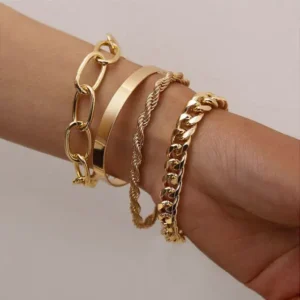
A copper alloy snake chain with cubic zirconia in tension settings and a toggle clasp, in three styles. Copper alloy plus a mechanical clasp means water trapped in the links is the enemy. Wipe rather than soak and dry the clasp properly. Cubic zirconia itself is hard and takes a dry brush well. Not a piece to wear swimming.
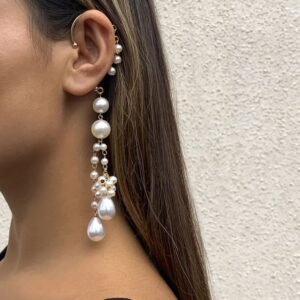
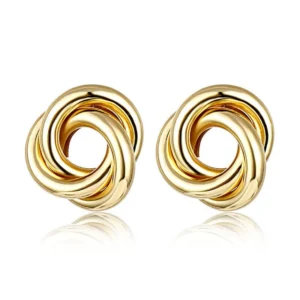
Alloy with pearl, sold as a pair, at 10 grams. Pearls are the most fragile thing most people own. No soap, no solution, no ultrasonic. A barely damp soft cloth after each wear, dried flat, is the entire care routine. Clip fittings also collect skin oil at the pad, which is worth a wipe at the same time.
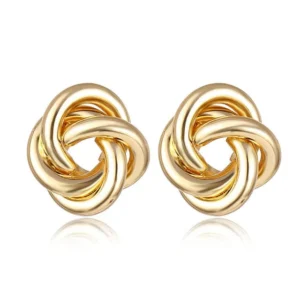
Zinc alloy in a bold geometric shape, light enough for all day wear. Zinc alloy reacts with moisture and skin acids. The routine is a dry microfibre wipe after wearing and storage somewhere dry. No hypoallergenic claim is made. Anyone with a nickel sensitivity should test-wear briefly first.
The same zinc alloy construction in a different geometric pattern, again lightweight. Treat it identically: dry wipe, dry storage, no perfume or hairspray while wearing. Alloy pieces at this weight suit everyday wear. They won’t survive being tossed loose into a bag with keys.
This is the advice that circulates most widely and causes the most damage. Baking soda is a mild abrasive. On solid gold, used as a thin paste with a soft cloth and rinsed off immediately, it lifts tarnish and it’s survivable. Gold is soft. Even here it leaves microscopic scratching that dulls a polished finish over repeated use.
On anything plated, it’s destructive. A plated layer is a few microns thick. An abrasive removes microns. Two or three cleanings and you’re looking at the brass underneath. There’s no fix short of replating. On pearls it’s worse still, because the nacre is a soft layered surface and abrasion destroys the lustre permanently. The one place baking soda genuinely earns its reputation is heavily tarnished sterling silver, which isn’t gold at all. If a piece is plated, alloy or set with soft stones, the paste stays in the cupboard.
Plated pieces don’t fail because people clean them badly. They fail because of everything that happens before the cleaning.
Put jewellery on last, after perfume, hairspray, moisturiser and makeup. Alcohol and oils in cosmetics degrade the plating faster than anything else in daily life.
Take it off for showers, swimming, exercise and washing up. Chlorine is the worst offender. Sweat is a slow second.
Wipe after every wear with a dry soft cloth. Thirty seconds removes the skin acids that would otherwise sit against the surface overnight.
Store pieces separately in a soft pouch or a lined box, not jumbled together. Plated surfaces scratch against each other. A scratch through the plating starts corrosion from the base metal outward.
Expect a lifespan rather than permanence. Plating wears at contact points. Rings and bracelets go first, earrings last longest. Replating is possible on better pieces and rarely economical on fashion ones.
Diamonds tolerate almost anything and are the reason ultrasonic cleaners exist. Soap and a soft brush behind the stone restores most of the sparkle people think they’ve lost, because the dullness is usually dirt on the underside blocking light. Cubic zirconia is hard and cleans easily, though many CZ pieces sit in glued settings rather than prongs. Soaking softens the adhesive. Wipe and dry-brush instead.
Pearls, opals, turquoise and emeralds are all porous or fragile. No chemicals, no ultrasonic, no soaking. Pearls go on last and come off first. A wipe after wear is the whole routine. Treated and fracture-filled stones can lose their treatment in an ultrasonic bath. If you don’t know whether a stone is treated, assume it is.
An ultrasonic cleaner drives microscopic bubbles through liquid to shake dirt out of settings. It works brilliantly on plain solid gold with diamonds in secure prongs. It’s the wrong tool for everything else. Plated pieces lose plating at any weak point. Glued settings come apart. Pearls and soft stones crack or dull. Loose stones in worn prongs get shaken free, which is how people lose a diamond while cleaning it. Have a jeweller check prongs before any ultrasonic cleaning of a valuable piece. Ten seconds with a loupe is worth more than the cleaning itself.
Chlorine is the serious one. Pool water, hot tubs and household bleach attack the alloy metals inside karat gold and cause stress cracking over time. Solid gold jewellery that snaps at a thin point has usually met chlorine repeatedly. Abrasives come second, from baking soda paste to toothpaste to scouring cloths. All of them scratch soft metal.
Storage is third. Loose jewellery in a drawer scratches, tangles and corrodes at contact points. Individual pouches or a compartmented box solves it for almost nothing. Cosmetics are the slow one. Perfume, hairspray and hand cream leave a film that dulls solid gold and eats plating.
One reader cleaned a plated chain with a baking soda paste every few weeks because a video recommended it. By the third clean the links had gone coppery at the edges. There was nothing wrong with the chain. The method was for solid gold.
Another had a solid gold ring that looked permanently dull and assumed it needed professional polishing. Fifteen minutes in warm soapy water and a baby toothbrush worked behind the setting, where a decade of hand cream was blocking the light coming through the stone.
The Urbano Mart Team covers jewellery, knitwear and personal accessories for customers across the United States, from a business formed in Michigan in 2022. Questions about alloy and plated pieces come up constantly in this category. Every material detail quoted here comes from the live product pages the team ships from.
Knowing how to clean gold jewelry starts with knowing which of the four types you own. Solid gold takes soap, water and a soft brush. Vermeil takes a gentle wipe. Plated and alloy take a dry cloth and careful habits, because nothing abrasive belongs anywhere near a few microns of gold. When in doubt, treat it as plated. Browse the gifts for her range or contact Urbano Mart at sales@urbanomartllc.com or +1 313 487 8379, Monday to Friday, 9:00 AM to 5:00 PM EST. Free shipping applies across the USA except HI, PR, AK and GU, with delivery in 5 to 8 working days.