

By Urbano Mart Team. Published 18 September 2026.
| Short answer Hidden litter box furniture works when the inside is big enough and the air can move. Allow at least 6 inches of clearance around the box on every side, a doorway around 8 inches wide, and a vent or a gap at the back. Cabinets that fail do so because they were designed to look tidy rather than to be used. |
Nobody buys a sofa and then puts a plastic tray beside it on purpose. Yet that’s the arrangement in most apartments, because the alternatives either look like a pet shop display or cost more than the sofa. Hidden litter box furniture solves it properly when you pick the right one. Get it wrong and your cat stops using the box, which is a much bigger problem than the one you started with. This walkthrough covers the five rules that decide whether an enclosure works, nine ideas at different budgets, and what changes when you have two cats instead of one.
Cats aren’t fussy about looks. They’re fussy about space, smell and escape routes. Every rule below comes from that.
Most cabinets sold online fail rule one or rule three. Measure before you buy anything. Measure your existing litter box rather than guessing.
A side table with a fabric panel hung on the front. Costs almost nothing when you already own the table. Works best for a single small cat in a quiet corner. Fabric absorbs odor over time. Pick something washable and expect to replace it.
A lidded bench with an entrance cut into one end. Lifting the lid gives you full access for scooping, which solves rule four better than most purpose built units. Seal the inside with a wipeable finish before the box goes in.
Remove the drawers, cut a side entrance and you’ve got a compact enclosure that still looks like furniture. Height suits older cats. Narrow nightstands often break rule one. Check the interior width against your box first.
The internet’s favorite route. A basic two door cabinet, a hole saw, some edge trim and an afternoon. Cheap and customizable. The catch is the material: most flat pack furniture is particle board with a thin laminate. Once liquid gets into a cut edge the panel swells.
A folding screen across a corner of the room. No construction and no measuring. It hides sight lines rather than smell. It needs a covered box behind it and regular scooping.
A cat door cut into a closet door turns dead space into a litter room with excellent airflow. Best option if you own the property. Renters should leave this one alone.
Cut an entrance into the side panel of a vanity cabinet. The bathroom already has a floor you can mop and an extractor fan, which handles rule three for free.
Furniture designed for the job from the start. Sealed interiors, correct entrance height, doors that open fully and a top surface rated to hold something. Costs more than a hack. Doesn’t swell, doesn’t smell and doesn’t need a weekend.
Two separate internal compartments in one piece of furniture. This is the one most lists skip. It’s the one multi cat homes actually need. More on why below.
Vets and shelter groups repeat the same rule: one box per cat plus one spare. Two cats means three boxes in an ideal setup. Most apartments can’t spare three corners, which is where a double enclosure earns its place by turning two of those boxes into one piece of furniture.
There’s a behavior reason as well as a space one. Cats guard resources. A dominant cat can sit near a single box and block the other one from using it. The second cat then finds somewhere else in your home to go. Separate compartments with separate entrances remove the choke point. If your second cat has started using the rug, this is the first thing to check.
| Setup | Boxes needed | What usually goes wrong |
|---|---|---|
| One cat, one floor | 2 ideally, 1 acceptable | Box too small inside the cabinet |
| Two cats, one floor | 3 ideally, 2 workable in separate compartments | One cat guards a single shared box |
| Two cats, two floors | One box per floor minimum | Older cat avoids stairs at night |
| Cat plus dog | Same as above, entrance sized for the cat only | Dog raids the box through a wide opening |
Both routes work. The honest comparison looks like this once you count the hours.
| Factor | DIY conversion | Purpose built furniture |
|---|---|---|
| Upfront cost | $40 to $120 plus tools | $150 to $400 |
| Time | A weekend, more if you’ve not cut a panel before | Assembly only |
| Material | Usually particle board that swells when wet | Sealed or laminated interior |
| Entrance quality | Cut edges need trim or they snag fur | Finished from the factory |
| Two cat capable | Rarely, without building a divider | Available as a double |
| Lifespan | 2 to 4 years in a working litter setup | Longer. It resells as furniture |
Two pieces from our own range. One is built for the litter job specifically and the other is the answer when the litter box has a home already and the room still needs storage.
| Product | Key spec | Best for | Price |
|---|---|---|---|
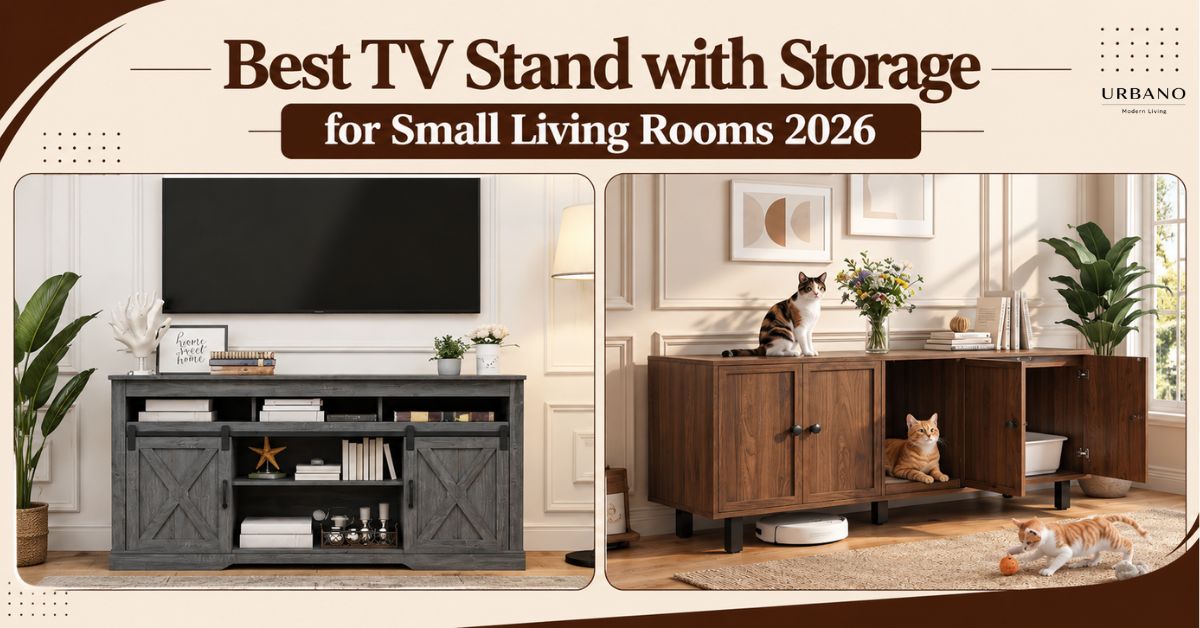
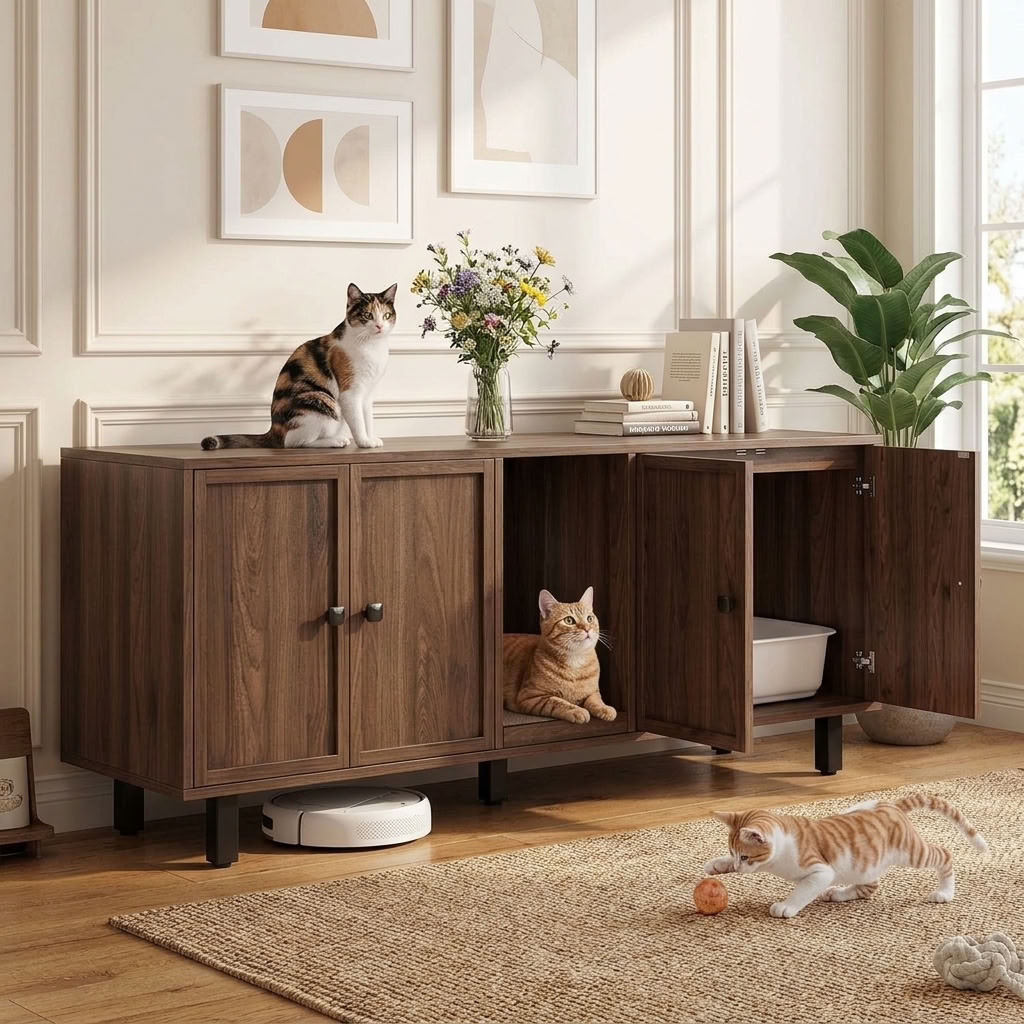
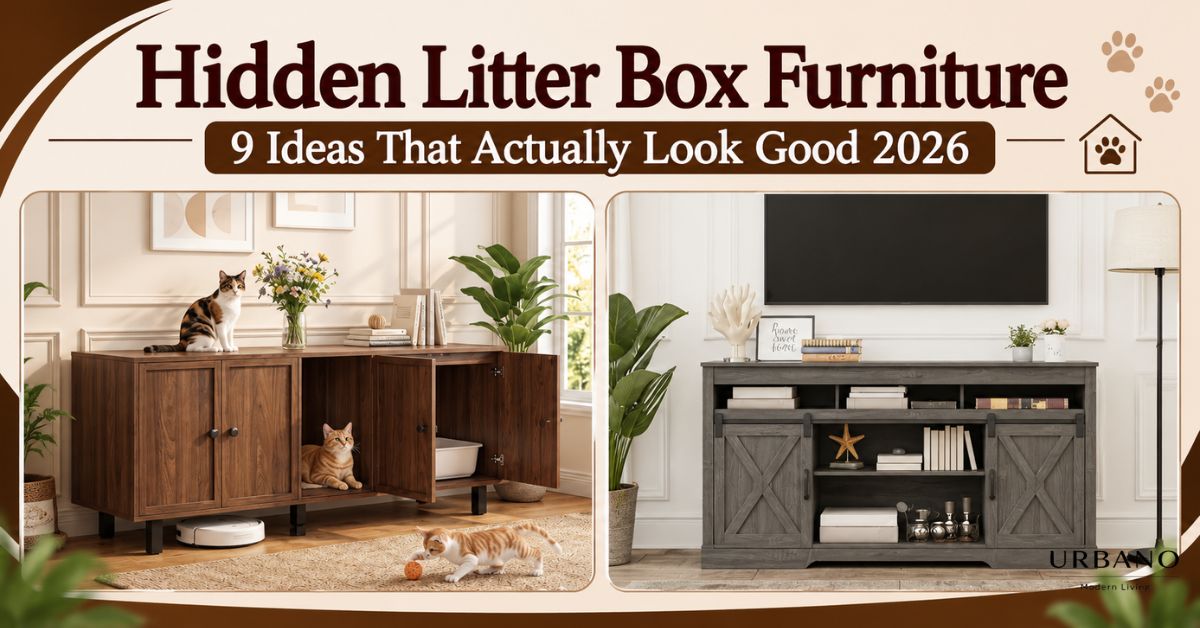
| Double Litter Box Enclosure | Two compartments, each 22 in long by 18.5 in wide by 18.9 in high, black or brown | Two cat homes, doubles as a TV stand | $235.00 |
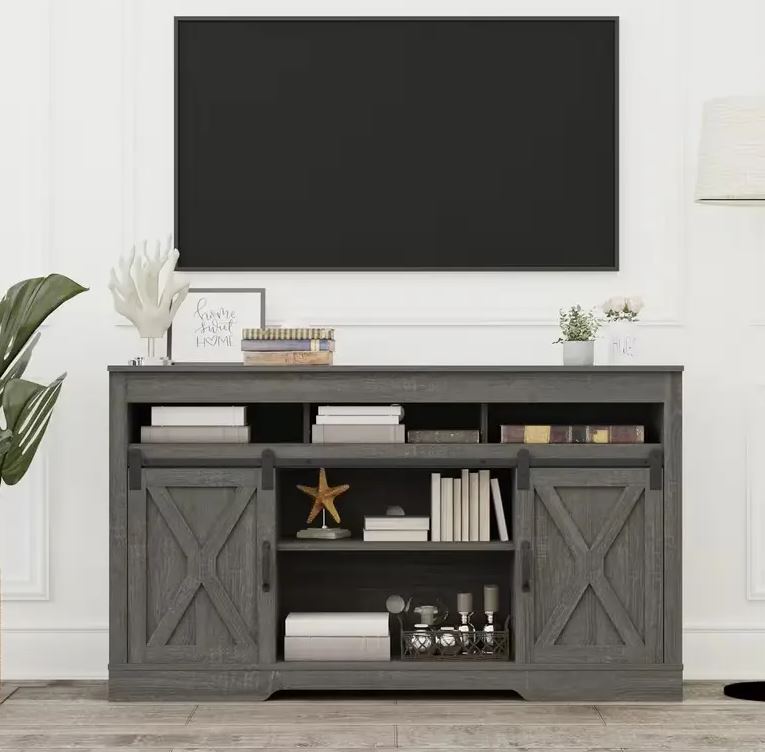
| Farmhouse 65 Inch TV Stand | Sliding barn doors, adjustable shelves, fits TVs up to 65 inches | Rooms where the litter is handled elsewhere | $215.00 |
Double Litter Box Enclosure is the piece behind idea nine. Two separate internal rooms mean two cats can go at the same time without meeting, which removes the guarding problem described above. Each compartment measures 22 inches long by 18.5 inches wide by 18.9 inches high. A standard litter box sits inside with room to turn. Customers rate it 4.32 out of 5 across 19 ratings.
Honest limitation: at 22 by 18.5 inches per compartment, extra large litter boxes and top entry boxes won’t fit. Measure your current box before ordering. It’s also a wooden cabinet, which means it needs to stay out of a damp basement corner.
Farmhouse 65 Inch TV Stand is here for a different version of the same problem. Plenty of people solve litter in the bathroom and then still need the living room to stop looking like a storage unit. Sliding barn doors hide the clutter, adjustable shelves take consoles and boxes. It supports televisions up to 65 inches. Rated 4.56 out of 5 across 10 ratings.
Honest limitation: this is a TV stand, not an enclosure. There’s no cat entrance and no sealed litter compartment. Pick it only when the litter box lives somewhere else.
| Ordering from Urbano Mart Free shipping across the USA, excluding HI, PR, AK and GU. Orders are confirmed by email straight away, processed in 1 to 3 business days and shipped in 3 to 5 business days through UPS, USPS or FedEx. Returns stay open for 30 days. Questions go to sales@urbanomartllc.com or +1 313-487-8379, Monday to Friday, 9:00 AM to 5:00 PM EST. |
An enclosure hides the box. It doesn’t clean it. Everything that made the open box smell still applies. In a closed space it concentrates faster.
Studio and one bedroom apartments have a specific constraint: every piece of furniture has to do two jobs. That’s the argument for an enclosure that works as a TV stand or a console rather than a dedicated pet cabinet sitting in a corner. Place it against an interior wall rather than under a window, keep it away from the food bowls, and leave a clear path so the cat never has to pass the dog to reach it. Corner placement feels tidy to us and reads as a dead end to them.
A cabinet that looks big can have a 14 inch interior once you account for panel thickness and a door frame. Interior measurements are the only ones that matter.
Airtight is the wrong goal. Without airflow the smell builds up and the cat votes with its feet.
Change one thing at a time. Put the new cabinet in place with the old box inside it for a week before you change litter or location.
One accident soaks in and the panel swells. After that the smell is permanent and the unit is scrap.
A cabinet in a closet behind a door that stays shut is a box your cat can’t reach. Hidden from guests is the goal. Hidden from the cat is a failure.
Use a piece of furniture that was going to be in the room anyway. A cabinet that works as a TV stand or console hides the box without adding a dedicated object to a small floor plan. Place it against an interior wall, away from food bowls, with a clear approach path. Leave the door slightly open or add a vent so the air moves.
Yes, provided the inside is roomy and ventilated. Problems come from cramped interiors and trapped odor rather than the enclosure itself. Allow around 6 inches of clearance on every side of the box, keep the entrance low and wide, and scoop daily. A cat that starts going next to the cabinet is telling you one of those three conditions has failed.
It varies by cat, which is why the size of the enclosure matters more than the concept. Cats that feel trapped dislike covers. Cats that want privacy prefer them. Shy cats in busy homes often use a covered box more readily. Give any cat two weeks with the new setup before deciding. Keep the old box available during that time.
Measure your litter box and add at least 6 inches to the length and the width. A standard box of roughly 18 by 14 inches wants an interior near 24 by 20 inches. Height should let an adult cat stand without touching the roof, which is usually 16 inches or more. Entrances around 8 inches wide suit most adult cats.
The widely repeated guidance from vets and shelters is one box per cat plus one spare, so three boxes for two cats. Two can work when they sit in separate compartments or separate rooms, because the real problem is one cat blocking another’s access. Watch for a cat waiting nearby while the other is inside. That’s guarding.
Scoop every day and keep air moving through the unit, which means a rear gap, a vent panel or a door left ajar. Wash the box monthly with unscented soap and replace it once a year, since scratched plastic holds odor permanently. Avoid heavily perfumed litter, because most cats tolerate the perfume worse than the ammonia.
Yes. The usual route is a flat pack cabinet with a side entrance cut into it. Budget a weekend and a hole saw. The weak point is material, since most flat pack panels are particle board that swells once liquid reaches a cut edge. Seal every cut surface and the interior floor before the box goes in.
A properly sized cat entrance blocks most medium and large dogs by geometry alone. Small dogs can follow a cat through an 8 inch opening. Those homes need a raised entrance or a top entry design instead. A cabinet with a latching door also stops a determined dog once you’re out of the room.
Beside food and water bowls, in a cupboard that gets closed, next to a noisy appliance, or anywhere the cat has to pass another pet to reach it. Laundry rooms are popular with owners and unpopular with cats, because a washing machine spin cycle starting up teaches a cat the room is unsafe.
It concentrates it rather than removing it, which turns out to be useful. All the litter comes out through one doorway instead of spreading in every direction. A trapping mat placed at that entrance catches most of it. Combine the mat with a lower dust litter and the floor stays noticeably cleaner.
Urbano Mart Team. Urbano Mart LLC has been selling home improvement products to customers across the USA since 2022, from living room furniture and TV stands to outdoor sheds and kitchen tools. Every product is picked for quality, durability and everyday usefulness. The cabinets in this article are stock we keep ourselves.
Working out where the cabinet goes is half the job. Read our living room layout ideas next. If the room needs a visual lift once the clutter is handled, wall decor ideas for living room covers that. More storage furniture sits in the Living Room Furniture collection.








Notifications