
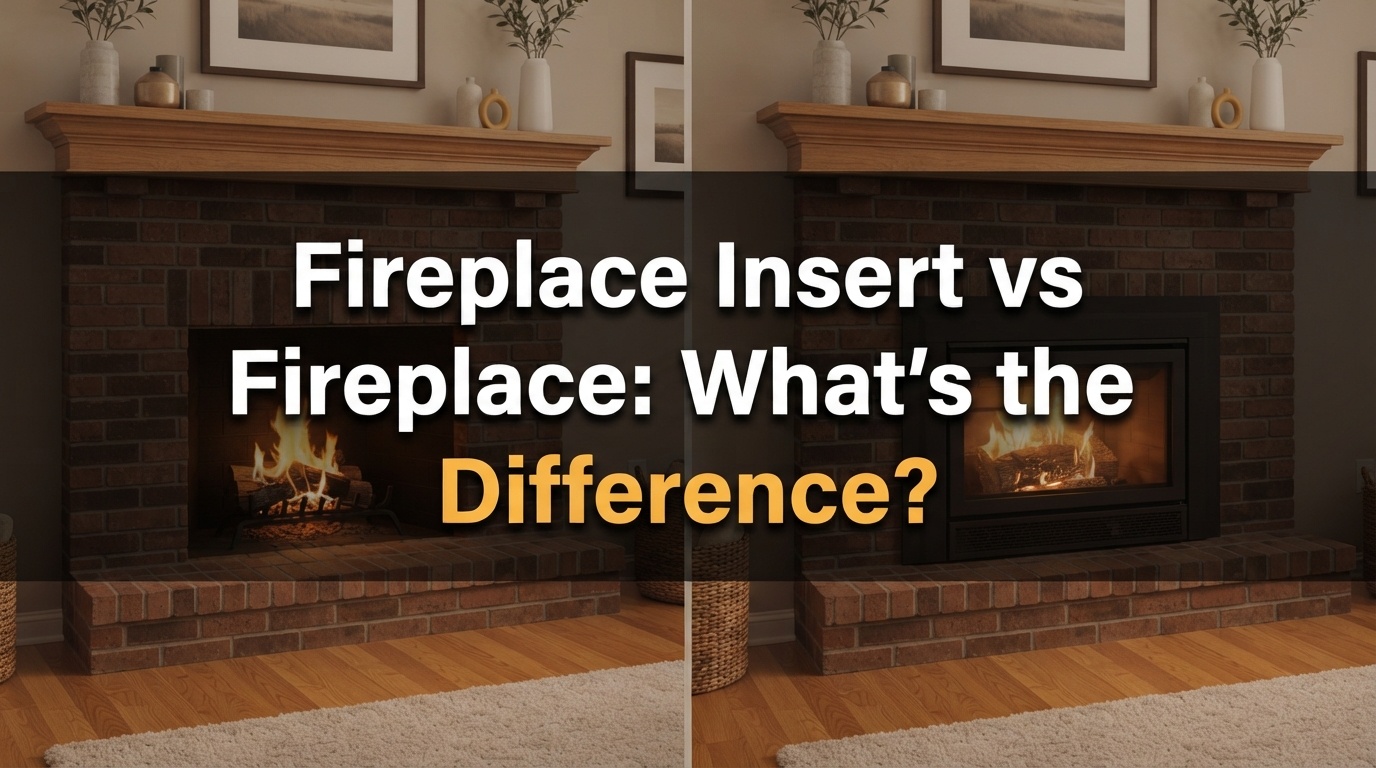
Put the two side by side and the insert-versus-fireplace question answers itself visually: a fireplace is an open fire in a brick or stone opening, and an insert is a sealed heating unit sitting inside that same opening, doing the heating the open fire cannot. A fireplace vs insert comparison is really a comparison between an atmosphere appliance and a heating appliance that share the same hole in the wall.
That is why the debate exists at all. The open fireplace wins on tradition — real logs, real crackle, nothing between you and the flame. The insert wins on almost every measurable thing: heat delivered, fuel wasted, smoke produced, effort required. This guide works through the differences that actually decide the purchase — heat, cost, safety, effort and looks — and finishes with the fuel question inside the insert family, because an electric insert vs gas is often the real final choice.
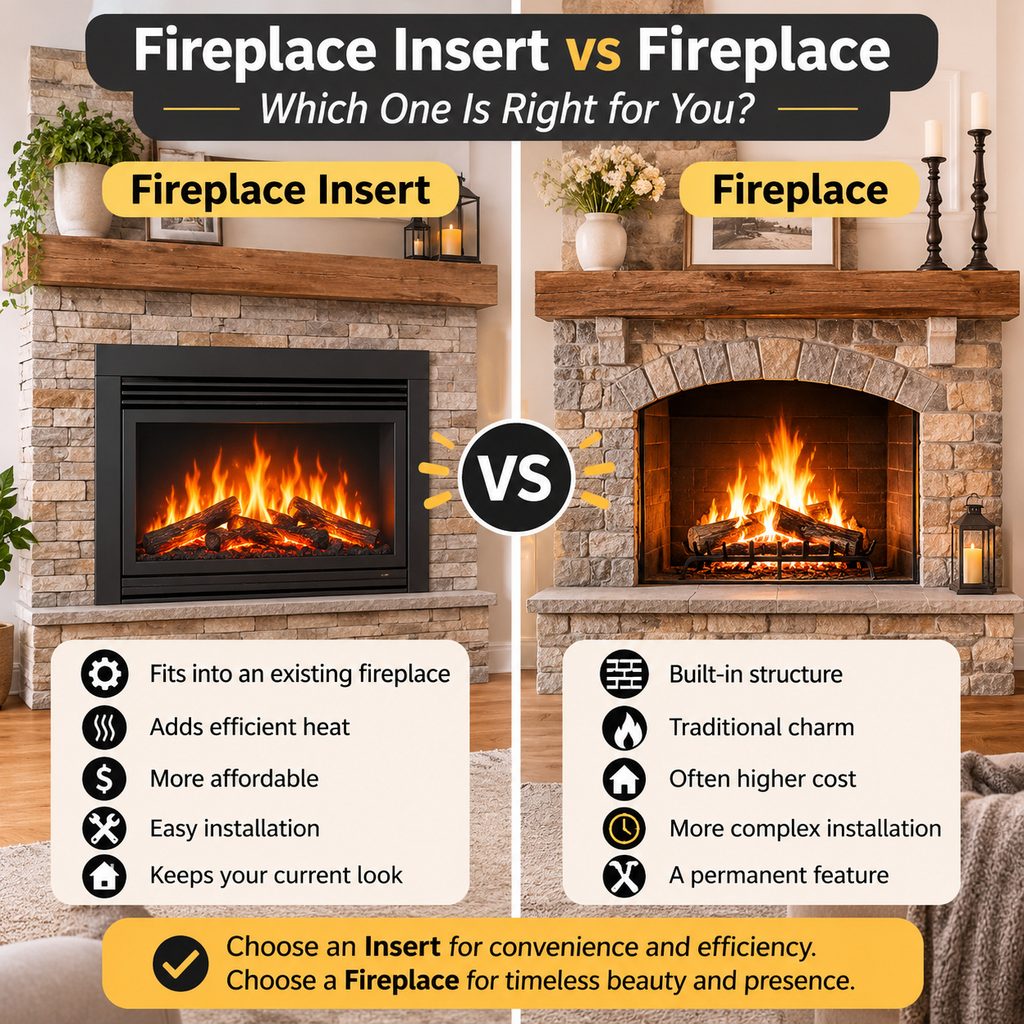
Fireplace Insert vs Fireplace: The Short Answer
In this matchup, the insert is the upgrade, not the replacement structure. The fireplace stays: the opening, the surround, the mantel, the chimney breast. What changes is what happens inside the opening. An open fire is replaced by a closed unit with its own firebox and controls, and the room gets heat instead of a draft.
The four differences that matter most:
- Heat: an open fireplace typically delivers a small fraction of its fuel’s heat to the room and can pull warm air up the chimney; an insert is built to keep heat in the room.
- Efficiency: the fireplace vs insert gap is the flue — an open fire’s exhaust route is also its heat escape route, while an insert seals or removes that route.
- Effort: an open fire needs building, tending and ash removal every time; inserts range from push-button (gas, electric) to moderate (wood).
- Cost to run: the insert burns less fuel, or a cheaper fuel, for the same room warmth — the detail is in the cost section below.
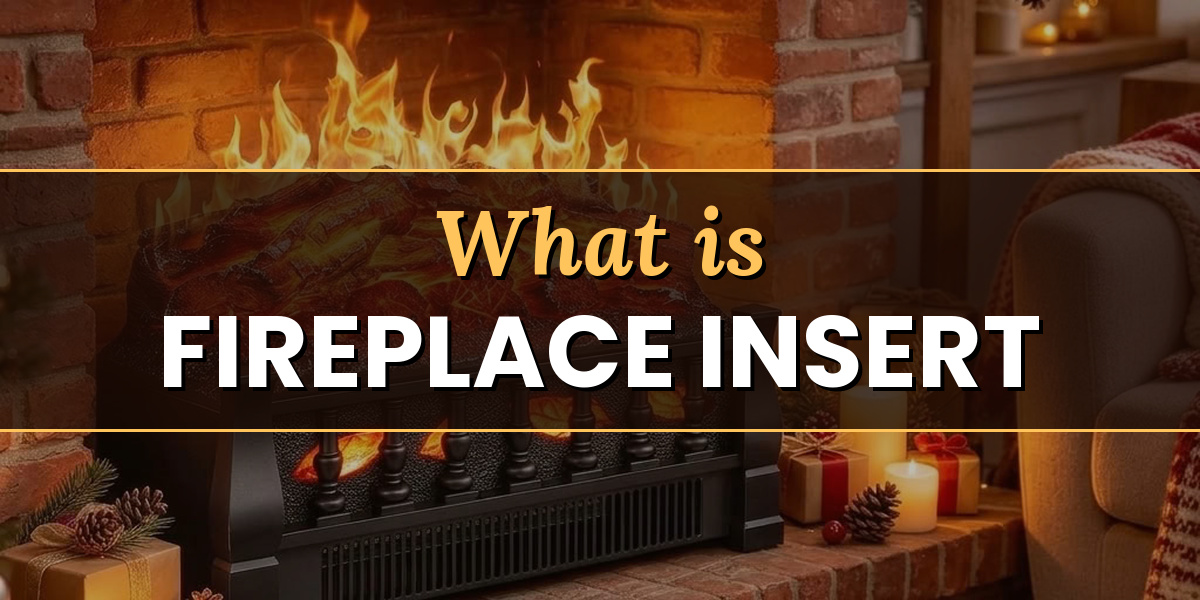
If you are still on the definition itself — what the unit actually is, part by part — start with what is a fireplace insert and come back to this comparison.
Heat and Efficiency: Fireplace Insert vs Fireplace
Fireplace vs Insert: Where the Heat Goes in an Open Fireplace
An open fireplace heats by radiation: you feel the fire on your face while the room behind you stays cool, and the chimney draws a steady stream of room air up and out — air your heating system already paid to warm. On a cold night a fireplace can make the rest of the house colder even as the fireside feels warm. In any honest accounting, that draft is the open fire’s biggest hidden cost.
Why an Insert Keeps the Heat in the Room
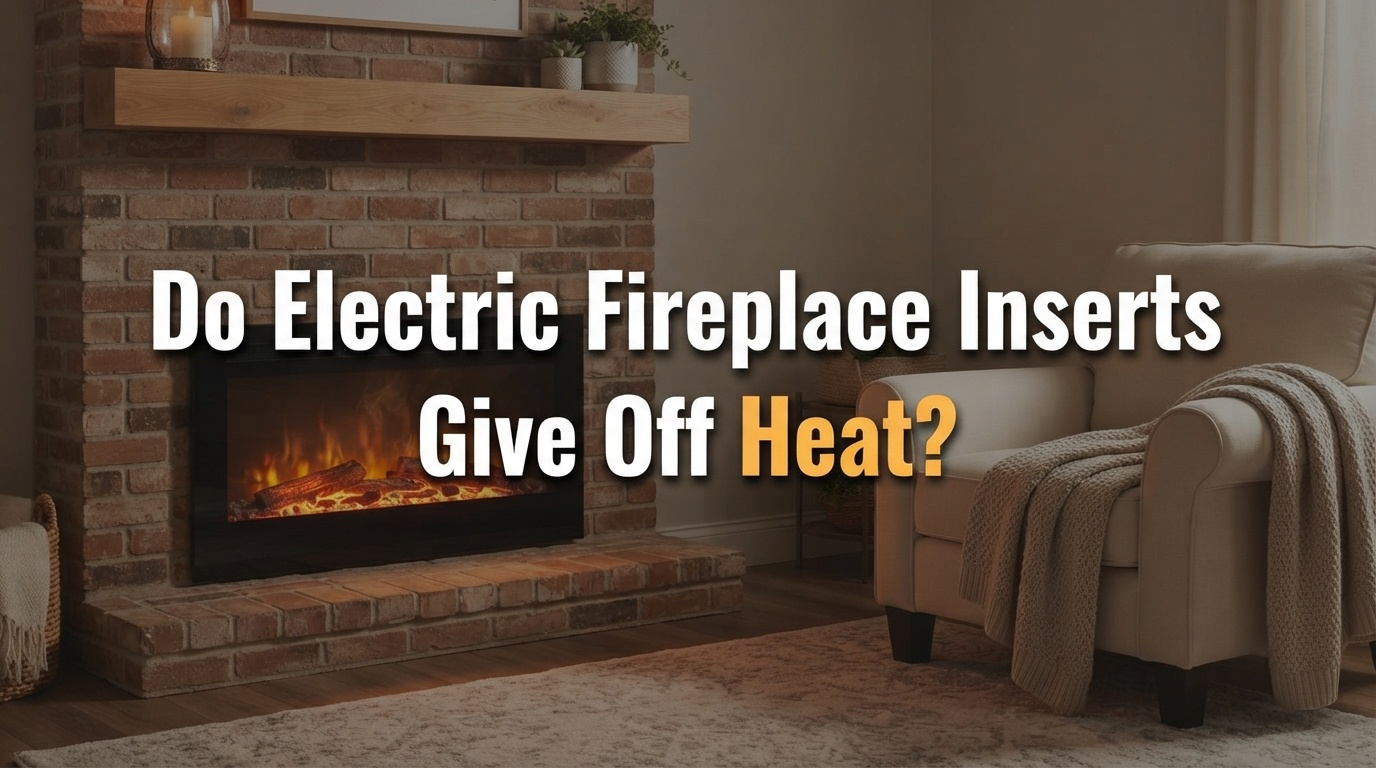
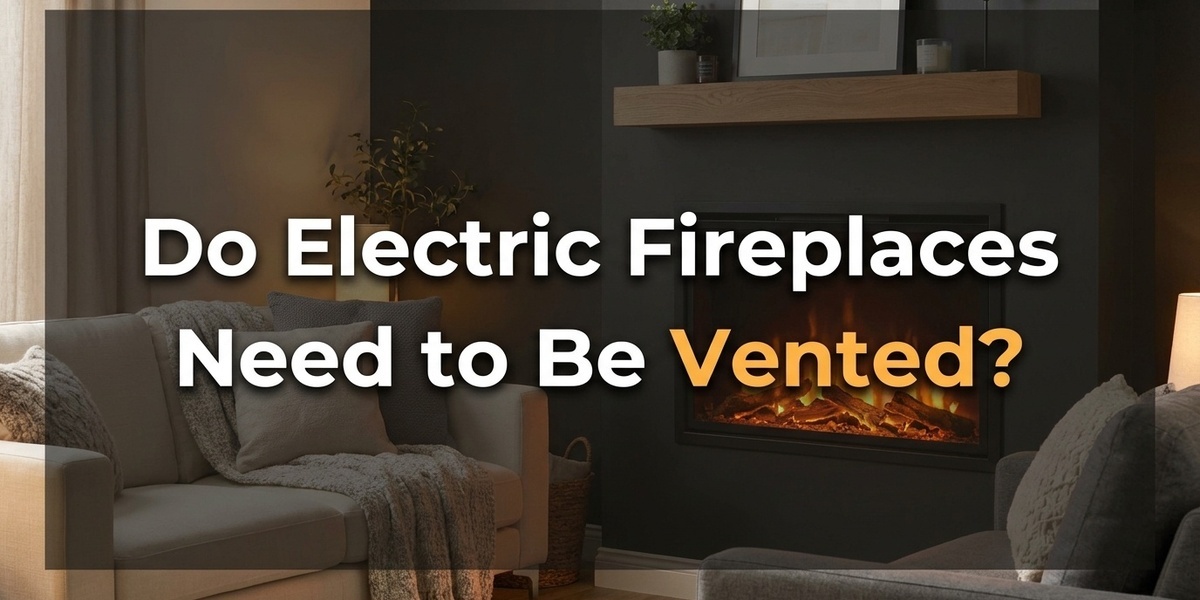
An insert attacks both losses. The sealed firebox and surround panel stop the room-air draft, and the burn (or the electric element) happens in a chamber designed to transfer heat to the room — by radiation, by a blower moving air around the hot box, or both. Wood inserts burn far more completely than open fires; gas inserts vent in a controlled way; electric inserts have no exhaust at all, so every watt of heat they make stays in the room. How much of that heat you actually feel is covered in our guide on whether electric fireplace inserts give off heat.
Cost: Fireplace Insert vs Fireplace
The open fireplace looks free — you already own it — and that is where the cost comparison gets interesting. The fireplace’s real costs are fuel burned for little heat, chimney sweeping, and the heating bills of a house losing warm air up its own flue. The insert’s costs are front-loaded: the unit, a liner for fuel-burning models, and fitting.
Typical US figures put electric inserts at the low end for both purchase and installation, because they need neither liner nor venting, while wood and gas inserts cost more up front and repay it in fuel efficiency over years. Our full breakdown of how much a fireplace insert costs goes fuel by fuel, with installed totals. The short version: if the fireplace is used for heat more than a few nights a year, the insert usually wins the lifetime cost argument; if it is lit twice a year for looks, the open fire’s inefficiency is a cheap indulgence.
Electric Fireplace Insert vs Gas and Wood: The Fuel Question
Once the insert wins that argument, a second comparison opens inside the insert family — and for many buyers it is the harder one.
Electric Fireplace Insert vs Gas Fireplace Inserts
An electric fireplace insert vs gas comparison comes down to installation versus fuel cost. Gas inserts burn inexpensive fuel and produce strong heat, but they need a gas line, venting through the chimney, professional fitting and annual servicing. Electric inserts cost more per unit of heat and need nothing but an outlet: no line, no vent, no service visit, and the flame runs without heat in summer. It is also a safety comparison — no combustion in the room, no carbon monoxide, a surface that stays cool to the touch.
Wood and Pellet Inserts in the Same Frame
Wood inserts are the traditionalist’s answer within the insert family: real fire, serious heat, and the work and mess that come with both, plus a liner and sweeping. Pellet inserts automate the wood idea with a hopper and steady output. Either is a genuine heating appliance; neither matches electric for simplicity or gas for hands-off fuel heat. The fireplace vs insert decision is about the opening; the fuel decision is about how you want to live with it.
Which One Should You Choose?
Choose the open fireplace if the fire is a rare, ceremonial thing — a few evenings a year, real logs, and the heat does not matter. Choose a wood or pellet insert if the fireplace is a working heat source and you are happy handling fuel. Choose a gas insert if you want fuel heat with a remote and can support the installation. And choose an electric insert if you want the fireplace back in daily use with the least work of all: no vent, no liner, no fuel store, heat when you want it and flame when you don’t.
Renters and apartment owners have really only one entry on that list, and it is the electric one — the only insert that leaves the building exactly as it found it.
Recommended Electric Fireplace Insert
For the electric route, the electric fireplace log insert with heater in our store is the simple end of the insert family: a 21 inch resin log set that drops into an existing opening or stands on the hearth, with 5,100 BTU of heat for rooms up to 450 sq ft, five flame brightness levels and a remote. Browse the other styles in the Fireplace category.
Frequently Asked Questions
What is the difference between a fireplace and a fireplace insert?
A fireplace is the built structure — the opening, firebox and chimney. A fireplace insert is a self-contained heating unit designed to fit inside that opening, with its own sealed or electric firebox and controls. The fireplace provides the place; the insert provides the heat.
Is a fireplace insert more efficient than an open fireplace?
Yes, by a wide margin. An open fireplace loses most of its heat up the chimney and draws warm room air out with it. An insert seals the opening, controls the burn or uses an electric element, and pushes heat into the room — which is the entire reason inserts exist.
Which is cheaper to run, an insert or an open fireplace?
The insert, in almost every real comparison. The open fireplace burns more fuel for less room heat and can raise the rest of the house’s heating bill through its draft. Inserts cost more to buy and fit, then run cheaper season after season.
Does an insert change how a fireplace looks?
Yes — the open firebox becomes a framed unit with a glass front or a flame display, and the surround panel covers the gap around it. The mantel, hearth and chimney breast stay the same, so the room keeps its architecture while the fire itself looks tidier and more finished.
Can any fireplace take an insert?
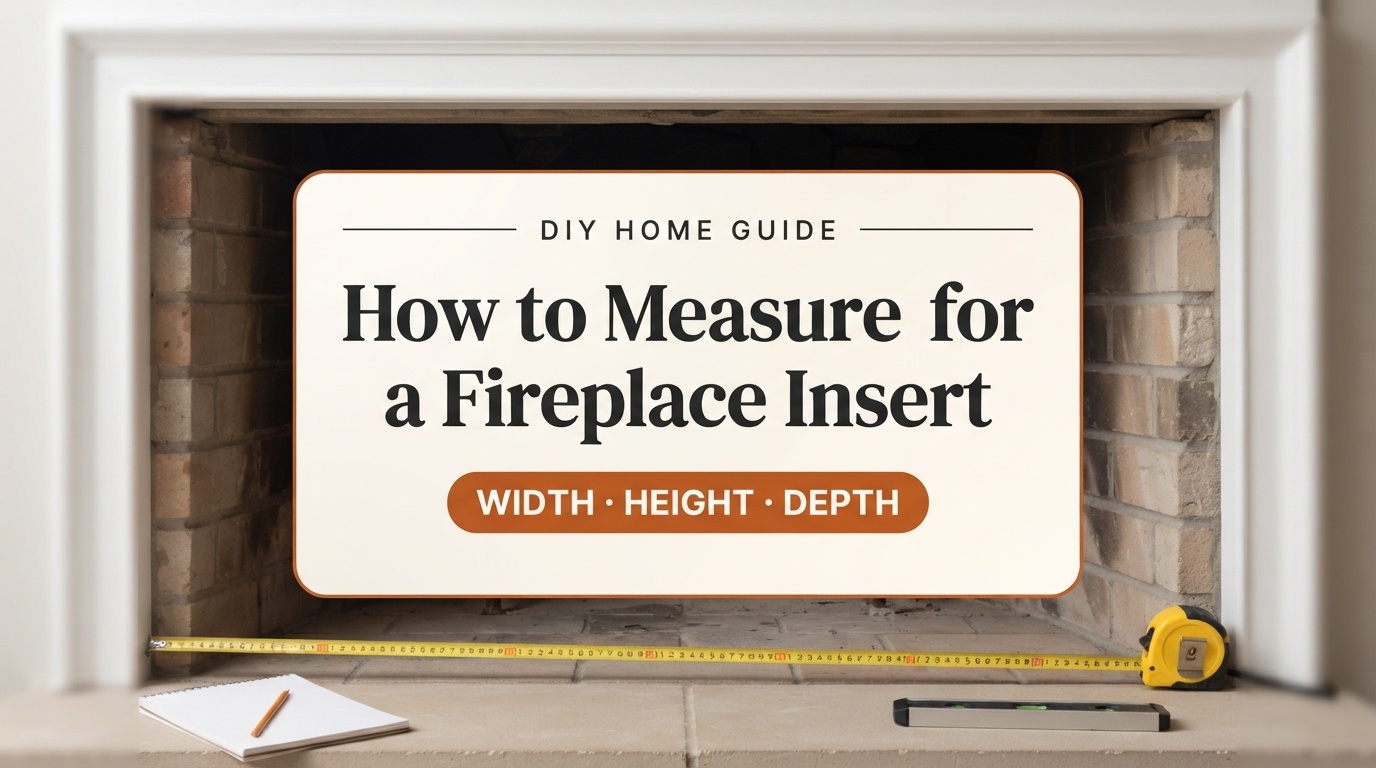
Most masonry and prefabricated fireplaces can, provided the opening is big enough for the unit and — for wood, gas or pellet models — the chimney can take a liner. Electric inserts are the most forgiving: they fit the widest range of openings and need no chimney at all.
Conclusion
Fireplace insert vs fireplace is not really a contest between two products; it is a decision about what your existing fireplace is for. Left open, it is an occasional pleasure that heats poorly and drafts constantly. Fitted with an insert, the same opening becomes a controlled, efficient heat source — and the fireplace vs insert gap only widens the more nights a year the fire is lit. Pick the fuel that matches your life, and the fireplace you already own becomes the heater it always should have been.









One Response