

By Urbano Mart Team. Published 18 September 2026.
| Short answer Heat the grill on high for 10 to 15 minutes with the lid closed, then clean the grates while they’re still hot. High heat turns stuck grease into loose ash and a bristle free brush sweeps it off in one pass. Wipe a thin coat of oil over the bars afterward. Five minutes after every cook. One deep soak a month. |
The burgers stuck. The grate looks like a parking lot. Guests arrive in an hour. Most people grab a wire brush at that point and start scraping, which is slow and it chews up the grate surface. There’s a faster way that uses the grill’s own heat instead of your shoulder. This walkthrough covers how to clean BBQ grill grates in about five minutes, what to do when a grate has been ignored for a whole season, and which grates you should never treat the same way twice. Works on gas, charcoal and pellet.
Nothing here is special equipment. Most of it is already in your kitchen.
| Tool | Why it matters | What works instead |
|---|---|---|
| Bristle free or electric brush | Sweeps ash off hot bars without shedding metal wire into your food | A crumpled ball of heavy duty aluminum foil held in long tongs |
| Heat resistant gloves | You’ll be working over a 500F grate. One slip on a hot bar leaves a real burn | Two dry folded kitchen towels, which is a poor second |
| Plastic or wood scraper | Lifts thick crust off the edges where the brush skips | An old wooden spatula sacrificed to the cause |
| Baking soda | Turns alkaline on contact with grease and loosens carbon overnight | Grill safe degreaser spray |
| White vinegar | Reacts with the baking soda and helps float the residue off | Lemon juice, which is weaker |
| Cooking oil with a high smoke point | Seals the clean metal so the next cook releases cleanly | Canola, grapeseed or refined avocado oil |
| Paper towel and long tongs | The safest way to oil a hot grate | A silicone basting brush kept for this job only |
Fat drips. Some of it burns off. The rest lands on the bars and keeps cooking. Every cook after that bakes another layer on top. Around 400F the fat stops behaving like oil and starts behaving like varnish. Chemists call that polymerization. You know it as the black sticky film that laughs at dish soap.
Two things are sitting on your grate and they are not the same thing. A thin brown film that feels dry and smooth is patina. Leave it. It protects the metal and helps food release. A thick black crust that flakes when you scratch it is carbonized grease. That has to go, because it carries old food particles, tastes bitter and blocks heat from reaching your steak evenly.
Here is the useful part. Carbonized grease gives up at around 500F to 600F. It turns to grey ash that a brush can move with almost no pressure. Dish soap and cold water can’t do that at any pressure. The heat is doing the work. Your only job is choosing the right five minutes to show up.
Three passes, in this order, every single cook. Skip the order and you double the work.
Close the lid and run the grill on high for 10 to 15 minutes. On charcoal, stack the coals and leave the vents wide open. The residue will stop smoking and start looking chalky. That grey chalk is your signal.
Gloves on. Brush along the bars, not across them, in long strokes from the back of the grate to the front. Ash falls into the firebox and burns away next time. A hot grate needs one pass. A cold grate needs twenty and still loses.
Fold a paper towel into a tight pad, grip it with long tongs, dip it in high smoke point oil and wipe the bars once. The coat should look barely there. Pooled oil turns into tomorrow’s crust, which defeats the point.
Five steps, start to finish:
Neglected a whole season? Pull the grates out and use the overnight route. Coat them in a paste of baking soda and water, seal them in a heavy garbage bag with a cup of white vinegar, leave them 8 to 12 hours, then rinse and dry them fully before they go back in. One caution: cast iron never soaks. The table below explains why.
The same treatment that saves a stainless grate can ruin a porcelain one. Check which bars you own before you touch anything.
| Material | Do this | Never do this | After cleaning |
|---|---|---|---|
| Stainless steel | Hot brush after every cook. Foil over stubborn spots during preheat | Steel wool, which scratches the finish and invites pitting | Light oil coat |
| Cast iron | Hot brush, then oil while the bars are still warm | Long water soaks. Rust starts within hours | Oil generously and heat to set it |
| Porcelain coated | Soft nylon brush or a foil ball, gentle pressure only | Metal scrapers. One chip and the steel underneath rusts out | Light oil coat |
| Chrome plated | Warm soapy water and a soft brush off the grill | High heat burn off, which blisters the plating | Dry fully, then oil |
You can do all of the above with foil and a towel. It works. It’s also slower and it burns your knuckles. If you’d rather buy the right thing once, these three cover the whole method and they’re the ones we sell because they’re the ones we use.
| Product | Key spec | Best for | Price |
|---|---|---|---|
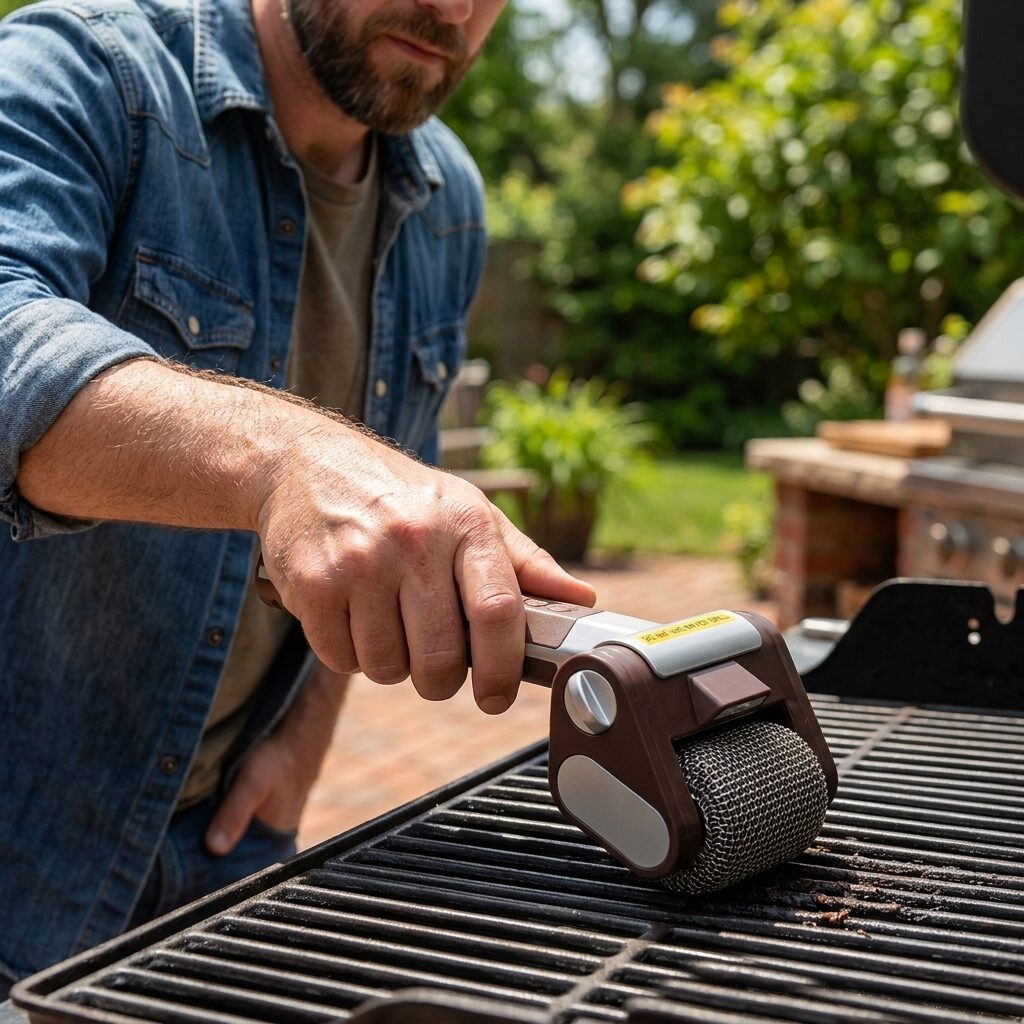
| Electric Grill Brush Rechargeable | Brushless motor, cordless, up to 70 percent less cleaning time than manual | Pass two, on any grate material | $60.00 (was $85.00) |
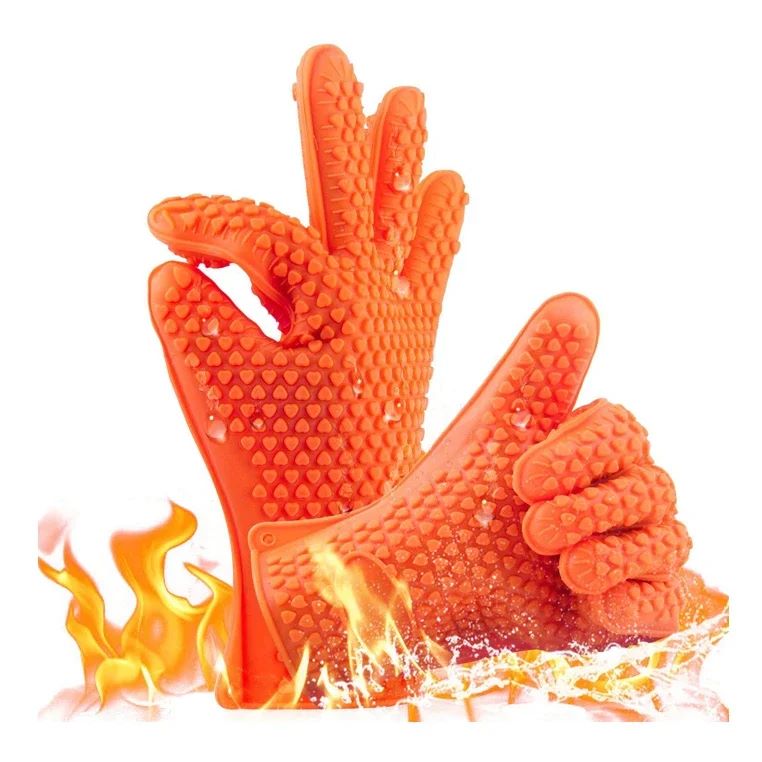
| Silicone BBQ Gloves, pack of 2 | Textured non slip silicone, rated 4.29 out of 5 by 14 customers | Pass one and pass three, and lifting hot grates | $35.00 (was $60.00) |
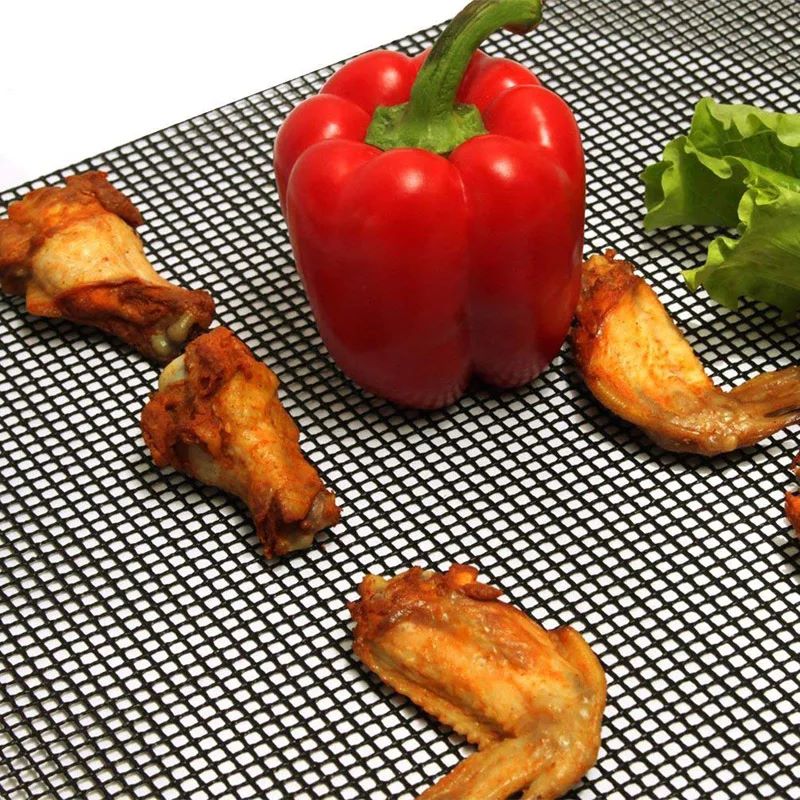
| BBQ Grill Mat, pack of 3 | Food grade PTFE coated fiberglass mesh, rated to 500F | Stopping the mess before it starts | $20.00 (was $35.00) |
Electric Grill Brush Rechargeable is the one that replaces the wire brush. The brushless motor spins fast enough to lift baked grease and carbon without you leaning on it. The listing puts it at up to 70 percent less cleaning time than scrubbing by hand. It’s cordless. No cable drags across a hot lid. Safe on stainless, cast iron and porcelain coated bars. Gas, charcoal, smokers, all fine.
Honest limitation: it runs on a battery. A flat charge means no brush. Put it on to charge the morning of a cookout, not five minutes before. It also won’t rescue a grate that’s been neglected for a season on its own. That one needs the overnight soak first.
Silicone BBQ Gloves come as a pair and they’re what make pass one and pass three survivable. The outside is deliberately rough. A wet or greasy grate bar doesn’t slide out of your hand. Customers have them at 4.29 out of 5 across 14 ratings. They double as oven mitts indoors, which is how most people end up using them more than they expected.
Honest limitation: the product page doesn’t publish a temperature rating. Treat them as protection for lifting and moving, not for gripping glowing metal for a minute at a time. Silicone is also bulkier than leather. Fine knife work with them on is awkward.
BBQ Grill Mat is the prevention play. Three mats of food-grade PTFE-coated fiberglass mesh sit over the bars and give food a flat surface, while the open weave still lets heat and smoke through so you keep the char flavor. Shrimp, asparagus and flaky fish stop falling into the fire. Less drips down means less crust to deal with next weekend.
Honest limitation: 500F is the ceiling. A mat is the wrong tool for a hard sear over a roaring fire. You’ll also get fainter grill marks through mesh than you get off bare metal. Use them for the delicate half of the cook and go bare for the steaks.
| Ordering from Urbano Mart Free shipping across the USA, excluding HI, PR, AK and GU. Orders are confirmed by email straight away, processed in 1 to 3 business days and shipped in 3 to 5 business days through UPS, USPS or FedEx. Returns stay open for 30 days. Questions go to sales@urbanomartllc.com or +1 313-487-8379, Monday to Friday, 9:00 AM to 5:00 PM EST. |
Wire bristles break off and they don’t always land in the firebox. Emergency physicians and US consumer safety groups have documented cases of swallowed bristles that needed surgery. The Consumer Product Safety Commission has tracked those reports for years. A worn brush is the dangerous one. Bristle free heads and coiled designs sidestep the problem entirely.
Cold carbonized grease is a solid. Soap can’t dissolve it. All you achieve is a wet grate, a sore arm and a bar surface full of fresh scratches for the next batch of grease to grip.
Water and bare iron get along for about an hour. After that you’re looking at orange freckles. Cast iron gets the hot brush and an oil coat while it’s warm. Nothing else.
Olive oil smokes at a temperature your grill passes on the way to medium. It leaves a sticky film that bakes into new crust. Pick something refined with a high smoke point and use a whisper of it.
Grease pools in the drip tray and inside the firebox. The National Fire Protection Association ties thousands of home grill fires each year to a buildup of exactly that. Scrape the tray every few cooks. It takes a minute and it’s the difference between smoke and a fire.
| When | What you do | Time it takes |
|---|---|---|
| After every cook | Three pass method: heat, brush, oil | 5 minutes |
| Every few cooks | Scrape the drip tray and empty the grease cup | 2 minutes |
| Monthly in grilling season | Pull the grates and soak them overnight in baking soda and vinegar | 10 minutes of work, 8 to 12 hours of waiting |
| End of season | Deep clean, dry fully, oil heavily, cover the grill | 30 minutes |
| First cook of spring | Burn off on high for 20 minutes, brush, oil | 25 minutes |
Crumple a sheet of heavy duty aluminum foil into a tight ball, grip it with long tongs and scrub the hot bars with it. Foil is abrasive enough for ash and it can’t shed bristles. A half onion on a fork works on lightly soiled grates. A rechargeable electric brush handles the job without any loose wire at all. All three want a preheated grate to push against.
A new brush in good condition is usually fine. A worn one is the risk, because individual bristles snap off, stick to food and get swallowed. Cases severe enough to need surgery show up in US emergency rooms every grilling season. If you keep using one, inspect the head before every cook and bin it the moment bristles start coming loose.
Hot, almost always. Heat breaks carbonized grease down into ash. One brush pass clears what twenty cold passes can’t. The exception is chrome plated grates, which blister under a high heat burn off and should be washed off the grill in warm soapy water instead.
Quick clean after every cook, which is five minutes of heat, brush and oil. Scrape the drip tray every few cooks. Deep clean once a month through grilling season, plus a full clean and oil before you cover the grill for winter. Skipping the quick clean is what creates the monthly job.
Yes. It works best as an overnight treatment rather than a scrub. Coat cold grates in a baking soda and water paste, seal them in a heavy bag with a cup of white vinegar and leave them 8 to 12 hours. Rinse and dry them fully afterward. Cast iron stays out of this one.
It does something, just less than the internet suggests. Rubbing a cut onion over hot bars releases moisture and mild acid that loosens light residue and adds a little flavor. On a grate with real buildup it’s theater. Save it for a grate you’ve already been maintaining properly.
Yes. Cleaning strips the protective layer along with the grease. Bare metal rusts and grabs food. Wipe a thin coat of refined high smoke point oil across the warm bars with a paper towel held in tongs. Thin is the whole point. Pooled oil bakes into the crust you just removed.
Stainless and porcelain coated grates survive a dishwasher cycle if they physically fit, though the detergent strips the seasoning and you’ll need to re-oil them. Cast iron must never go in. Heavy grease can also clog the filter. Scrape the worst off first. Or skip the machine altogether.
Old grease turns rancid and passes a bitter taste to everything you cook. Carbon buildup blocks even heat. Food cooks unevenly. Burners and vents clog. The serious one is fire: grease in the drip tray and firebox is behind thousands of home grill fires in the US every year.
Use a soft nylon brush or a foil ball and light pressure, on a warm grate rather than a scorching one. Metal scrapers and steel wool chip the enamel. Once the steel underneath is exposed it rusts and the coating flakes further. For stuck spots, lay damp paper towels over the bars for ten minutes and wipe them clean.
Urbano Mart Team. Urbano Mart LLC has been selling home improvement products to customers across the USA since 2022, from outdoor sheds and kitchen tools to home decor and living room furniture. Every product is picked for quality, durability and everyday usefulness. The grilling gear in this article is stock we keep and use ourselves.