A shallow bowl of succulents can look like a page from a design magazine, or it can look like a few lonely plants dropped into a pot. The difference is rarely the price of the plants. Most bowls use the same easy rosettes, cactus, and trailing plants you can find at any garden center.
The real difference is arrangement. A well planned succulent dish garden follows a few simple rules about spacing, height, color, soil, and grouping. Once you know them, you can walk past the costly ready made bowls at the store and build your own for much less.
This guide shares five tricks that designers use again and again. Each one lifts an ordinary succulent dish garden into something that looks planned and polished. They work in a small bowl on a desk and in a wide bowl on a patio table, and you need no rare plants or fancy tools — just a good bowl, gritty soil, healthy plants, and a calm ten minutes.
If you are new to mixed bowls, start here. A single succulent dish garden is the fastest way to learn how these plants look best together.
The 5 Tricks That Make a Succulent Dish Garden Look Expensive
Trick 1: Space Plants Close, Not Far Apart
New planters often leave big gaps between plants, hoping they will grow and fill in. Succulents grow slowly, so those gaps can stay bare for months. A bowl with bare soil reads as unfinished, no matter how pretty the plants are.
Place your plants closer than you think they need. In a healthy succulent dish garden, rosettes can almost touch at the edges. Their leaves overlap a little, and the bowl looks full from day one. Full is what makes a bowl look costly.
Close spacing does not mean crowding roots into a tight knot. Loosen each root ball gently, set the plants in, and let the leaves be near neighbors, with air still able to move between them.
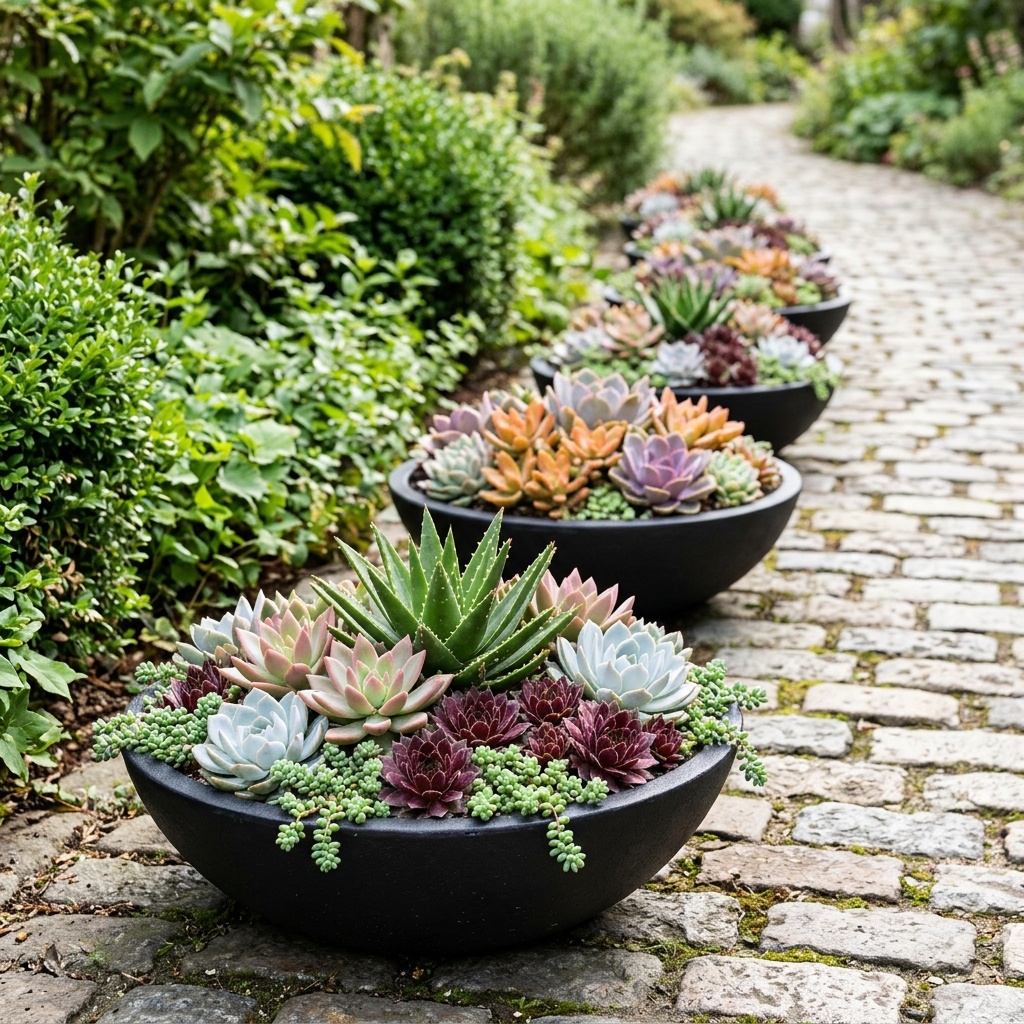
Work from the center outward. Set your largest plant first, then tuck medium plants around it, then add the smallest ones near the rim. If soil still shows in a spot, that is fine. Trick 4 will cover it with a neat top dressing.
Trick 2: Give Your Succulent Dish Garden Height With the Thriller, Filler, Spiller Rule
Flat bowls look dull because every plant sits at the same height. Florists fix this with a simple rule: thriller, filler, spiller. It works just as well in a succulent dish garden as it does in a flower pot.
The thriller is your tall, bold plant. A small upright cactus, a crested euphorbia, or a tall sedum works well. Place it off center, not right in the middle, so the bowl looks natural instead of stiff.
Fillers are the medium rosettes that form the body of the bowl. Echeveria and graptoveria are classic picks. They fill the middle ring with color and soft shapes and hide the taller plant’s bare stems.
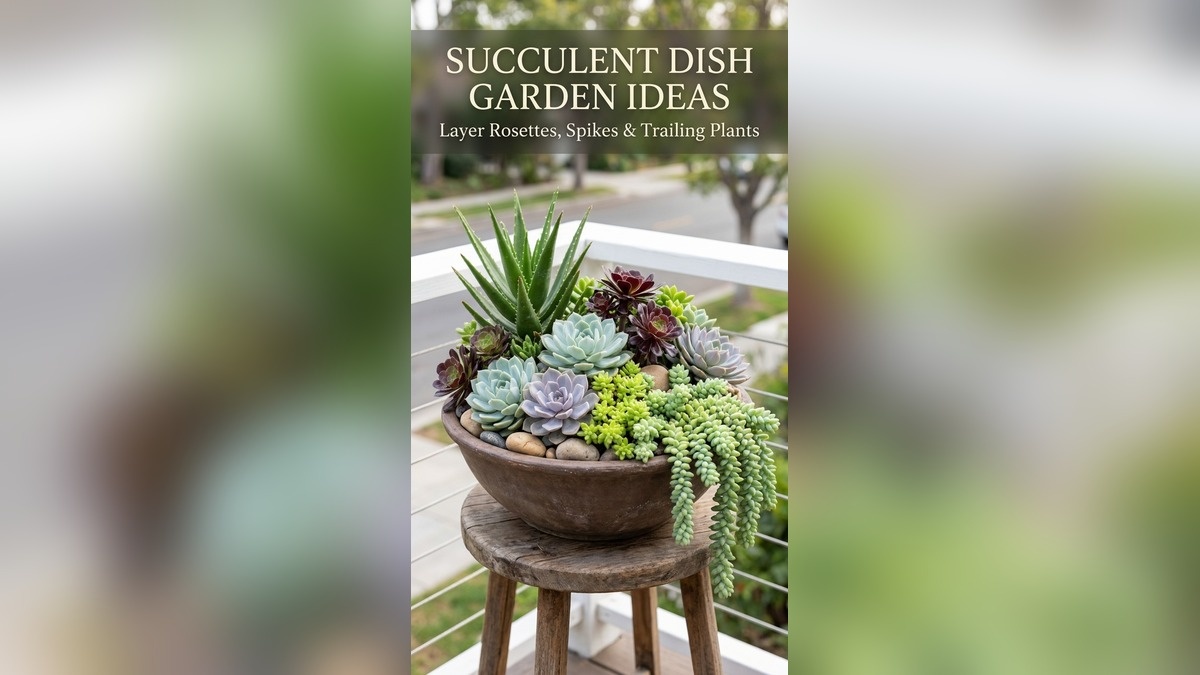
The spiller trails over the rim. String of pearls, burro’s tail, or a trailing sedum softens the hard edge of the bowl and makes the whole piece feel lush. One spiller is enough for a small bowl. Two can work in a wide one.
When you shop, hold one plant from each group together before you buy. If the three heights look good in your palm, they will look good in the bowl.
Trick 3: Group Colors Instead of Scattering Them
Random color is the most common reason a bowl looks cheap. One pink plant here, one blue there, and a bright green one in the corner fight with each other, and the eye does not know where to rest.
Pick a simple color plan before you plant. A calm succulent dish garden often uses two main colors and one accent. Soft blue green rosettes with a touch of blush pink is a classic mix. Deep green with silver and one burgundy plant also looks rich.
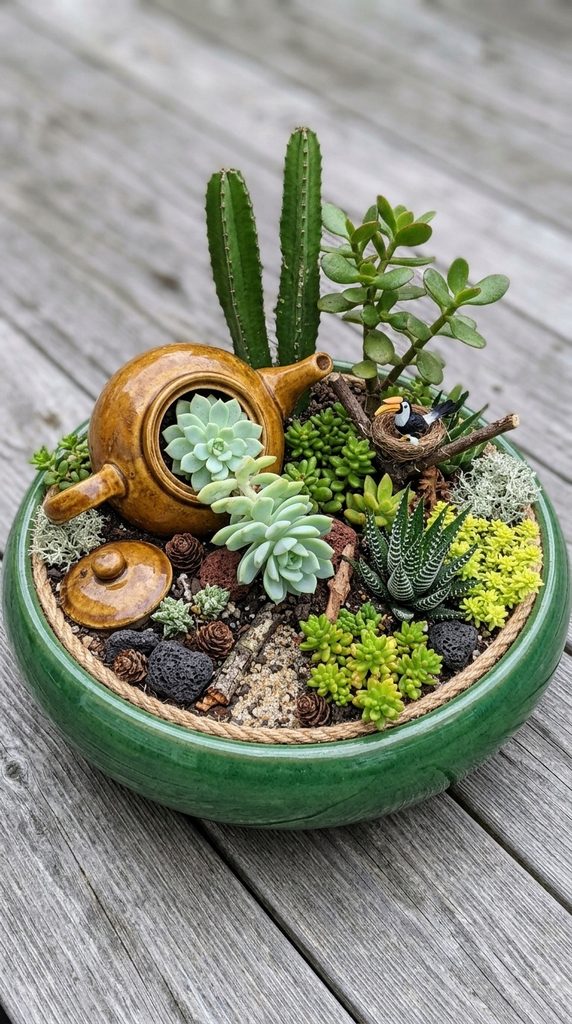
Then group plants by color. Place plants of the same shade near each other in small clusters of two or three. Repeat each color at least twice in the bowl so the mix looks planned, not random.
Use the bowl itself as part of the color plan. A plain cream, terracotta, or soft gray bowl lets the plant colors shine. With a bright glazed bowl, keep the plants mostly green so the two do not compete.
Trick 4: Mind the Soil Line and Add a Pebble Top Dressing
Nothing makes a bowl look unfinished faster than soil spilled over the rim or a soil line that sits too low. Aim to keep the soil about half an inch below the rim of the bowl. That small lip holds water in when you water and keeps the surface neat.
Once the plants are in, cover the bare soil with a top dressing. Fine pebbles, coarse sand, or small crushed stone all work. Spread a thin layer and brush it off the leaves with a soft paintbrush.
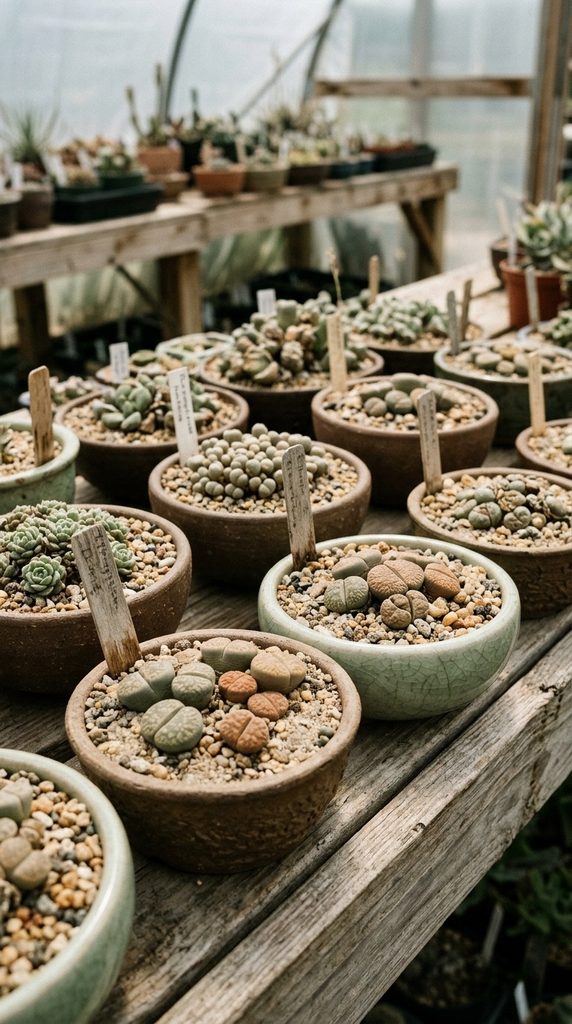
A pebble layer does three jobs in a succulent dish garden. It gives the bowl a clean, finished look, like the costly ones in stores. It keeps soil from splashing onto leaves when you water. It also helps the surface dry out, which keeps stems healthier.
Choose a stone color that suits your color plan. Pale gravel makes blue and pink rosettes glow, and dark stone makes green plants look deep and rich. Keep the stones small, so they sit flat.
Trick 5: Group Plants in Odd Numbers in Your Succulent Dish Garden
Designers love odd numbers, and there is a simple reason. Groups of three or five look natural and lively, while even groups can look stiff and split down the middle. Your eye reads odd groups as one flowing scene.
Use this rule at every level of your succulent dish garden. Choose three or five main plants for a small bowl, and cluster filler rosettes in threes.
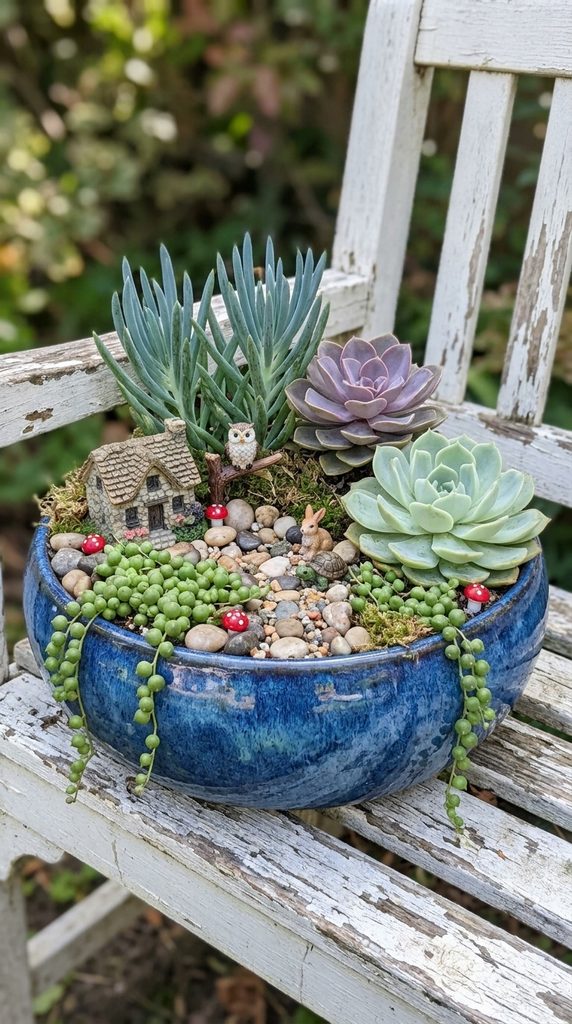
Odd numbers also help with balance. Place your tall thriller on one side, then set a group of three rosettes on the other side. The two sides will not match, and that is the point. An unmatched bowl looks like a small garden, not a shelf product.
Before you water for the first time, turn the bowl slowly and view it from all sides. A good bowl has no bad side. If one view looks empty, nudge a small plant or a cluster of pebbles into that spot.
Choosing the Right Bowl for Your Succulent Dish Garden
The bowl matters as much as the plants. A succulent dish garden needs a shallow, wide bowl, not a tall, narrow pot. Most succulents have short roots, so four to six inches of soil depth is plenty. A wide shape gives you the surface space you need for grouping and color play.
Drainage is the one rule you should not skip. Pick a bowl with a drainage hole in the bottom, and set it on a saucer to protect your table. If you fall in love with a bowl that has no hole, use it as an outer cover pot and plant in a plain pot with a hole that fits inside it.
Material is a matter of taste and place. Terracotta breathes well, suits a warm, rustic look, and dries out at a kind pace, which helps new planters. Glazed ceramic holds moisture a bit longer and brings color to a desk or counter. Both can host a fine succulent dish garden if you water with care. In short, the best bowl for a succulent dish garden is wide, shallow, and free draining.
Size wise, a bowl ten to fourteen inches wide is a sweet spot for beginners. It is large enough for five to seven plants, yet small enough to carry to the sink for watering. For more layout ideas in bowls and pots of many sizes, see our guide Beautiful Mixed Succulent Pot Ideas, which pairs well with the tricks in this guide.
Basic Care for a Succulent Dish Garden
Once your succulent dish garden is planted well, its care is simple. Light comes first. Give your bowl bright light for at least six hours a day. A sunny south or west facing windowsill works indoors. Outdoors, morning sun with light afternoon shade keeps colors rich and leaves safe from scorch.
Water only when the soil is fully dry. Pour water slowly over the soil, not over the rosettes, until it runs out of the drainage hole. Then empty the saucer so the roots never sit in water. In most US homes, that means watering every two to three weeks indoors, and a bit more often outside in summer heat.
Feed lightly, if at all. A weak dose of balanced plant food once in spring is enough; more food makes soft, leggy growth that spoils the tight, neat look you worked to build.
Every few months, pinch off dry leaves from under the rosettes and check for pests in the leaf joints. That quick tidy keeps your succulent dish garden looking fresh and stops small problems early. If one plant outgrows its space, lift it out, pot it on its own, and tuck a new plant into the gap.
If you later move your bowl outdoors for the warm months, treat it as the start of a bigger plan. Our Succulent Garden Design guide shows how the same color and grouping rules grow into full beds, rock gardens, and patio displays.
Conclusion
An expensive look does not come from expensive plants. It comes from five habits: space plants close, build height with a thriller, filler, and spiller, group your colors, keep a neat soil line under a pebble dressing, and plant in odd numbers.
Pick a shallow bowl with drainage, set aside a calm half hour, and build your first succulent dish garden this weekend. Start with one bowl on a sunny sill, enjoy how full and calm it looks, and let that small win lead to your next one. A lovely succulent dish garden is well within your reach, and your table will thank you for it.
Frequently Asked Questions
How often should you water a succulent dish garden?
Water only when the soil is completely dry all the way through. Pour water slowly over the soil until it runs out of the drainage hole, then empty the saucer. In most US homes, that works out to once every two to three weeks indoors.
What size bowl is best for a succulent dish garden?
A shallow, wide bowl about ten to fourteen inches across is the easiest size to start with. It holds five to seven plants with room to group them, and it is still light enough to carry to the sink for watering. Aim for about four to six inches of soil depth.
Can I plant in a bowl that has no drainage hole?
It is risky, because extra water pools at the bottom and can rot the roots. If you love a bowl without a hole, use it as a cover pot and plant in a plain inner pot that drains. Or have a hole drilled in the bottom before you plant.
What soil works best in a shallow succulent bowl?
Use a gritty, fast draining mix, such as regular potting soil blended about half and half with perlite or coarse sand. Water should run through quickly instead of sitting on the surface. Finish with a thin pebble top dressing to keep the surface neat and dry.
How many plants should I put in one dish garden?
For a ten to fourteen inch bowl, five to seven plants is a good count. Set one tall thriller, a few medium rosettes as fillers, and one trailing spiller over the rim. Plant in odd numbers and space the plants close, so your succulent dish garden looks full from the first day.