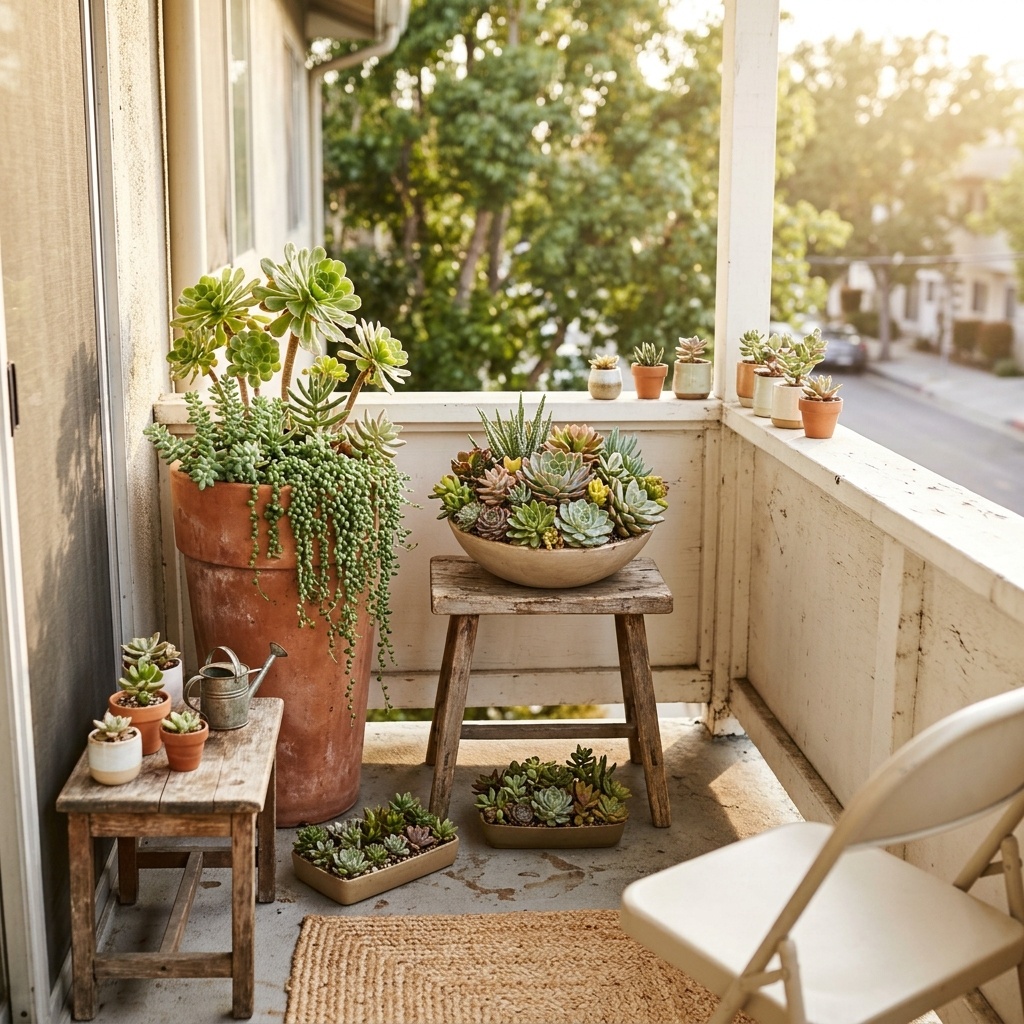
A small balcony can feel impossible to garden. There is barely room for a chair, let alone plants. Yet some of the prettiest outdoor corners online are tiny apartment balconies, and they all share one simple trick. They do not use more plants. They use plants at three different heights.
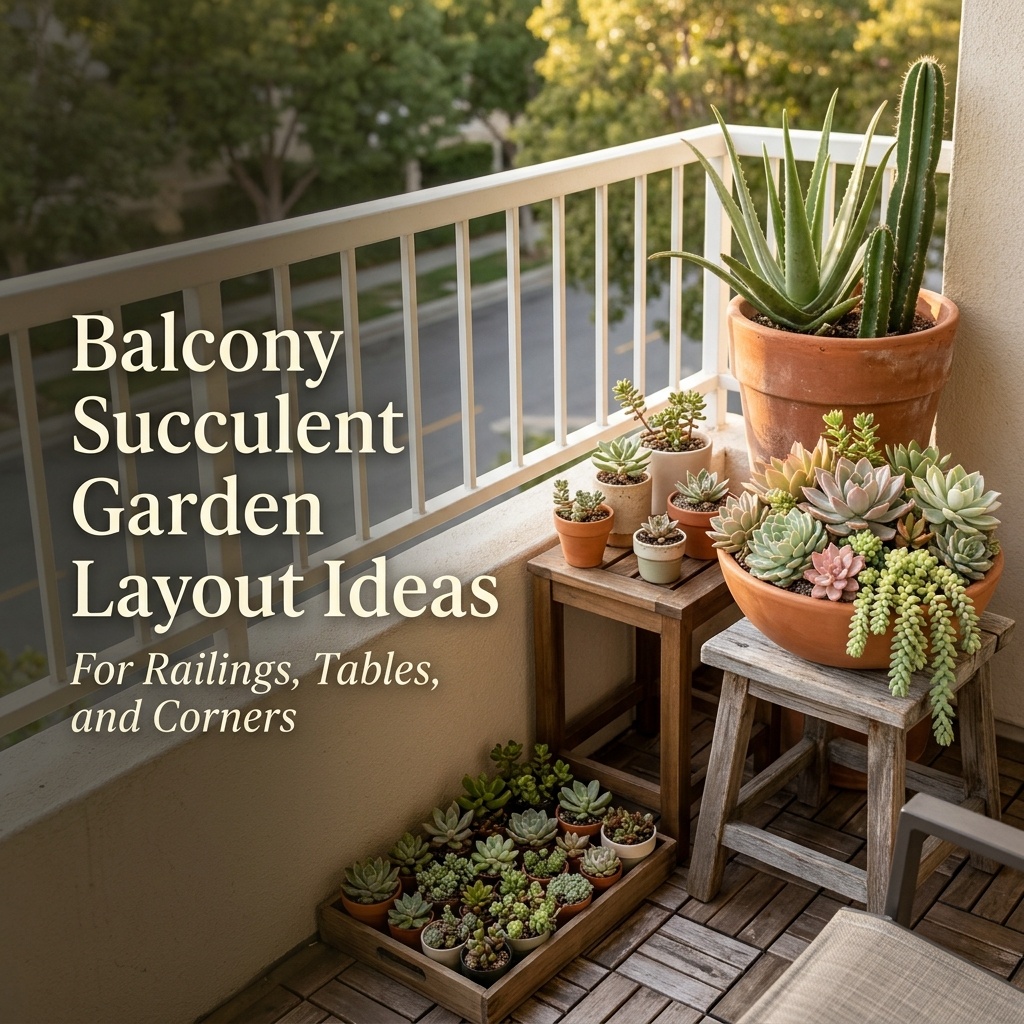
That is the whole secret behind a balcony succulent garden that looks designed instead of random. One tall pot, one full mixed bowl at mid height, and one low tray or shallow bowl. Three levels, three shapes, and suddenly a plain railing corner looks like a styled garden.
Succulents plants are perfect for this job. They stay compact, they love sun, and they forgive a missed watering when life gets busy. In this guide, you will learn the three-heights rule, how to pick plants that handle balcony sun and wind, three easy layouts, and the basic care that keeps everything healthy in a rental-friendly way.
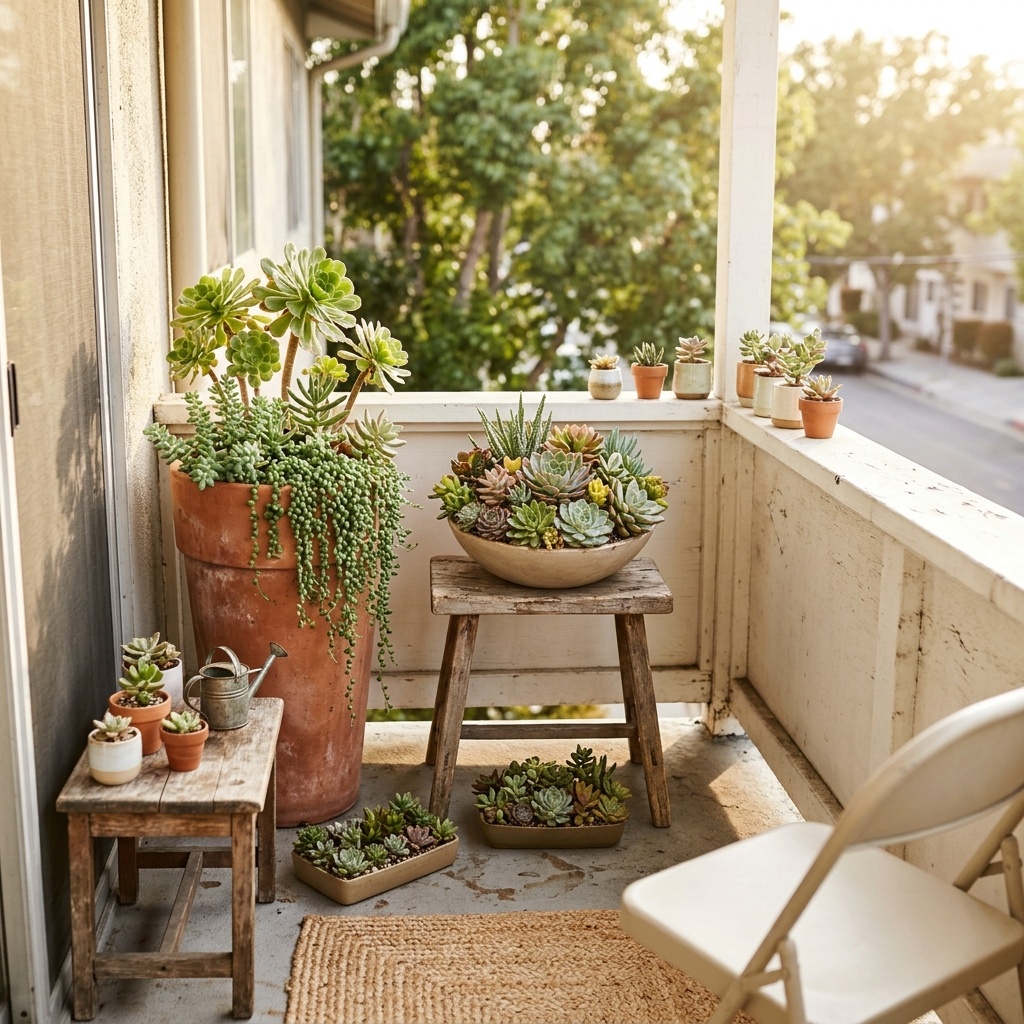
The 3-Heights Rule Behind Every Good Balcony Succulent Garden
Think of your balcony succulent garden like a tiny skyline. A skyline looks interesting because the buildings are not all the same height. Plants work the same way. When every pot sits at one level, the eye slides right past them. When the heights change, the eye stops and looks.
The rule is simple. Use one tall piece, one mid-height piece, and one low piece. That is it. You can build the whole grouping in one afternoon, and it works on a balcony that is only a few feet wide. Here is how each level earns its place.
Level 1: The Tall Pot Gives Your Balcony Succulent Garden a Backbone
Every grouping needs an anchor, and the tall pot is yours. Choose one upright plant with real presence, such as a snake plant, a tall cactus, or a jade plant that has grown a woody stem. Place it in a pot that is taller or heavier than the rest, and set it at the back of the grouping or in the corner.
This tall piece does two jobs. It gives the eye a starting point, and it makes the smaller pots in front look intentional, like steps leading up to it. Without an anchor, a balcony succulent garden often looks like a line of leftovers waiting for a home.
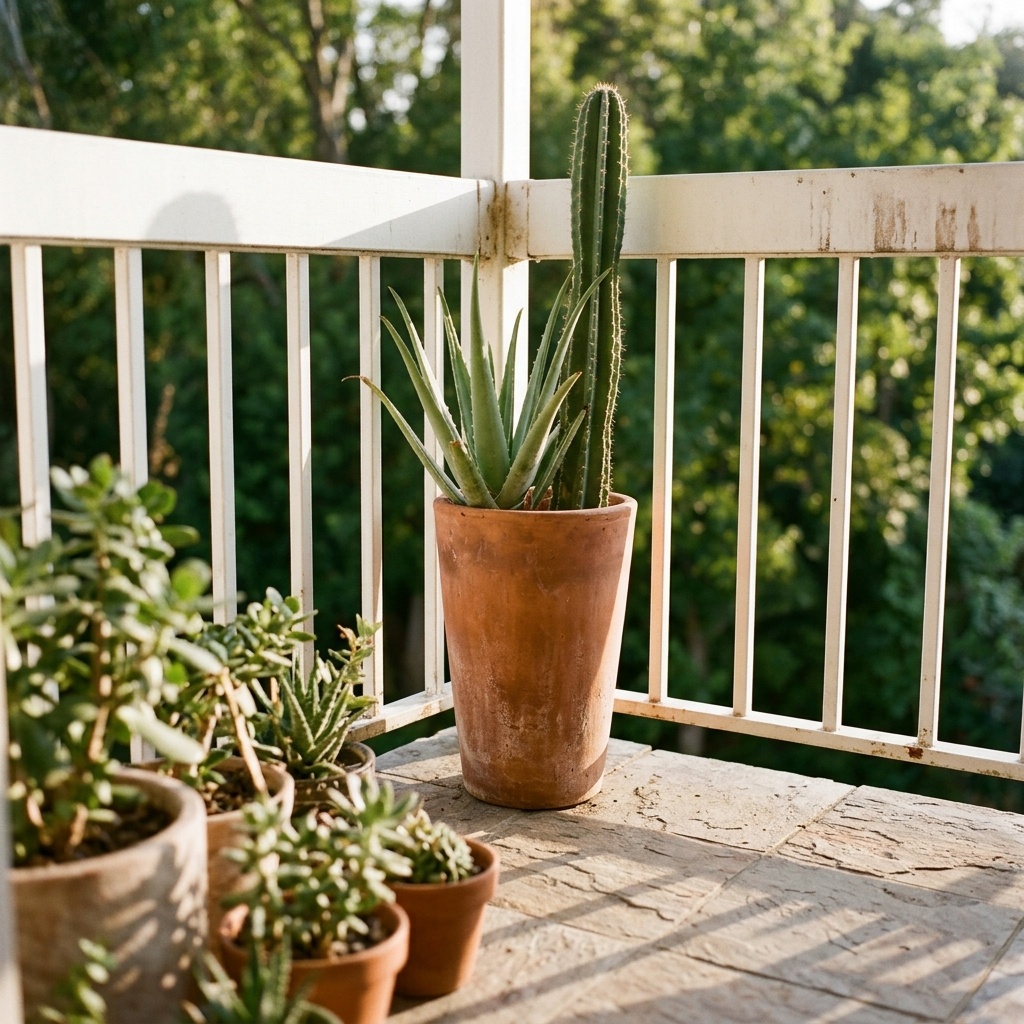
One practical tip: keep the tall pot heavy or set it inside a larger cache pot. Balconies get gusts of wind, and a top-heavy plant in a light pot is the first thing to tip over.
Level 2: The Mixed Bowl Is the Star of Your Balcony Succulent Garden
The middle level is where the beauty lives. This is your mixed bowl, filled with rosettes, small cactuses, and a trailing plant spilling over the edge. It sits at chair height or table height, right where you see it when you sit down with your morning coffee.
Fill the bowl more generously than feels natural. A tight mix of shapes and colors is what makes a mixed bowl look lush instead of sparse. If you want step-by-step help building one, our guide Beautiful Mixed Succulent Pot Ideas walks through spacing, color, and finishing touches.
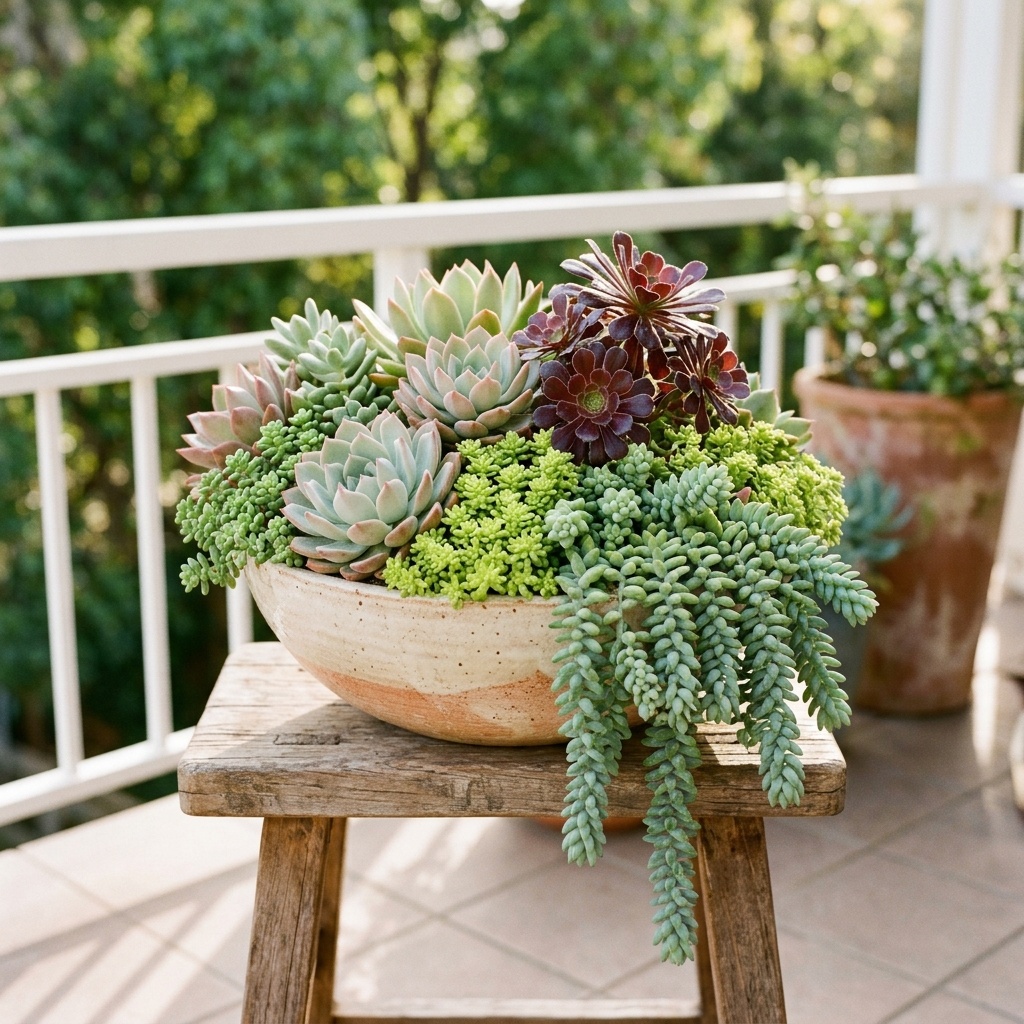
This bowl is the piece people will save, photograph, and ask about. Give it the best spot in your balcony succulent garden, with the most light and the easiest view.
Level 3: The Low Tray or Bowl Grounds the Whole Display
The low level is the one beginners skip, and it is the one that makes the grouping look finished. A shallow tray, a low bowl, or even a wide saucer with two or three tiny pots adds a soft front edge. It catches the eye at ground level and ties the tall pot and the mixed bowl together.
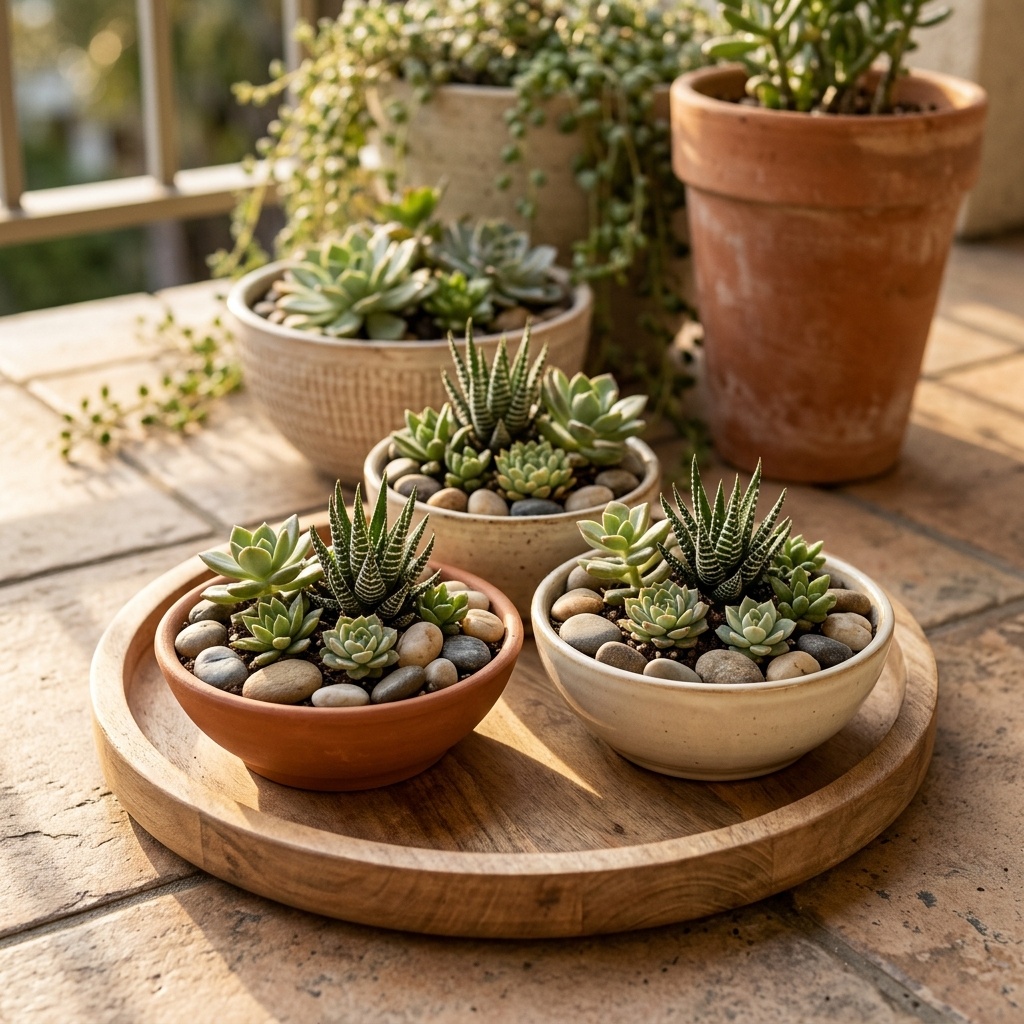
Low pieces are also your flexible players. Swap a tiny pot in or out with the seasons, try a new plant here before giving it a bigger home, or tuck in a small stone or two for texture. In a small balcony succulent garden, this front layer adds depth without taking real space.
Choosing Plants for Sun and Wind in a Balcony Succulent Garden
Balconies are tougher than they look. A south or west facing balcony in the US can bake in afternoon sun, while a high-rise balcony can feel like a wind tunnel. Pick plants for the conditions you actually have, not the ones in a catalog photo.
Start by watching your light for one day. Note when direct sun first hits the railing and when shade takes over. Most succulents want at least five or six hours of bright light. Echeveria, sedum, and most cactuses are happy in full sun once they adjust to it. If a plant is new from a store shelf, move it into full sun over a week so the leaves do not scorch.
For very sunny, hot balconies, lean on tough plants. Hens and chicks, stonecrop sedums, and paddle plant handle heat well. For a balcony with only morning sun, jade, haworthia, and string of pearls are safer picks, since they accept gentler light.
Wind matters just as much. It dries soil fast and can shred soft leaves. Trailing plants look lovely on railings, but on a windy floor, keep them lower and closer to the wall. Choose compact, sturdy rosettes for exposed spots, and save the delicate trailers for sheltered corners of your balcony succulent garden.
One more rule: group plants with similar thirst together. A cactus and a string of pearls in the same bowl will fight over water, and one of them will lose.
Balcony Succulent Garden Layout Ideas for Railings, Tables, and Corners
Once you know the three heights, you can fit them almost anywhere. The best balcony succulent gardens look layered from every angle, not just from the front. These three layouts cover the spots most apartment and small-home balconies actually have.
The railing line. Hang or hook the low tray at railing level, set the mixed bowl on a small side table just inside the railing, and stand the tall pot on the floor behind it. You get the layered look without giving up floor space, which matters when the balcony barely fits two chairs. Check your building rules first, and always hang planters on the inside of the railing so nothing can fall.
The coffee table trio. If your balcony holds a small table, make it the garden. Tall pot on the table at the back, mixed bowl in the center, low bowl at the front edge. It reads like a centerpiece, and you enjoy it up close every time you sit outside. This is the easiest balcony succulent garden layout to copy, because one surface does all the work.
The corner stack. Corners collect clutter, so give yours a job. Put the tall pot directly in the corner, the mixed bowl on a stool or crate beside it, and the low tray on the floor in front. The steps pull the eye down and out, and a dead corner turns into the best-looking part of the balcony. A tiered stand does the same thing even faster, which is why stands work so well in a compact balcony succulent garden.
If you fall in love with the layered look and later gain a yard, the same thinking scales up. Our guide Beautiful Succulent Garden Design shows how these small groupings grow into full beds, rock gardens, and patio displays.
Care Basics for a Balcony Succulent Garden: Water, Weight, and Drainage
Outdoor succulents are low care, not no care. Three basics keep a balcony planting healthy all season.
Watering. Use the soak and dry method. Water deeply until it runs from the drainage hole, then wait until the soil is fully dry before watering again. On a hot, windy balcony, that may be every week to ten days in summer. In cool weather, it can stretch to every few weeks. When in doubt, wait a day. More balcony succulents die from too much water than from too little. That simple rhythm is all a healthy balcony succulent garden asks for.
Drainage and saucers. Every pot needs a drainage hole, full stop. Outdoors, rain will find your plants, and a pot without drainage becomes a soup bowl. Set each pot on a saucer or tray so water does not stain the balcony floor or drip on the neighbor below. Empty saucers after heavy rain so roots do not sit in water.
Weight and your lease. Wet soil is heavy, so check what your balcony can hold before building a giant grouping. The three-heights setup is naturally light: three pieces, modest pots, fast-draining gritty soil. Plastic or fiberglass tall pots give the look of stone at a fraction of the weight, and they are kinder to rental floors. Keep pots a little away from walls so air can move and paint does not scuff.
Finally, plan for winter. In most of the US, tender succulents cannot stay outside through freezing nights. The beauty of a pot-based balcony succulent garden is that the whole grouping can move indoors to a sunny window in minutes when the first frost warning arrives.
Conclusion
A beautiful balcony succulent garden does not need a big space or a big budget. It needs three heights: one tall pot for structure, one full mixed bowl as the star, and one low tray to finish the front edge. Pick plants that match your sun and wind, try the railing, table, or corner layout that fits your space, and keep up the simple care routine of deep watering, real drainage, and sensible weight.
Start with three pots this weekend. Stand back, look at the little skyline you built, and notice how finished it feels. That layered look is the whole trick, and now your balcony succulent garden has it.