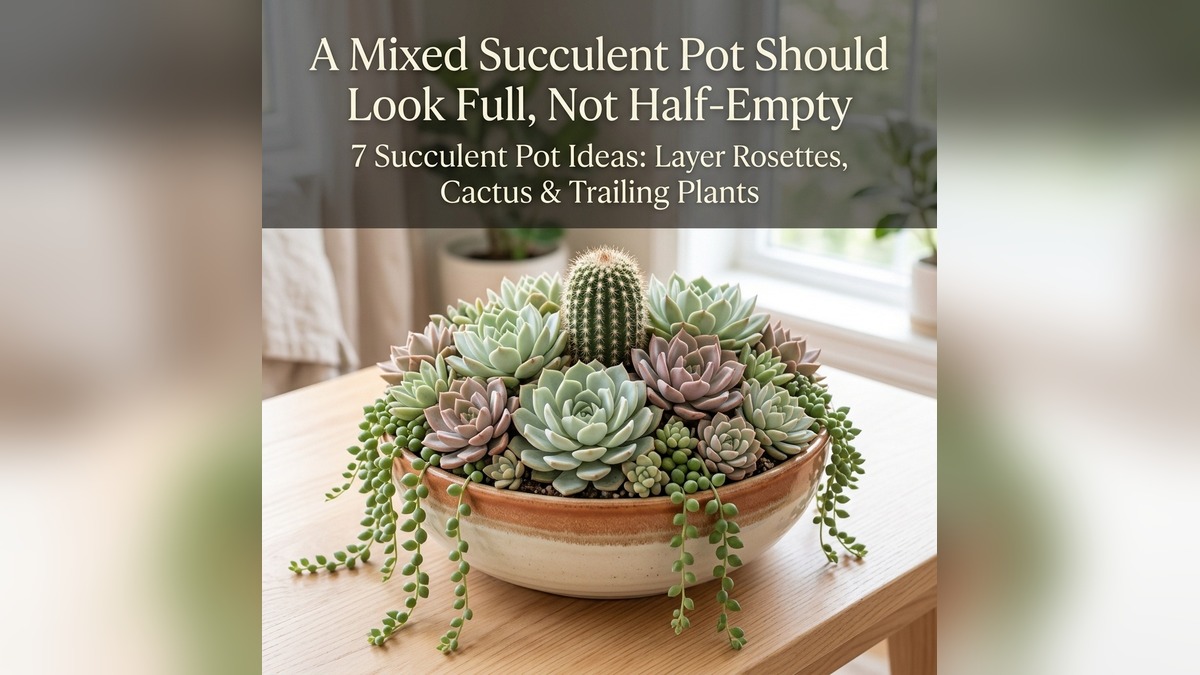
You plant a mixed succulent pot, step back, and something feels off. The plants are healthy, the pot is pretty, but there are gaps of bare soil everywhere and the whole thing looks half finished. If that sounds familiar, you are not doing anything wrong. Most sparse pots just need better spacing, a few more plants, and a smarter layout. The good news is that the best succulent pot ideas are simple. They use plants you probably already own, and most of them take less than an hour to put together. In this guide, you will find seven succulent pot ideas that make any mixed bowl look full and lush, plus the simple care routine that keeps it looking that way. Whether you are styling a sunny windowsill, a patio table, or a desk at work, one of these succulent pot ideas will fit your space.
7 Beautiful Succulent Pot Ideas That Look Full and Lush
Before you buy a single new plant, it helps to know why pots look sparse in the first place. Most beginners space succulents like vegetables in a garden row, with room to grow between each one. Succulents grow slowly, though, so those gaps stay empty for months. The succulent pot ideas below fix the problem from different angles. Some add more plants, some change the layout, and some simply hide the soil so your eye reads the pot as full. Mix and match them, because the fullest pots usually combine two or three of these tricks at once. If you want even more arrangements to copy, our guide to Beautiful Mixed Succulent Pot Ideas walks through complete bowl designs step by step.
1. Use the Thriller, Filler, and Spiller Trick
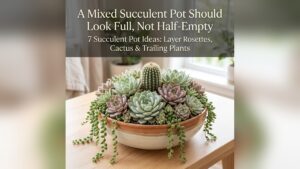
Borrow this rule from flower gardening and your pot instantly looks designed. Pick one tall thriller for the center or back, like a small cactus or an upright echeveria. Ring it with medium filler rosettes that cover the middle ground. Then tuck a trailing spiller, such as string of pearls or burro’s tail, over the edge. This is one of the most reliable succulent pot ideas because it fills every level of the pot at once: top, middle, and rim. Leave no level empty and the whole arrangement reads as lush, even in a small 6-inch bowl.
2. Plant Tighter Than You Think: A Classic Succulent Pot Idea
Here is the secret behind almost all full-looking succulent pot ideas: nursery growers plant far tighter than most home gardeners dare to. Place your rosettes so the leaves almost touch, about half an inch apart. Tight planting hides the soil, which is the real reason pots look sparse. Do not worry about crowding. Succulents are slow growers, and you can always lift one out and move it to its own pot later. A tightly planted bowl also holds together better in photos, which is why this simple succulent pot idea shows up in almost every magazine arrangement you have ever admired.
3. Mix Sizes, Shapes, and Textures
A pot planted with five identical rosettes looks flat, no matter how tight the spacing is. Instead, combine one large statement rosette with two or three medium plants and several tiny offsets or cuttings in the gaps. Mix smooth leaves with fuzzy ones, and round rosettes with spiky haworthia. The contrast makes your eye move around the pot, and a busy eye reads the pot as full. Keep this in mind when you shop: you are not buying matching sets, you are buying a cast of characters. It is one of those succulent pot ideas that costs nothing extra but changes everything.
4. Finish With a Pebble Top Dressing, the Fastest Succulent Pot Idea
Bare brown soil is the biggest giveaway of a sparse pot. A thin layer of small pebbles, coarse sand, or fine gravel covers the soil and gives the arrangement a clean, finished look in about five minutes. Pale gravel makes green rosettes pop, while dark lava rock suits a modern, moody style. Top dressing has practical perks too. It keeps leaves off damp soil, slows rot, and stops soil from splashing out when you water. Of all the succulent pot ideas in this list, this is the fastest fix, so try it first if your pot needs help today.
One more detail matters here: match the top dressing to the pot. A wide, shallow bowl looks best with fine gravel spread in an even layer, right up to the rim. A taller pot can handle chunkier pebbles. Keep the layer about half an inch deep, and brush any stray stones off the leaves with a soft paintbrush when you finish. That small cleanup step sounds fussy, but it is what separates a homemade pot from a store-bought arrangement. Visitors will not know why your bowl looks so polished. They will just notice that it does.
5. Group Mixed Succulent Pots at Three Different Heights
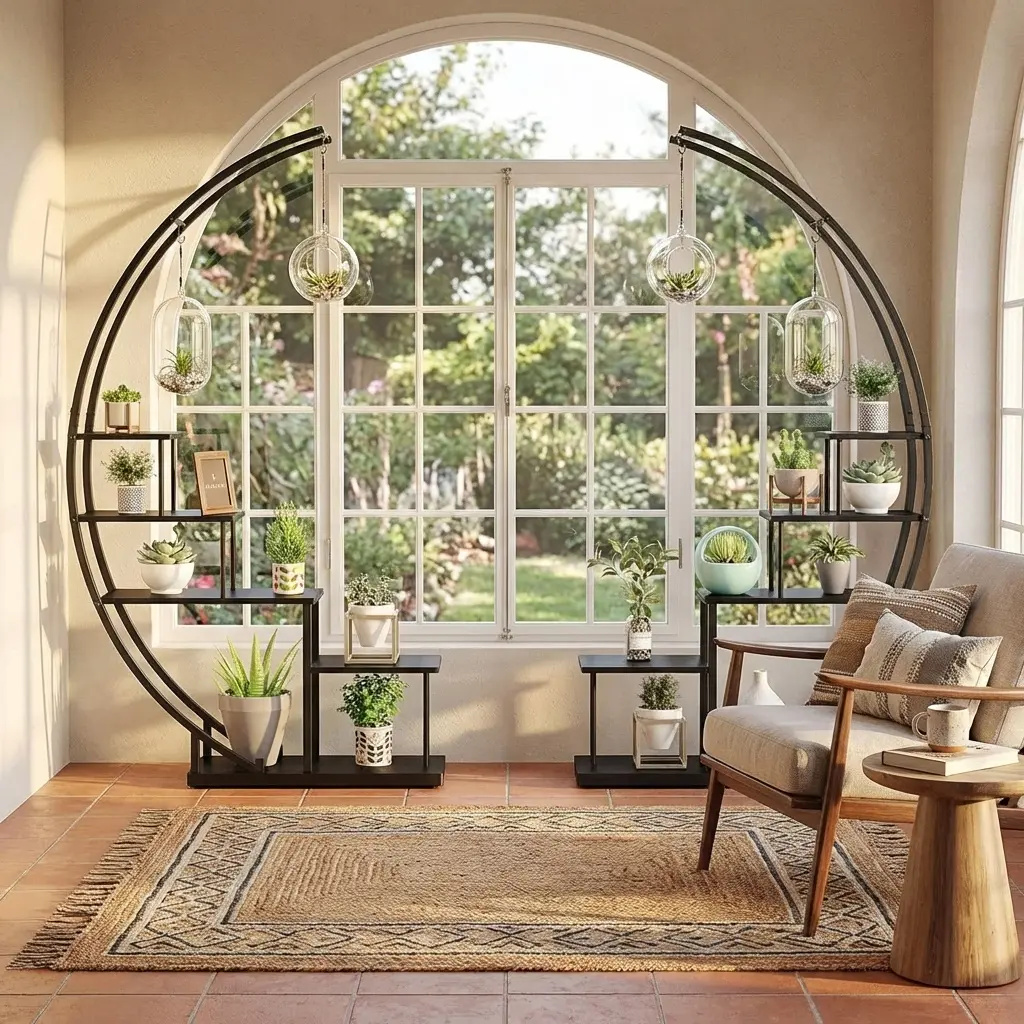
Sometimes one pot is not sparse at all. It just looks lonely. Grouping pots at three heights, low, medium, and tall, turns single plants into a display that feels full and generous. A tiered metal stand does the work for you, or you can stack sturdy books, crates, or an upside-down empty pot. This works indoors on a plant shelf and outdoors on a patio step. Many of the most saved succulent pot ideas online are really just smart groupings like this, photographed from the front. Stand back, check the outline, and adjust until the group forms one pleasing shape.
6. Repeat One Color Through the Whole Pot
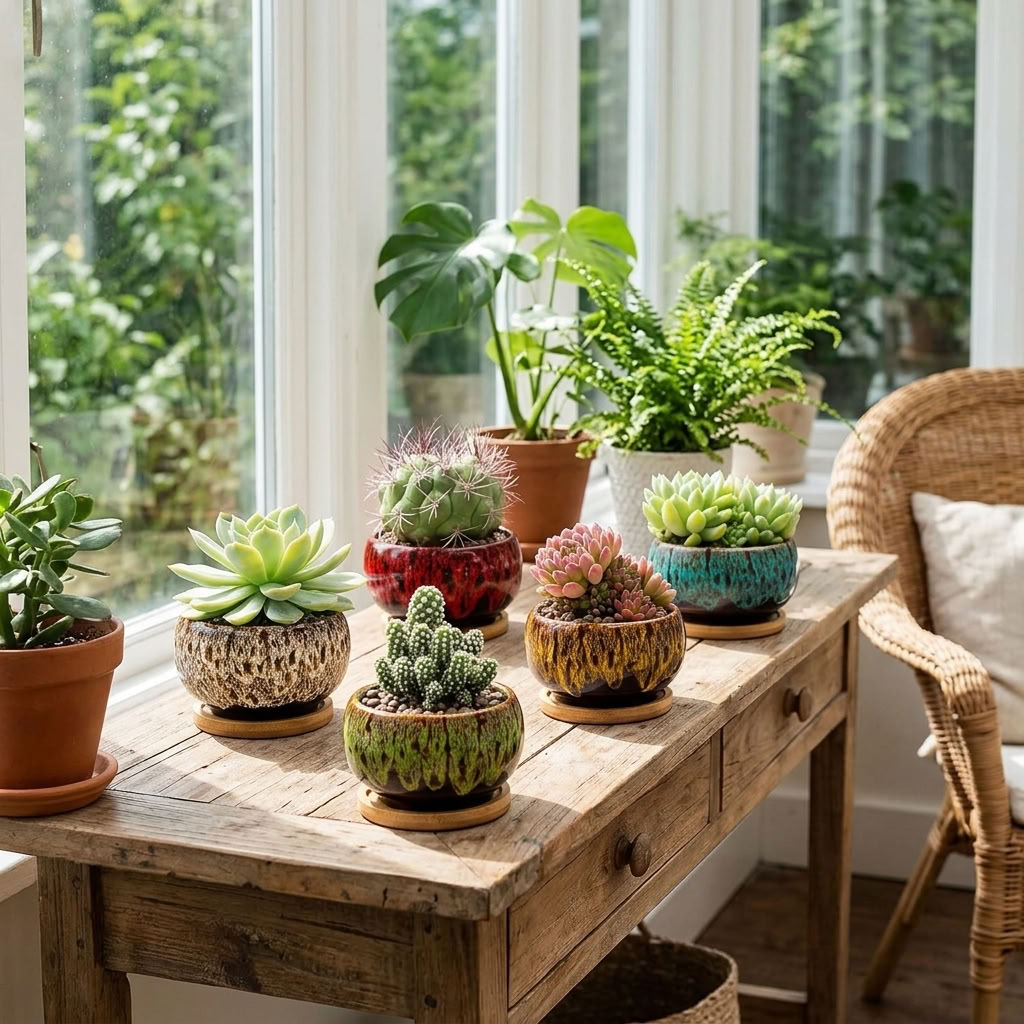
A full pot is not only about how many plants you use. It is also about how calm the result looks. Repeating one accent color, like the blue-green of echeveria leaves or the blush pink of a graptoveria, ties mixed plants together so the pot reads as one design instead of a random collection. You can repeat the color in the pot itself, the gravel, or a matching saucer. This is a quieter succulent pot idea, but it is the one that makes arrangements look expensive. When in doubt, pick two main colors and let everything else stay green.
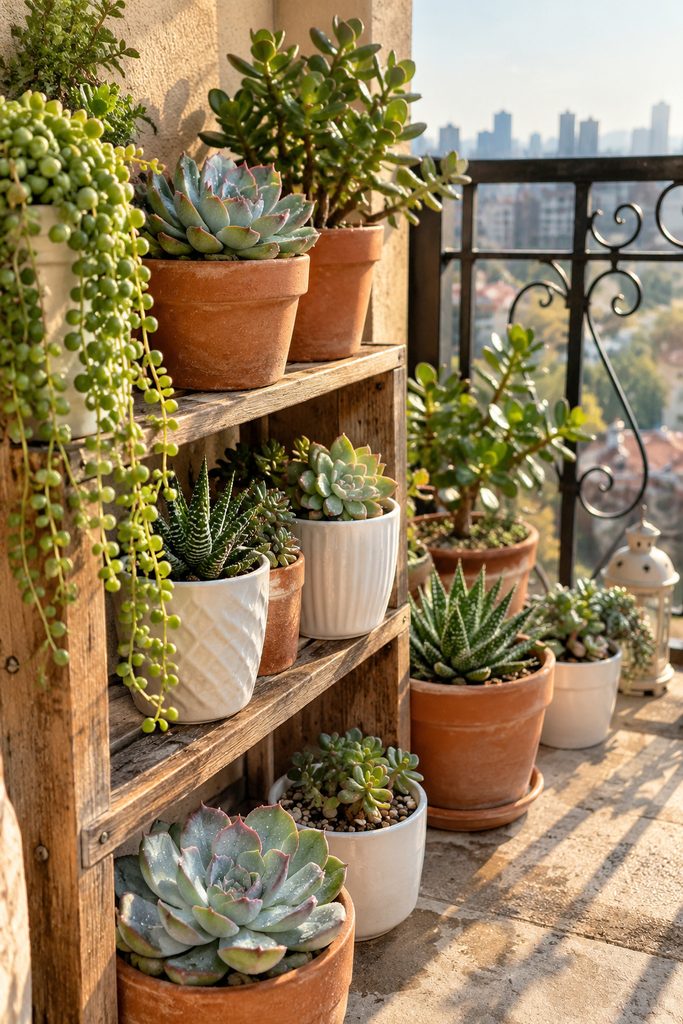
7. Give the Mixed Succulent Pot a Sunny Balcony Spot
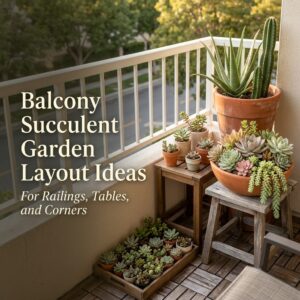
Transform your balcony into a cozy little garden with a beautiful collection of mixed succulents! Arrange echeveria, jade plants, haworthia, and trailing string of pearls in charming terracotta and white ceramic pots. Place them on rustic wooden shelves and around the balcony floor to create a fuller, greener look. With warm golden sunlight, natural textures, and thoughtfully arranged planters, even a small balcony can become a peaceful, lush, and inviting succulent retreat.
Simple Care That Keeps Succulent Pot Ideas Full and Lush
A lush arrangement only stays lush with the right routine, but the routine is short. Water deeply only when the soil is completely dry, then let every drop drain away. Crowded pots dry a little faster than single plants, so check the soil with a fingertip or a wooden skewer before you water. If you are unsure about timing, our guide on How Often Should You Water Succulent Plants explains the soak-and-dry method in plain steps. Every few months, pinch back trailing stems and replant the cuttings into any gaps that have opened up. This is where your favorite succulent pot ideas keep paying off, because a full pot gives you free cuttings for the next one. Rotate the pot a quarter turn each week so every side gets light, remove dry leaves from the base, and your arrangement will hold its shape through the season.
The pot itself does quiet work too. Always choose a container with a drainage hole, because crowded roots sitting in wet soil will rot faster than a single plant would. A gritty, fast-draining mix matters just as much. Blend regular potting soil with perlite or coarse sand, roughly half and half, so water runs through instead of pooling at the bottom. When a rosette outgrows its space, do not force the whole design apart. Lift just that one plant, pot it up on its own, and drop a fresh cutting into the gap. Small, regular edits like this are how good succulent pot ideas stay good for a year or more, instead of looking great for one photo and tired by the next season.
Conclusion
A sparse pot is not a failed pot. It is usually just a pot that needs tighter planting, one more layer, or a handful of gravel. Start with the thriller, filler, and spiller layout, plant closer than feels natural, and finish the surface so no bare soil shows. Then give the whole thing bright light and careful watering. Try one of these succulent pot ideas this weekend, and you will be surprised how quickly a thin, gappy bowl turns into the full, lush centerpiece you pictured when you bought the plants. Save your favorite succulent pot idea, gather a few extra cuttings, and happy planting.
Frequently Asked Questions
What is the easiest succulent pot idea for beginners?
Start with the thriller, filler, and spiller layout in a 6-inch bowl. One upright plant in the middle, a ring of rosettes around it, and one trailing plant over the edge looks full right away. Plant tighter than feels natural and finish with gravel so no bare soil shows.
Can I use these succulent pot ideas in a small bowl?
Yes, every idea here scales down well. In a small bowl, use one statement rosette, two or three medium plants, and tiny cuttings in the gaps. Keep the pebble layer fine rather than chunky so it suits the smaller size.
Why does my arrangement look sparse even though the plants are healthy?
The usual cause is spacing, not health. Slow-growing rosettes planted far apart leave bare soil showing for months, and the eye reads that soil as emptiness. Tuck in cuttings or offsets to close the gaps, and add a top dressing so the surface looks finished.
How many plants do I need for one full mixed bowl?
For a 6-inch bowl, plan on about five to seven plants: one taller centerpiece, three or four medium rosettes, and a few small cuttings for the edges. A wider 10-inch bowl usually takes nine to twelve. It is better to buy one or two extra than to stretch too few across the surface.
How often should I water a tightly planted bowl?
Water only when the soil is completely dry all the way through, then soak it until water runs from the drainage hole. Crowded bowls dry a little faster than single plants, so check with a fingertip or wooden skewer every week or so. In winter, most indoor bowls need water only every three to four weeks.