

A tiny yard can feel like a dead end for a plant lover. There is room for a chair, maybe a grill, and that is about it. Yet one of the smartest small-space designs in the succulent world fits into a circle just 4 feet wide. It is called a spiral succulent garden, and it works because it grows up, not out.
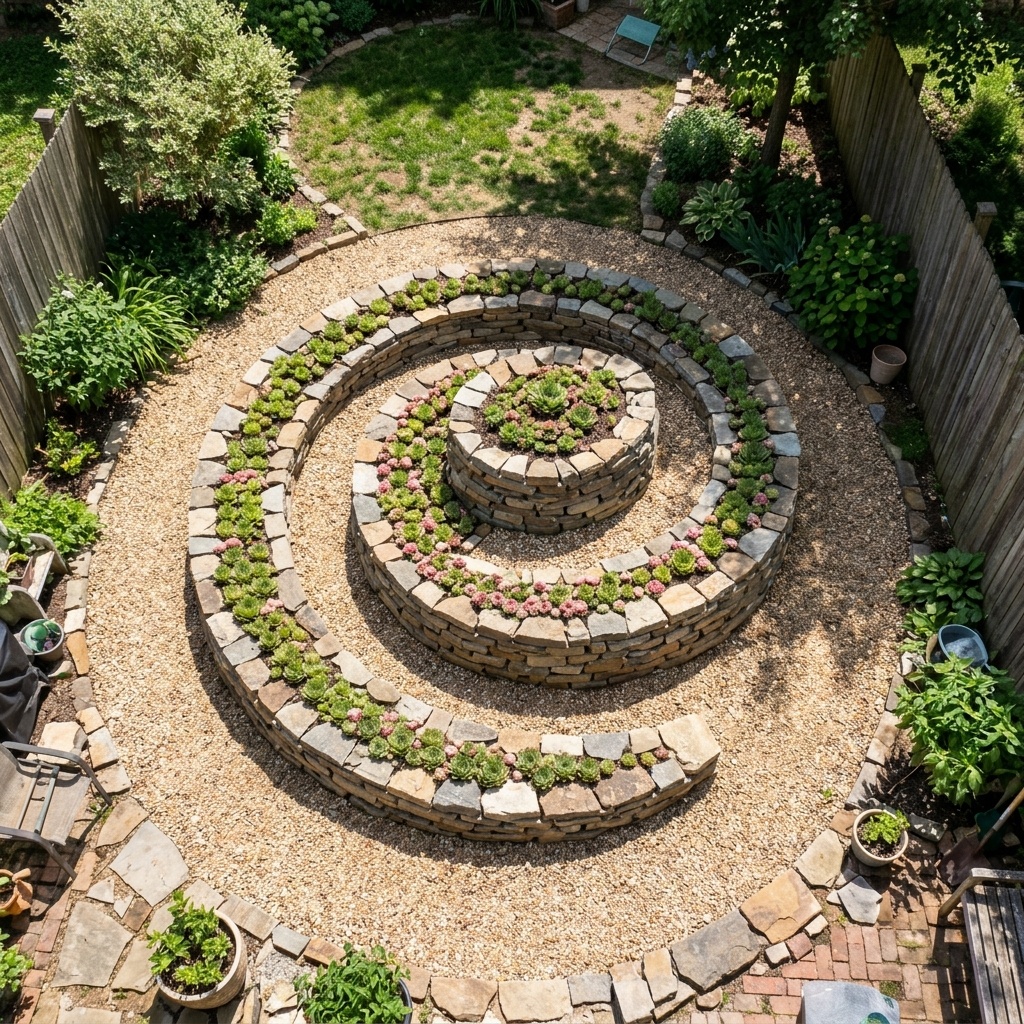
Instead of a flat bed, a spiral succulent garden winds a low stone wall in a curl, like a snail shell. The center rises about 2 feet high, and the planting row spirals down to ground level. That one curl gives you a long planting line, several heights, and dry and moist zones in a footprint smaller than a patio table.
The headline number is real, with one honest condition. A 4-foot spiral can hold about 20-30 small succulents, and that count assumes starter plants in 2-inch pots spaced roughly 4 to 6 inches apart along the spiral. Use larger 4-inch rosettes and the count drops closer to 20. Think of 20 small succulent plants as a planning example, not a promise, and this guide shows the spacing math as we go.
How a Spiral Succulent Garden Works
The shape is the whole secret. When you build a spiral succulent garden, the wall curls inward and climbs as it goes. The top of the spiral is the highest, sunniest, and driest point in the bed. The bottom, where the spiral ends at ground level, is the lowest and coolest point, and it holds moisture the longest.
This happens for simple reasons. Water always runs downhill, so rain and hose water drain away from the top first and collect longest near the base. The raised center also catches more sun and more wind, and both dry the soil faster. Down at the base, the soil sits in the slight shade of the wall for part of the day, and it stays damp a little longer after watering.
That dry-to-moist slope is gold for succulent growers. In one small bed, you can keep sun-loving, drought-happy plants at the top and give slightly thirstier plants the cooler base. A flat bed forces every plant to live with the same water. A spiral succulent garden lets each plant live at its own level, and that is why mixed plantings thrive in it instead of fighting.
The spiral also packs in planting length. A straight 4-foot row holds a handful of plants. Curl that row into a spiral and the planting line stretches to roughly 10 to 12 feet inside the same circle. That long line, plus small starter plants at close spacing, is exactly how about 30 plants fit without crowding.
If you want to see how this bed fits into a full yard plan, our guide to Beautiful Succulent Garden Design shows where a feature bed like this works best in a wider layout.
What You Need to Build a Spiral Succulent Garden
The materials list is short, and most gardeners already own half of it. For a 4-foot spiral succulent garden, plan on:
- Stones, bricks, or concrete blocks for the wall — enough for a curling wall about 10 to 12 feet long, stacked 2 to 3 rows high at the tallest point
- Gritty succulent soil — a cactus and succulent mix with extra perlite, pumice, or coarse sand added for fast drainage
- A bag of gravel or small pebbles for a drainage layer and a neat top dressing
- About 30 small succulents in 2-inch pots, or about 20 in 4-inch pots if you prefer a fuller look sooner
- A garden hose or watering can with a narrow spout
- A tape measure, a short stake, and string for marking the circle
- Work gloves, because stone and cactus spines are a poor mix
Buy the stone first and dry-lay it before you commit. Stone sizes vary a lot, and a test curl in the driveway tells you fast whether you need one more bundle. Choose stone with at least one flat side, since flat faces stack into a steadier wall.

Step-by-Step: Building the Bed in an Afternoon
A spiral succulent garden goes together in four clear stages. Most gardeners finish in one relaxed afternoon, stone stacking included.
Step 1: Mark the Circle
Push a stake into the center of your chosen spot, tie on a string cut to 2 feet, and walk the string around to scratch or mark a clean 4-foot circle. Pick the sunniest spot you have, because most succulents want at least 6 hours of direct sun. Check that the ground is fairly level, then skim off grass and weeds inside the circle and rake the soil smooth. Take your time here, because a spiral succulent garden only looks right when the circle underneath it is true.
Step 2: Build the Spiral Succulent Garden Wall With Stone or Brick
Start at the outer edge of the circle and lay your first stones along a curling line that winds toward the center. Keep the first row at ground height, then add height as the wall curls inward, so the center ends up about 18 to 24 inches tall. Stagger the joints like a brick wall, and tilt each stone very slightly inward for strength. Leave no big gaps, because soil will wash out through them. The finished wall of a spiral succulent garden should look like a snail shell drawn in stone.
Step 3: Fill With Gritty Soil
Add a thin gravel layer along the base of the planting row, then fill behind and above the wall with your gritty soil mix. Mound the soil so it follows the slope of the spiral, high at the center and level with the ground at the tail. Firm the soil gently with your hands as you go. Rich, heavy garden soil holds too much water for this bed, so if your mix feels soft and dark like potting soil, stir in more perlite or coarse sand until it feels sandy and loose.
Step 4: Plant Your Spiral Succulent Garden From the Top Down
Planting order matters in a spiral succulent garden, so always start at the top. Set the first plants into the raised center, then work down the curl, firming soil around each root ball as you go. Top-down planting keeps loose soil from burying the plants below, and it lets you judge spacing as the row fills. Keep small 2-inch plants about 4 to 6 inches apart, and give 4-inch rosettes 6 to 8 inches. Finish with a thin pebble top dressing, which keeps leaves off damp soil and gives the bed a clean, finished look. By the last plant, your spiral succulent garden should already look full and layered from every side.
Which Plants Go at Each Level
Matching plants to levels is where a spiral succulent garden really pays off. The top, middle, and base are three different microclimates, so plant them that way.
The top — dry and sunny. Plant the toughest sun lovers here: echeveria rosettes, hens and chicks (sempervivum), small agaves, and sedums like burro’s tail starts kept near the edge so they can trail. These plants like fast drainage and bright light, and the top of the spiral gives them both.
The middle — the main slope. This long middle band suits the widest range: graptoveria, pachyveria, crassula, and mixed rosettes in pink, blue, and green. Plant in small color groups of three for a designed look, and repeat a color at two points on the spiral so the whole bed feels connected.
The base — coolest and moistest. Save the base for plants that like a little more water and a touch of shade, such as haworthia and gasteria. Placing them at the bottom of a spiral succulent garden gives them the longest-lasting moisture in the bed without any extra watering from you.
Prefer to practice in a container first? Our article Beautiful Mixed Succulent Pot Ideas uses the same thriller, filler, and spiller thinking in a single bowl, and it is a great warm-up before you build in the ground.
Care Basics for the First Year and Beyond
Care for a spiral succulent garden is simple once the bed settles in. Water deeply but rarely: soak the bed, then let the soil dry out before you water again. In summer heat that may be every 10 to 14 days, while in cool weather the bed may need nothing for a month. Always check the base last, since it dries slowest, and never let the tail of the spiral sit soggy.
Feed lightly, if at all. A half-strength dose of a balanced fertilizer once in spring is plenty, because lean soil keeps rosettes compact and colorful. Remove fallen leaves from the crowns so they do not rot against the stems, and pull the odd weed while it is small.
In cold-winter states, tender rosettes at the top are the first to feel a hard freeze. Growers in USDA Zones 8 and colder often cover the bed with frost cloth on the coldest nights or treat the tender top plants as annuals and replant in spring. Hardy hens and chicks shrug off winter in most zones and carry the bed through.
Once a year, walk the wall and reset any stone that has shifted. A five-minute repair each spring keeps a spiral succulent garden looking sharp for years.

Conclusion
A small yard is not a small garden, and a spiral succulent garden proves it in a 4-foot circle. One curling stone wall gives you a long planting line, three planting levels, and a dry-to-moist slope that lets very different plants live happily side by side. Start with about 20-30 small plants at honest 4-to-6-inch spacing, or fewer large ones, and the bed will fill in through its first warm season. Build it once, water it rarely, and your spiral succulent garden will be the first thing every guest asks about.
Frequently Asked Questions
How many plants do I need for a spiral succulent garden?
For a 4-foot bed, plan on about 30 small plants in 2-inch pots, spaced 4 to 6 inches apart along the planting row. If you prefer larger 4-inch rosettes, about 20 plants will fill the same spiral and give a fuller look sooner.
How much space does a spiral succulent garden need?
A circle about 4 feet wide is the classic size, and it fits most small yards and patio corners. You can scale down to about 3 feet for a mini version, but keep the wall low so the proportions still look right.
What soil works best in a spiral bed?
Use a gritty, fast-draining mix, such as cactus and succulent soil with extra perlite, pumice, or coarse sand stirred in. Rich, heavy garden soil holds too much water and can rot roots, especially near the base, where moisture lingers longest.
How often should I water a spiral succulent garden?
Water deeply, then wait until the soil has dried out before watering again. In summer heat that is often every 10 to 14 days, while in cool weather the bed may go a month between waterings, and the base always dries slowest.
Will a spiral succulent garden survive winter?
Hardy plants like hens and chicks carry through winter in most US zones, but tender rosettes at the top are the first to feel a hard freeze. In USDA Zones 8 and colder, cover the bed with frost cloth on the coldest nights or plan to replant the tender top plants in spring.